
Precision-engineered aluminum profiles, stainless steel hardware (AISI 304/316), and safety laminated tempered glass assemblies manufactured to rigorous Mediterranean structural and environmental specifications.
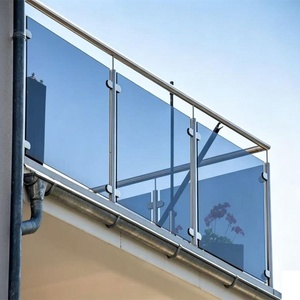
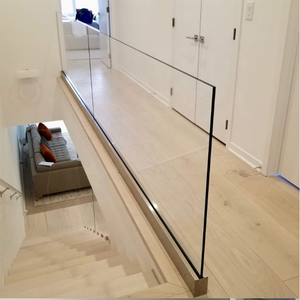
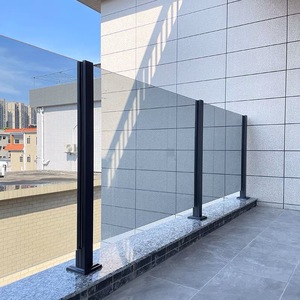
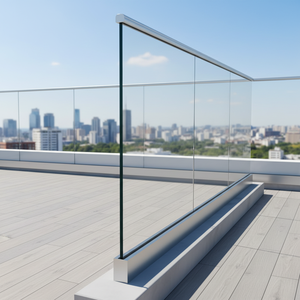
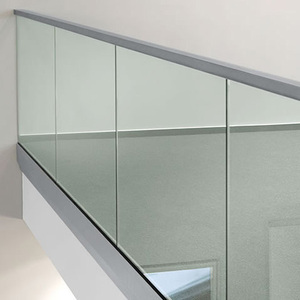
The Israeli construction ecosystem represents one of the most demanding procurement environments globally, driven by stringent national safety codes, distinct microclimates, and seismic resilience imperatives.
The concentration of luxury multi-family developments and corporate towers throughout Tel Aviv, Ramat Gan, and Herzliya has driven demand for structural interior railings that maximize usable floor area while maintaining acoustic isolation and visual continuity. Developers require minimal-footprint embedded floor channels that integrate seamlessly into polished concrete, terrazzo, and local Jerusalem stone floor compositions.
Simultaneously, extensive urban renewal initiatives under Tama 38 (תמ"א 38) seismic retrofitting protocols demand lightweight modular balustrade retrofits that minimize structural dead load on existing foundations while modernizing internal vertical circulation and atrium spaces.
While designated as "interior" installations, coastal residences along the Mediterranean shoreline (such as Netanya, Tel Aviv, Ashdod, and Haifa) experience elevated atmospheric saline air through cross-ventilation, open facades, and high humidity. In these micro-climates, standard AISI 304 stainless steel and poorly anodized extrusions suffer rapid pitting corrosion and crevice oxidation.
Tier-1 exporters supplying the Israeli market must engineer balustrade hardware utilizing marine-grade AISI 316L, 2205 Duplex Stainless Steel, and Qualanod-certified aluminum profiles with anodizing layer thicknesses exceeding 20–25 microns to preserve structural integrity over multi-decade service lives.
Failure to navigate Standards Institution of Israel (SII / מכון התקנים הישראלי) regulations is the single largest cause of customs impoundment and site inspection rejection. Below is an engineering breakdown of mandatory technical baselines.
| Standard & Parameter | Mandatory Threshold (SII Specification) | Export Factory Solution & Metallurgy | Verification Protocol |
|---|---|---|---|
| SI 1142: Balustrade Height | Minimum 1,050mm above finished floor level (FFL); minimum 1,100mm on stair landings > 12m fall hazard. | Standardized 1,100mm–1,200mm glass panel height allowing for dry-wedge profile depth compensation. | Laser measurement & on-site calibration verification. |
| SI 1142: Non-Climbability | No climbable horizontal or diagonal projections between 100mm and 900mm from finished floor. | Fully frameless glass panels or continuous vertical post designs devoid of intermediate rails or toe holds. | 100mm sphere penetration gauge test. |
| SI 1142: Horizontal Line Load | 1.0 kN/m for private residential; 1.5 kN/m for public corridors; up to 3.0 kN/m for high-traffic atriums. | Heavy-duty 6063-T6 U-channels reinforced with bottom rib webs; 2205 duplex heavy floor spigots. | Static hydraulic load testing & deflection analysis (< 25mm). |
| SI 1099: Safety Glazing | Toughened laminated glass mandatory for all free-standing balustrades devoid of structural handrails. | Double-tempered PVB or SentryGlas (SGP) laminated panels (e.g., 8+1.52+8mm or 10+1.52+10mm). | Pendulum impact test (50kg dual-tire drop at 1,200mm). |
| Nickel Sulfide (NiS) Mitigation | Recommended prevention of spontaneous tempered glass fracture in critical public voids. | 100% Heat Soak Testing (HST) compliant with EN 14179 / DIN 18516 prior to lamination and export packaging. | Factory calibration furnace logs & batch certificates. |
While standard 1.52mm PVB is suitable for framed post-and-clamp residential stairs, frameless glass cantilever balustrades in Israeli commercial complexes demand ionoplast interlayers such as Kuraray SentryGlas (SGP). SGP offers 5x the tear strength and 100x the rigidity of conventional PVB, eliminating edge delamination and catastrophic panel collapse upon impact.
Anchorage to reinforced concrete slabs (C25/30 or C30/37) must account for edge-distance tearout risks. Tier-1 manufacturers provide pre-engineered slotted mounting holes engineered specifically for Hilti HST3 or Fischer FAZ II M10/M12 stainless steel seismic anchors, rated for peak shear and dynamic tension loads under seismic event categories.
Aluminum profiles destined for Mediterranean distribution undergo automated 18-step sulfuric acid anodization with continuous electro-coloring. A sealed oxide film layer of 20μm–25μm guarantees grade-9 salt-spray test resistance (> 1,000 hours ASTM B117), exceeding regional requirements across Israeli coastal plains.
Based on manufacturing capacity, alloy metallurgy, CNC glass processing tolerances, SII certification support, and maritime logistics reliability to Haifa and Ashdod ports, we benchmark the top manufacturing leaders.
Backed by 15+ years of dedicated structural metal and architectural glazing fabrication, this enterprise stands as the premier original equipment manufacturer (OEM/ODM) for top Israeli architectural distributors and main contractors. Equipped with automated European CNC machining centers, high-capacity Glaston tempering furnaces, and dual-vacuum autoclave lamination lines, they offer complete bespoke engineered railing systems tailored to SI 1142 load calculations.
One of the largest aluminum profile producers globally, Xingfa specializes in massive volume standardized continuous floor shoe bases. Their 6063-T6 aluminum alloys exhibit exceptional yield strength, making them popular among Tier-1 Israeli commercial contractors who possess local glass lamination facilities and seek bare extruded hardware in 40ft container quantities.
Internationally renowned for engineering extreme glass facades, Northglass produces architectural laminated tempered panels featuring ultra-low roller-wave distortion. Their capability to deliver curved, oversized laminated interior glass panels makes them the primary factory choice for luxury multi-story helical stairs in Caesarea and Savyon villas.
Specializing in stainless steel 304 and 316 post systems, balusters, and standoff glass pins. Demose is known for comprehensive catalog options that appeal to middle-market residential renovations and interior designers seeking fast, turnkey modular post-and-clamp setups with clear English CAD assembly drawings.
Providing integrated engineered architectural systems, Kite Glass pairs laser-calibrated stainless hardware with pre-cut CNC glass panels. Highly appreciated by boutique developers in Tel Aviv for delivering precision-cut stair panel orders accompanied by pre-installed dry-glaze gaskets and zero on-site cutting requirements.
A leading exporter of advanced safety glass panels, Sun Global excels in switchable PDLC privacy glass and embedded ceramic frit decorative laminated panels. Widely specified for corporate boardrooms and tech office mezzanines throughout the Herzliya Pituach high-tech commercial corridor.
An engineering leader in precision investment casting, Aozheng manufactures heavy-duty glass spigots, articulated point-fixing bolts, and spider fittings. Their 2205 Duplex castings are widely utilized in coastal high-salinity zones, providing superior yield strength under dynamic horizontal wind and crowd surge loads.
Specialized in export-ready crated building components, Grandsea delivers prefabricated aluminum channel railing systems with pre-assembled LED channels. Their competitive lead times and integrated packaging appeal to residential developers running simultaneous multi-unit apartment fit-outs in central Israel.
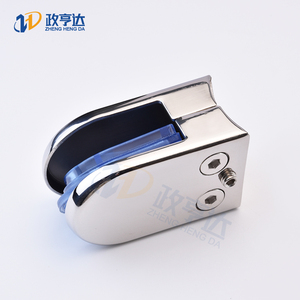
Known for strict metallurgy control, JNJ specializes in high-tolerance AISI 316 and 316L glass clamps, floor flanges, and slotted top handrails. Every export consignment is paired with direct spectral chemical analysis reports, verifying low carbon content and corrosion longevity under Mediterranean atmospheric exposure.
Positioned strategically near North China shipping ports, Vatti Glass delivers containerized shipments of clear, low-iron, and tinted laminated safety glass for interior atriums. Their automated edge-polishing and water-jet cut-out lines provide superior finishing for frameless standoff railing assemblies.
How interior glass balustrades interface with unique Israeli architectural vernaculars, regional construction materials, and structural environments.
In luxury multi-level penthouses overlooking the Mediterranean, interior mezzanine railings demand 100% frameless transparency. Base shoe channels are cast directly into structural floor screeds, covered with matching porcelain or parquet flooring to deliver an uninterrupted sightline of urban skylines while satisfying SI 1142 safety load requirements.
Modern residences in Jerusalem blend historic rough-faced limestone (Mizi Ahmar or Meleke) with sleek contemporary glazing. Matte-black powder-coated aluminum U-channels and satin stainless steel glass standoff pins create a striking aesthetic contrast against ancient stone stairwells without transferring high point stress onto fragile masonry.
Corporate campuses in Silicon Wadi require heavy-traffic interior atrium balustrades with continuous line loads exceeding 1.5 kN/m. Systems integrate smart switchable PDLC privacy glass panels that transition instantly from transparent glass to private opaque partitions during executive meetings and events.
Existing 1960s–1970s residential buildings undergoing seismic retrofitting require rapid, non-invasive installation. Side-mounted aluminum dry-glaze profiles allow retrofitting onto narrow staircase cheeks without hot-welding or extensive demolition, accelerating handover schedules while upgrading building life safety.
Discover how cutting-edge materials science, optoelectronics, and modular installation engineering are revolutionizing interior glass railing specifications.
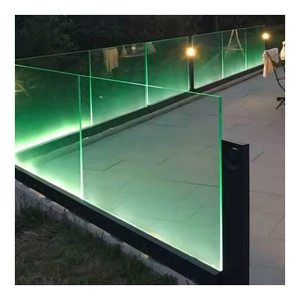
Concealed LED strip channels integrated within aluminum base shoes and slotted handrails provide continuous indirect ambient lighting along stair treads and corridors, reducing ceiling fixture energy loads while enhancing nighttime safety in luxury residential settings.
Traditional wet silicone glazing is completely obsolete in modern Israeli commercial construction. Patented two-component plastic wedge lock systems allow mechanical glass plumb adjustment of ±15mm entirely from the interior side, cutting installation labor costs by 65%.
Standard clear float glass exhibits an inherent greenish hue, which distorts interior stone and timber palettes. Exporters are shifting toward ultra-clear low-iron glass (iron oxide < 100 ppm), delivering genuine color fidelity and 91%+ light transmittance.
Interior glass panels subjected to continuous HVAC airflow and human contact attract dust and fingerprints. Modern factory-applied silica sol-gel hydrophobic treatments bond chemically with the glass surface, repelling oils and reducing maintenance cycles by 80%.
Navigating maritime transit, import customs clearance, and container shipping to ensure damage-free delivery to job sites in Central and Northern Israel.
Consignments destined for Tel Aviv, Gush Dan, and southern projects enter through the Port of Ashdod, whereas northern regional developments (Haifa, Nazareth, Galilee) route through the Port of Haifa. Reliable exporters provide complete export documentation, bill of lading (B/L) tracking, and custom certificate of origin documents to facilitate swift customs release.
Maritime roll and port handling represent critical risk points for glass breakage. Professional factories employ fumigated solid-plywood A-frame crates with integrated desiccant bags, rubber-cushioned spacer blocks, and steel strapping. Aluminum profiles are individually wrapped in protective PE film and packed in reinforced honeycomb cartons.
Importing unbranded railing hardware into Israel risks severe customs delays if documentation is incomplete. Reputable factories supply official mill test certificates (MTC), chemical breakdown analyses for stainless steel batches, and complete mechanical test reports conforming to ISO and European CE standards to streamline SII verification.
Bridging European engineering standards with high-capacity Chinese manufacturing economics to deliver superior architectural railing solutions.
With more than a decade and a half of focused architectural metal and glass production, we manage every phase—from aluminum billet extrusion to precision CNC milling, glass lamination, and automated surface treatment—entirely in-house under strict ISO 9001 quality management.
No project opening is standard. Our engineering office translates architect CAD files and Revit models directly into automated CNC fabrication schedules, cutting custom profile lengths, miters, and glass radius curves with sub-millimeter accuracy (±0.5mm).
Every structural component is laser-marked with batch serial numbers corresponding to raw material spectral analysis, glass heat-soak furnace temperature logs, and tensile failure load tests, giving Israeli project consultants absolute assurance during building handover.
We utilize exclusively prime-grade A00 aluminum ingots and certified 304/316/2205 stainless alloys. No recycled, contaminated scrap is ever introduced into our melting crucibles, ensuring complete structural density and zero galvanic failure over time.
To maximize freight efficiency for Israeli importers, our 12,000 m² logistics warehouse facilitates mixed-load consolidation—combining aluminum base shoes, stainless spigots, pre-cut glass panels, silicone seals, and mechanical fasteners into unified 20GP or 40HQ container shipments.
For multi-unit developer tenders, we provide rapid-turnaround physical mockups—including anodized profile cutaways, wedge samples, and certified laminated glass corners—delivered by DHL directly to your Tel Aviv or Jerusalem engineering office within 5 business days.
Common inquiries addressed by our structural engineering and international logistics desk.
Our continuous aluminum base shoes and stainless steel post systems are engineered to withstand horizontal line loads ranging from 1.0 kN/m (residential) up to 3.0 kN/m (high-traffic commercial). We supply formal finite element analysis (FEA) deflection calculations and static lab test certificates that satisfy SII technical inspection criteria.
For post-supported designs with continuous handrails, 1.52mm PVB is structurally compliant and economical. However, for completely frameless cantilevered balustrades devoid of top handrails, we strongly recommend Kuraray SentryGlas (SGP). SGP maintains rigidity even if a glass ply fractures, preventing hazardous sag and complying with modern building safety standards.
Production for customized aluminum channels and CNC glass orders generally spans 20 to 28 days depending on total order volume. Maritime transit from Shenzhen/Ningbo to Ashdod or Haifa typically takes 22 to 28 sailing days, resulting in an end-to-end delivery cycle of approximately 7 to 9 weeks from final CAD shop drawing sign-off.
Yes. We offer Qualanod-certified anodizing in silver, bronze, champagne, and deep black, alongside Qualicoat Class 2 architectural powder coating matched to any standard RAL color code. For stainless steel, we provide 320-grit satin brushed, mirror polished, and physical vapor deposition (PVD) titanium finishes.
Our glass panels are shipped in heavy-duty fumigated wooden A-frame crates with integrated steel lifting bands. Each individual glass panel is separated by cork pads and protected by peelable plastic film. Desiccant packs prevent clouding or moisture staining in humid ocean crossing conditions.
For standard catalog extrusions and spigot fittings, our MOQ is flexible (starting from 50 linear meters). For bespoke aluminum extrusion dies designed to developer-specific cross-sections, our MOQ is 500 kilograms, with die-tooling turnaround completed within 12 business days.
Yes. Our dedicated engineering desk works directly with your architectural drawings (DWG, DXF, RVT, IFC). We produce comprehensive 2D shop drawings and 3D installation models detailing all anchor locations, expansion joints, glass panel step-downs, and handrail connectors prior to production.
We provide complete export documentation including commercial invoices, detailed packing lists, ocean bills of lading, and official certificates of origin (COO). We collaborate closely with your appointed Israeli customs broker to ensure correct HS code classification (typically Chapter 76 for aluminum, Chapter 73 for steel, and Chapter 70 for glass).
Connect directly with our structural railing engineering desk. Request complete SI 1142 compliance reports, physical profile sample kits, and direct factory container pricing for your upcoming residential or commercial developments.