
Direct manufacturer supply for Slovak general contractors, facade fabricators, and architectural developers. Fully compliant with European technical harmonized standards and local building codes.
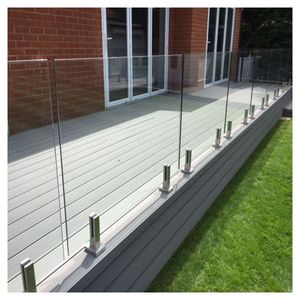
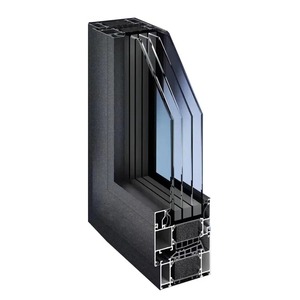
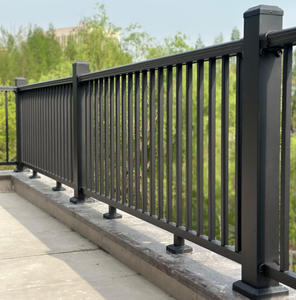
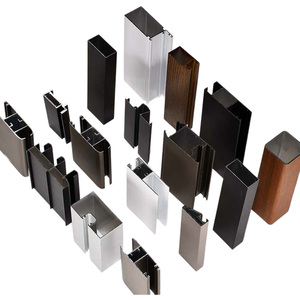
Technical evaluation of architectural glazing demands, Eurocode regulatory alignments, and regional climatic variables influencing balustrade specification across Central Europe.
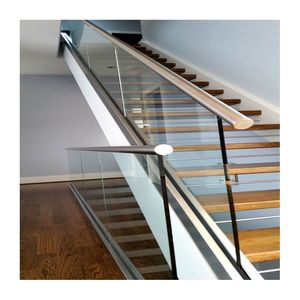
The construction sector across the Slovak Republic (Slovensko) is undergoing an unprecedented architectural modernization. From the ambitious mixed-use waterfront developments along the Danube River in Bratislava (such as Eurovea City and the Sky Park master plan) to high-density commercial hubs in Košice, Žilina, and Trnava, the demand for frameless, high-transparency architectural envelopes has surged. Modern Slovak architects, structural engineers, and general building contractors (generálni dodávatelia stavieb) are progressively phasing out traditional wrought iron, standard mild steel, and obstructive post-and-spindle systems in favor of clean, structural frameless glass balustrades.
However, importing structural glass railing assemblies into Slovakia requires strict adherence to both Pan-European Norms and domestic Slovak National Standards (Slovenské technické normy - STN). Unlike generic interior fittings, exterior and perimeter glass balustrades operate as primary life-safety barriers. They must reliably absorb static horizontal line loads, dynamic wind suction forces, and accidental human impact without compromising the structural integrity of the floor slab or the laminated glass panel. Sourcing directly from an established overseas export manufacturing plant allows Slovak developers to capture substantial cost savings while maintaining rigorous compliance with STN 74 3305 (Protective Railings / Ochranné zábradlia), STN EN 1991-1-1 (Eurocode 1: Actions on Structures), and STN EN 12600 (Impact Testing for Glass in Building).
In accordance with STN 74 3305, all structural glass balustrades installed in public gathering areas, commercial retail spaces, or multi-family residential elevations exceeding a fall hazard of 1.5 meters must utilize laminated safety glass (VSG) composed of chemically or thermally toughened plies (ESG/TVG). In open-edge exterior applications subject to alpine freeze-thaw cycles, standard PVB interlayers are increasingly rejected in favor of rigid ionoplast interlayers (SentryGlas® / SGP) to eliminate edge delamination and catastrophic post-breakage collapse.
Precise structural calculations, deflection limitations, and wind zone micro-climates tailored to Slovak geographical topography.
When engineering structural glass balustrades for export to Slovakia, structural calculations cannot be treated with a one-size-fits-all methodology. The country's diverse topography—ranging from the low-lying Danubian Plains (Podunajská nížina) characterized by sustained, high-velocity wind pressures, to the severe sub-zero alpine conditions of the High and Low Tatras (Vysoké a Nízke Tatry)—dictates uncompromising material selection and profile extrusion standards.
Under Eurocode 1 (EN 1991-1-1 / STN EN 1991-1-1), buildings are categorized by occupancy type, establishing the design horizontal characteristic line load (qk) that the balustrade handrail or top glass edge must resist at a standardized nominal height (typically 1000 mm to 1100 mm from the finished floor level):
Beyond static horizontal loads, structural engineers in Slovakia enforce strict deflection limits (Serviceability Limit State - SLS). The maximum allowable horizontal displacement under service load at the crest of the glass panel is generally restricted to h / 60 or an absolute ceiling of 25 mm, preventing psychological discomfort for building occupants looking down from high-rise parapets.
| Structural System | Primary Alloy / Glass Spec | STN 74 3305 Load Class | Alpine & Lowland Application | Key Advantage |
|---|---|---|---|---|
| Continuous Base Shoe U-Channel | EN AW-6063-T6 / 10+10mm or 12+12mm SGP Laminated | 1.5 kN/m – 3.0 kN/m (Heavy Commercial) | High-rise balconies (Bratislava) & Public Atriums | Zero bottom-glass drilling; uninterrupted linear view; internal drainage integration. |
| Heavy-Duty Friction Spigots | Duplex 2205 / 316L Stainless / 8+8mm or 10+10mm ESG/PVB | 0.5 kN/m – 1.0 kN/m (Residential) | Swimming pools, private garden decks & villa terraces | Rapid surface anchor mounting; allows natural water drainage underneath glass panels. |
| Point-Fixing Standoff Pins | 316 Stainless Steel (Ø50mm / Ø60mm) / 10+10mm ESG | 1.0 kN/m – 1.5 kN/m (Residential / Office) | Staircase flights, internal mezzanines & open voids | Side/fascia mounting maximizes usable floor area on narrow concrete staircases. |
| Slim-Profile Post & Clamp | Anodized Aluminum / 6+6mm or 8+8mm Tempered Glass | 0.5 kN/m – 1.0 kN/m (Medium Duty) | Multi-unit residential renovations & courtyard perimeters | Cost-effective modular installation; versatile infill options. |
Tailored architectural glazing solutions configured for specific structural conditions, microclimates, and Slovak urban planning requirements.
Bratislava experiences significant aerodynamic wind tunneling along the riverbanks of the Danube. High-rise developments require continuous base shoe systems anchor-tested for Wind Zone II and III (STN EN 1991-1-4). We export 6063-T6 aluminum profiles with deep glass embedment depths (up to 120 mm) and custom EPDM/silicone seals that resist high wind-suction forces, mitigating vibration harmonics and howling acoustics.
Luxury hospitality architecture in Poprad, Štrbské Pleso, and Jasná demands balustrades engineered for heavy snow accumulation and ice damming (STN EN 1991-1-3). Wet snow accumulating against glass panels exerts immense lateral hydrostatic pressure. We configure tempered laminated glass utilizing stiff SentryGlas® interlayers, ensuring the panel remains rigid even when ambient temperatures plummet to -25°C.
Slovakia's booming tech centers require expansive, light-flooded indoor public spaces. Frameless glass balustrades in multi-tier atriums require certified 2.0 kN/m to 3.0 kN/m crash barrier load ratings. Our systems integrate discrete slimline stainless-steel top handrails (capping channels) that provide edge protection and redundant load sharing in the unlikely event of single-ply structural failure.
Eliminating delamination, profile oxidation, and fastener failure in extreme continental climates.
Slovakia features a humid continental climate characterized by severe seasonal shifts: summer surface temperatures on exposed south-facing balconies can exceed +55°C (due to direct solar radiation absorption on dark finishes), while winter nights can drop to -20°C or lower. These severe thermal swings cause differential thermal expansion between the aluminum extrusion channel (thermal expansion coefficient α ≈ 23 × 10-6 / K) and the glass panel (α ≈ 8.5 × 10⁻⁶ / K).
Inferior glass balustrade systems imported without engineering oversight frequently suffer from loose clamping wedges, cracked glass bottom corners, or degraded polymer gaskets after only one or two winter seasons. Our factory resolves these structural failures through precision material engineering:
Extrusions are treated with minimum 20–25 μm architectural anodizing or Class 2 Qualicoat architectural powder coatings. This prevents galvanic and pitting corrosion caused by urban road de-icing salts (soli na posyp ciest) carried by wind-borne winter spray across Slovak cities.
For external open-edge glass in Slovakia, we recommend SGP interlayers over standard PVB. SGP is 100 times stiffer and 5 times more tear-resistant than conventional PVB. Crucially, SGP demonstrates near-zero edge moisture absorption, completely eradicating the cloudy white delamination rings common along Slovak mountain balconies.
Standard rubber gaskets harden, shrink, and crack when exposed to sub-zero temperatures. Our export channels incorporate vulcanized, UV-stabilized EPDM clamping gaskets rated for continuous flexibility from -40°C to +120°C, ensuring permanent, non-slackened clamping pressure throughout all seasons.
Bridging overseas manufacturing efficiency with European quality verification, zero-tolerance machining, and specialized export handling.
As an established manufacturer with over 15 years of precision architectural metal and glass production, we provide an integrated, factory-direct supply chain that removes redundant intermediary markups. Our export operations are engineered specifically to meet the high logistical and regulatory expectations of Slovak construction professionals:
Every profile is custom-extruded, CNC cut, and pre-drilled to exact structural layout schedules. Whether projects require curved radius channels, side-fascia mounting, or bespoke floor screed depths, our engineering workshop accommodates non-standard architectural geometry without extended tooling delays.
Every batch of laminated glass and structural aluminum extruded in our facilities is backed by raw material mill test certificates (MTCs), showing mechanical tensile yield strength, elongation percentages, and thermal temper validation compliant with EN 12150 and EN 14449.
Glass sheets are treated with interleaving anti-mildew powder, wrapped in waterproof poly-wrap, and secured inside fumigated IPPC-stamped solid timber end-cap crates. Aluminum channels are packaged in protective PE film and reinforced wooden cases to prevent freight transit damage via Koper or Hamburg ports directly to Slovakia.
Our project management department liaises directly with Slovak structural designers, reviewing BIM/CAD files, offering finite element analysis (FEA) deflection simulation, and preparing complete export declarations (DoP) to ensure smooth customs clearance and rapid site assembly.
Direct technical answers addressing CE marking, building regulations, logistics, drainage, and procurement safeguards.
Yes. All structural railing profiles, laminated glass assemblies, and stainless-steel hardware exported to Slovakia are fabricated in compliance with harmonized European standards (EN 1090-1 for aluminum execution, EN 12600 for pendulum impact resistance, and EN 14449 for laminated architectural safety glass). We issue formal Declarations of Performance (DoP) and CE conformity certificates, enabling Slovak general contractors and site inspectors (stavebný dozor) to approve installations without bureaucratic delays.
In Slovakia's freezing winter climate, water trapped inside an aluminum base shoe will expand by approximately 9% upon freezing, which can generate immense hydraulic pressure capable of fracturing glass panels or blowing out profile walls. Our exterior aluminum channels feature precision-milled drainage slots (odvodňovacie otvory) along the base, paired with directional weep-hole spacers and specialized exterior drainage sub-plates. This ensures all surface runoff and condensation drain rapidly before freezing occurs.
For standard private residential balconies in Slovakia (Category A, 0.5–1.0 kN/m line load), 8+8 mm (17.52 mm) tempered laminated glass is standard. For elevated high-rise residential balconies, alpine wind-exposed chalets, or commercial corridors (Category B/C1, 1.0–1.5 kN/m), we engineer 10+10 mm (21.52 mm) laminated glass with an SGP interlayer. For heavy public spaces, retail shopping centers, and transport facilities (Category C2–C5, 2.0–3.0 kN/m), 12+12 mm (25.52 mm) or 15+15 mm (31.52 mm) tempered laminated glass embedded in heavy-duty structural shoes is mandatory.
Yes. Our manufacturing facility possesses advanced multi-axis CNC machining centers and precision stretch-bending equipment. We fabricate side-mount (fascia/konsolová montáž) channels that preserve slab space, embedded hidden-shoe profiles designed for under-screed insulation integration, and radius-curved balustrades for rounded balcony features commonly specified in contemporary Bratislava villa designs.
Standard fabrication lead time is 18 to 25 working days depending on custom punching, powder coating, and glass lamination specifications. Ocean freight containers are routed either via the Port of Koper (Slovenia) or Port of Hamburg (Germany), followed by dedicated direct rail or truck freight into Slovak logistics hubs (e.g., Bratislava, Žilina, or Košice). Total transit time is typically 28 to 35 days. We provide comprehensive DDP (Delivered Duty Paid) or CIF options including all customs clearance documentation.
We work directly from your architectural DWG/BIM drawings, point-cloud 3D laser survey scans, or verified on-site structural dimensions. Our technical engineering desk verifies concrete structural expansion joint positions, anchor hole distances relative to rebar placement, and slab deflection tolerances before issuing comprehensive shop fabrication drawings for your written sign-off.
Under STN 74 3305, if a balustrade utilizes standard PVB laminated glass, an uninterrupted top handrail or edge-capping channel connected across panels is typically mandatory to provide secondary load transfer should one panel shatter. However, if the balustrade is engineered with structural ionoplast interlayers (SentryGlas® / SGP) and certified through four-sided load calculation, fully frameless handrail-free installations are legally permissible in many residential and semi-commercial settings.
We employ a multi-tier maritime packaging protocol. Aluminum profiles are individually poly-sleeved, padded with high-density EVA shock foam, and bundled in heavy-duty cardboard and timber boxes. Glass panels are separated with non-adhesive micro-porous cork pads, vacuum-sealed with desiccant packs to prevent moisture haze, and enclosed in heavy-duty, certified fumigated plywood crates equipped with steel perimeter band strapping.
Whether you require full container load (FCL) delivery of continuous U-channel profiles for a multi-family development in Bratislava, or custom-engineered balustrades for a commercial center in Košice, our factory project desk provides rapid calculations, test certificates, and sample shipments.