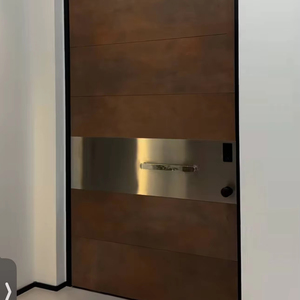
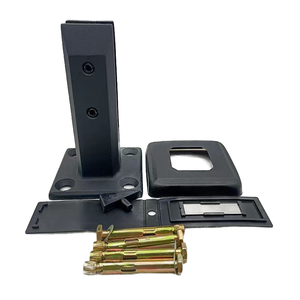
Explore our precision-manufactured building envelopes, heavy-duty stainless steel components, and energy-rated fenestration lines engineered to withstand India’s diverse thermal, seismic, and coastal parameters.
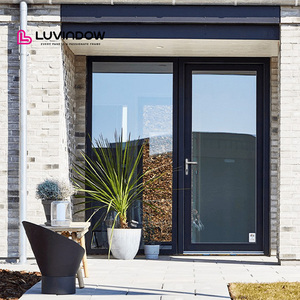
The contemporary Indian real estate sector is witnessing an unprecedented paradigm shift toward structural transparent envelopes and minimalist safety barriers. From the high-velocity cyclonic coastal zones of Mumbai, Chennai, and Visakhapatnam to the intense seismic and high-density vertical skylines of the National Capital Region (NCR), Bengaluru, and Hyderabad, balustrade engineering has evolved from a simple decorative boundary into a critical life-safety structural element.
As a seasoned manufacturer and direct exporter to Indian engineering, procurement, and construction (EPC) conglomerates, architectural firms, and institutional developers, our operations adhere stringently to the structural performance mandates set forth in the National Building Code of India (NBC 2016), IS 875 (Part 3) for wind loads, and IS 2553 (Part 1) for architectural safety glazing. Selecting the appropriate stainless glass railing system requires an integrated understanding of metallurgical chemical composition, anchor pull-out stresses in concrete footings, and glass breakage post-failure retention.
One of the most catastrophic failures in the procurement cycle across Indian coastal developments is the misapplication of standard austenitic stainless steels in marine or severe industrial atmospheres. Corrosion failure in railing hardware is primarily driven by chloride-induced localized breakdown of the chromium-oxide passivation film, leading to rapid pitting, crevice corrosion, and aesthetic tea-staining.
Composition: 18% Cr, 8% Ni. Ideal for dry inland metropolitan regions such as Delhi-NCR, Pune, Hyderabad, and Jaipur. Offers exceptional yield strength and ductility. Must be kept away from chloride atmospheres to prevent surface oxidation.
Composition: 16-18% Cr, 10-14% Ni, 2-3% Mo. The inclusion of molybdenum dramatically elevates resistance to pitting and crevice corrosion. Mandatory for coastal applications within 5 km of the sea (e.g., Marine Drive Mumbai, ECR Chennai).
Composition: 22% Cr, 5% Ni, 3% Mo, 0.18% N. A mixed austenitic-ferritic microstructure delivering double the yield strength of 316 and a Pitting Resistance Equivalent Number (PREN) ≥ 35. Best specified for high-wind oceanfront frameless spigots.
To eliminate surface discoloration and guarantee longevity across Indian tier-1 infrastructure projects, our manufacturing plants utilize automated electrochemical passivation and multi-stage automated orbital mechanical polishing. We offer hairline directional brushed finishes (320-grit) for low reflectivity, mirror-buffed (8K) finishes to inhibit particulate attachment in high-pollution industrial belts, and Physical Vapor Deposition (PVD) titanium coatings in Champagne Gold, Rose Gold, and Matte Black for luxury villa developments.
According to IS 2553 (Part 1): 2018, glass installed in balustrades, balconies, and staircases must qualify as impact-resistant safety glazing. The choice between tempered monolithic glass and laminated glass depends on the fall hazard height and the required post-breakage residual strength:
Monolithic Toughened Glass (10mm, 12mm, 15mm): Subjected to controlled thermal tempering, achieving a surface compressive stress > 90 MPa. While highly resistant to uniform wind loads, monolithic glass presents an evacuation and life-safety hazard if nickel sulfide (NiS) inclusion or corner impact occurs, causing the entire panel to crumble into small dice and leaving the barrier wide open. Thus, its application in Indian multi-story high-rises is increasingly restricted to low-level internal partitions or ground-floor applications.
Laminated Safety Glass (PVB vs. SGP): High-rise residential balustrades (above 3 floors) in Indian metro areas mandatorily dictate laminated safety glass. While Polyvinyl Butyral (PVB) interlayers (e.g., 1.52mm PVB sandwiched between two 6mm or 8mm heat-strengthened glass plies) prevent glass fragmentation from falling, high ambient temperatures (exceeding 44°C in Ahmedabad or Delhi) severely diminish the shear modulus of PVB, causing panels to sag or deform under sustained line loads. For critical cantilevered frameless balustrades, our export division provides structural SentryGlas® (SGP) ionoplast interlayers. SGP is up to 100 times stiffer and 5 times more tear-resistant than conventional PVB, ensuring that even if both glass lites fracture, the balustrade panel remains entirely upright and rigid, acting as an impenetrable safety fence until replacement.
Technical breakdown of structural anchoring, hardware metallurgy, glass sizing, and load capacity compliant with NBC 2016.
| System Configuration | Structural Profile / Hardware | Glass Specification | Design Line Load (NBC 2016) | Anchor Mechanism | Recommended Indian Project Context |
|---|---|---|---|---|---|
| Frameless Continuous Base Shoe | Extruded 6063-T6 Architectural Aluminium / SS 316 Cladding | 12mm Toughened or 17.52mm SGP Laminated | 1.50 kN/m to 3.00 kN/m | M12 Hilti/Fischer Chemical Anchors into M25/M30 Concrete | Ultra-luxury high-rise residential towers (Mumbai, Gurugram, Bengaluru); Grade-A corporate terraces. |
| Heavy-Duty Friction Spigot System | Duplex 2205 / SS 316 Solid Investment Cast Square/Round Spigots | 12mm to 15mm Heat Soaked Monolithic or 13.52mm PVB | 0.75 kN/m to 1.50 kN/m | 4x M10 Expansion / Countersunk Anchors per Spigot base | Coastal private villas (Goa, Alibaug, ECR Chennai); Infinity swimming pool perimeters; Resort balconies. |
| Post & Clamp Balustrade | Grade 304/316 50mm Dia Pipe or 50x50mm RHS Post (2mm Wall) | 8mm to 10mm Clear Toughened Glass with Safety Pins | 0.75 kN/m to 1.00 kN/m | Welded Flange Plate with M10 SS Drop-In Anchors | Commercial office internal stairwells, educational institutions, hospital corridors, suburban apartment blocks. |
| Point-Fixing Side Mount Standoff | Solid SS 316 CNC Machined 50mm Dia Standoffs with EPDM Isolators | 15mm Toughened or 19.52mm Laminated Glass | 1.00 kN/m to 1.50 kN/m | Through-bolt M12 threaded studs with internal chemical mortar | Grand atrium voids, metro station mezzanine parapets, boutique luxury hotel lobbies (Delhi, Mumbai, Kolkata). |
India’s climatic conditions and rapid construction methodologies require bespoke balustrade engineering. Standard generic hardware catalogs cannot withstand the micro-environments of distinct regions. Below is an engineering overview of our localized balustrade applications:
Locations: Mumbai (Worli, Bandra), Kochi, Vizag.
Challenge: Heavy saline moisture, monsoon wind pressures exceeding 2.0 kPa.
Engineered Solution: Floor-recessed continuous aluminum U-channels with marine-grade SS 316L fascia covers and 17.52mm SentryGlas® laminate to guarantee zero structural deflection and anti-pitting longevity.
Locations: Bengaluru (ORR), Gurugram Cyber City, Hyderabad HITEC City.
Challenge: Massive daily human traffic, continuous horizontal line loads (1.5 kN/m).
Engineered Solution: Heavy-gauge AISI 304/316 vertical baluster posts with high-tensile glass glass-to-post clamps, integrated continuous top handrails, and tamper-proof fasteners.
Locations: Delhi Metro, Mumbai Metro, Tier-1/2 Modernized Airports.
Challenge: Crowd crushing loads (3.0 kN/m peak), extreme impact requirements.
Engineered Solution: Stainless steel side-mount point-supported spider brackets combined with 21.52mm thick heat-soaked SGP laminated safety glass certified to zero-fall failure protocols.
1. Strict Enforcement of National Building Code (NBC) 2016: Municipal authorities such as BMC (Mumbai), BBMP (Bengaluru), and DTCP (Haryana) now demand third-party structural stability certificates for exterior balustrades on buildings exceeding 15 meters in height. Facade and balustrade consultants require proof of physical mock-up tests, including dead load, uniformly distributed line-load, and pendular soft-body impact testing in accordance with ASTM E2358 and BS 6180.
2. Rise of Minimalist Concealed Architectural Channels: Architects are systematically replacing conventional stainless post systems with concealed base shoe channels that disappear into the finished floor level (FFL). This affords unobstructed floor-to-ceiling panoramic views, complementing expansive thermal break sliding glass doors and minimalist curtain wall systems.
3. Advanced Metallic PVD Surface Finishes: Standard chrome silver is increasingly being supplanted in premium Indian villas and five-star hospitality projects by luxury PVD-coated finishes. Titanium nitride sputtering technology produces an ultra-hard surface coating that resists UV degradation, abrasion, and tropical humidity while delivering deep bronze, champagne gold, or graphite black aesthetics matching premium window frames.
4. Integration of Sustainable and Low-Carbon Materials: In line with IGBC (Indian Green Building Council) and GRIHA rating systems, developers prioritize balustrade suppliers capable of verifying high post-consumer recycled content in stainless steel and architectural aluminum, backed by rigorous Environmental Product Declarations (EPDs).
With more than 15 years of precision engineering heritage and over 1,200 successful installations worldwide, our manufacturing facilities bridge high-volume industrial scale with stringent bespoke architectural craftsmanship.
Every single heat of stainless steel (304, 316, 2205) is spectrometer-tested with positive material identification (PMI) and accompanied by full EN 10204 3.1 mill test certificates, guaranteeing strict limits on carbon and phosphorus to prevent premature corrosion.
Operating beyond rigid modular catalogs, our computer-controlled five-axis CNC cutting beds and bending lines custom-fabricate balustrade channels, bespoke corner transitions, and radiused curved glass panels directly aligned with specific site layout drawings.
Maritime export to Indian ports (Nhava Sheva, Mundra, Chennai, Kolkata) demands moisture-proof vacuum packing, desiccant liners, and heavy-duty steel-banded fumigated A-frame timber crates designed to withstand monsoon sea transits without oxidation or edge chipping.
Our dedicated engineering support division provides structural CAD cross-sections, 3D BIM models, anchor pull-out calculation packages, and wind-tunnel simulation assistance, facilitating smooth architectural approvals and client sign-offs.
Detailed answers covering customs regulations, structural test methodologies, coastal engineering, and supply chain logistics for Indian port delivery.
Whether you require precision-cast stainless spigots, heavy-duty continuous base shoe channels, or complete hurricane-rated laminated glass systems, our engineering desk is ready to generate CAD sections, load calculations, and FOB/CIF commercial pricing.
Get Catalog