
Explore our certified soundproof window configurations, structural laminated glass systems, and weather-tight architectural envelope components manufactured to European standards for Irish contractors and developers.
For Irish property developers, architectural specifiers, and commercial retrofit contractors, acoustic performance cannot be treated as a generic marketing term. In accordance with BS EN ISO 717-1 and the Irish Building Regulations (Technical Guidance Document Part E - Sound), sound insulation performance must be precisely calculated across low, mid, and high frequency bands.
Standard architectural double glazing often exhibits a severe "coincidence dip"—a frequency drop (typically between 1200 Hz and 2500 Hz) where the wavelength of incident sound in the air matches the bending wave velocity of the glass pane. To eliminate this vulnerability in demanding environments, our manufacturing facility engineers asymmetric glass build-ups paired with dedicated acoustic PVB (Polyvinyl Butyral) interlayers.
By pairing glass panes of differing mass—for instance, an 8.76mm acoustic laminated pane (4mm float + 0.76mm acoustic PVB + 4mm float) with a 16mm warm-edge argon-filled cavity and a 6mm toughened pane—the coincidence frequencies of the two glass panes decouple. This asymmetric structure flattens the acoustic transmission curve, delivering exceptional Rw + Ctr performance against Dublin bus traffic, DART / Luas railway rumbles, and wind turbulence along the Atlantic coastline.
| Glazing Composition | Rw (dB) | Rw + Ctr (dB) | Uw (W/m²K) |
|---|---|---|---|
| 4mm Float + 16Ar + 4mm Float (Baseline) | 31 dB | 26 dB | 1.3 W/m²K |
| 6mm Toughened + 16Ar + 8.76mm Standard Lam | 39 dB | 34 dB | 1.2 W/m²K |
| 8.76mm Sound Control + 16Ar + 6mm Toughened | 43 dB | 38 dB | 1.1 W/m²K |
| 10.76mm Acoustic Lam + 20Ar + 8.76mm Acoustic Lam | 46 dB | 41 dB | 1.0 W/m²K |
| Triple Glazed Ultra-Quiet (Acoustic Lam + Warm-Edge) | 48 dB | 44 dB | 0.79 W/m²K |
Irish geography presents distinct climatic and acoustic challenges—from oceanic gale forces along the Wild Atlantic Way to intense urban transit corridors throughout Dublin, Cork, and Limerick.
Projects located under Fingal County Council flight paths require high decibel attenuation against low-frequency aviation thrusters. Our certified acoustic laminated glazing packages mitigate peak flyover noise, aligning with DAA residential grant criteria and local development acoustic stipulations.
In high-density Dublin residential developments along the Luas Red/Green tracks and Heuston/Connolly rail paths, ground-borne acoustic vibrations and wheel-rail screeching require specialized asymmetric glazing with elastic damping compounds that absorb mechanical resonant vibration.
Coastal installations in Galway, Kerry, Mayo, and Donegal face continuous marine winds, salt spray, and extreme wind-driven rainfall. We manufacture thermal break systems featuring marine-grade Qualicoat Class 2 finishes, heavy-gauge 6063-T6 aluminum, and Class C5 wind resistance ratings.
Urban infill and commercial regenerations in Dublin’s Grand Canal Dock and Cork’s South Docks demand sleek, minimalist sightlines combined with interior acoustic confidentiality. Our acoustic glass partitions and thermally broken facade systems fulfill BREEAM and LEED acoustic targets seamlessly.
Strategic regulatory shifts and sustainable energy mandates are transforming how soundproof windows and building envelopes are specified across the Republic of Ireland.
Historical installations frequently compromised thermal insulation to achieve sound attenuation. Current Irish Nearly Zero Energy Building (NZEB) mandates demand whole-window U-values (Uw) not exceeding 1.2 W/m²K for renovations and 0.8 W/m²K for new builds. Our factories fuse high-performance soft-coat Low-E glass with structural acoustic laminates, satisfying both heat preservation and noise deadening without compromise.
Under the Sustainable Energy Authority of Ireland (SEAI) National Retrofit Scheme, homeowners across Dublin, Cork, and Limerick are replacing aging single and double glazed units. Specifiers are increasingly driving demand for "dual-action" windows—systems that enhance residential Building Energy Ratings (BER) while creating a sanctuary from escalating city transit noise pollution.
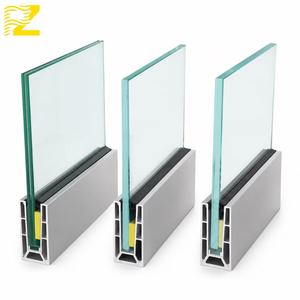
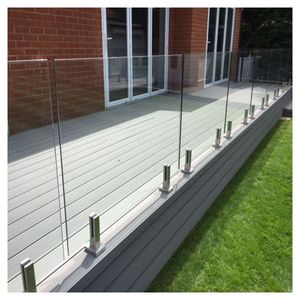
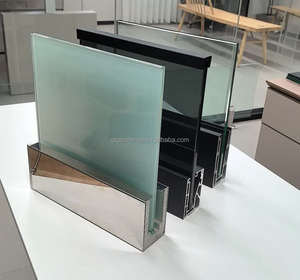
Modern Irish high-density apartments use glass-enclosed balconies and heavy structural balustrades as acoustic buffer zones. By positioning 8+8mm or 10+10mm acoustic laminated glass railing systems on external elevations, incoming decibels are diverted before reaching window surfaces, substantially improving indoor living comfort and tenant retention rates.
Drawing on over 15 years of dedicated architectural extrusion and glass processing excellence, our factory bridges high-capacity automated production with stringent European conformity.
We extrude only virgin 6063-T6 aluminum alloys, ensuring high tensile strength, dimensional stability against thermal expansion, and seamless surface finish under marine exposure.
Using European double-mitre computerized saws and multi-axis CNC machining centers, corner joints and hardware cut-outs maintain tolerances under 0.2mm, preventing air and sound leaks.
Our autonomous glass processing facility features climate-controlled Class 10,000 cleanrooms and high-pressure autoclaves to eliminate delamination, bubbles, and visual haze in acoustic interlayers.
All fenestration elements are packed in moisture-sealed steel/plywood export A-frames with desiccant protection, delivering direct to Dublin Port or Port of Cork without handling transit defects.
Clear, engineering-backed answers addressing compliance, weather resistance, delivery logistics, and performance specifications for the Irish market.
Direct B2B supply for Irish architectural practices, property developers, and window installation contractors. Send your schedules, window elevations, or acoustic engineering briefs for a competitive factory-direct estimate.
Get a Quote