
Precision-manufactured glass panels, marine-grade spigots, solar-integrated hardware, and aluminum structural channels tailored for the Australian architectural environment.
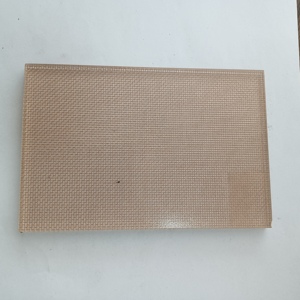
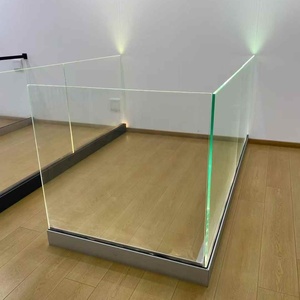
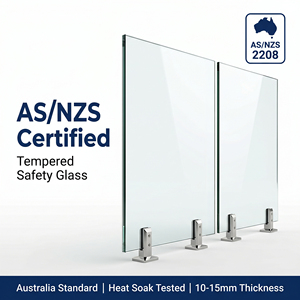
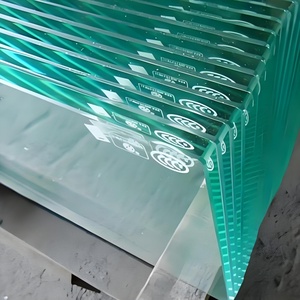
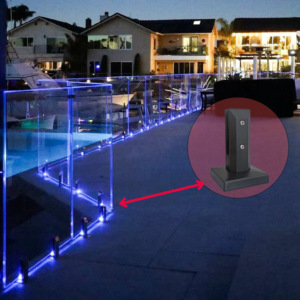
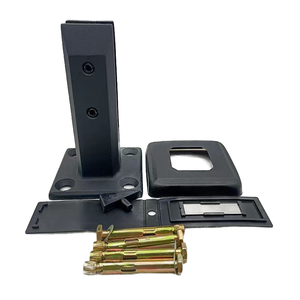
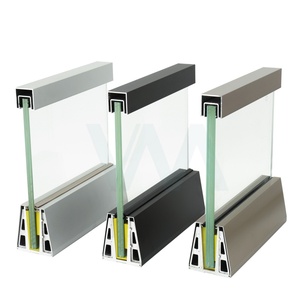
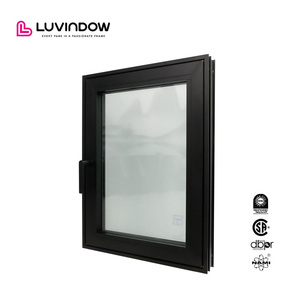
Sourcing glass pool fencing directly from offshore manufacturing hubs represents a transformative supply chain optimization for Australian commercial builders, civil engineering contractors, glass merchants, and pool builders. However, the Australian regulatory framework governed by the National Construction Code (NCC 2022) is among the most demanding globally. Procuring architectural glass requires uncompromising adherence to AS/NZS 2208:1996 (Safety Glazing Materials in Buildings), AS 1926.1:2012 (Swimming Pool Safety - Safety Barriers for Swimming Pools), and AS 1288:2021 (Glass in Buildings - Selection and Installation).
In Australia, a pool barrier is not merely an aesthetic perimeter; it is a life-safety containment mechanism mandated by municipal councils across New South Wales (NSW Child Safety Legislation), Queensland (QBCC Barrier Standards), Victoria (VBA Pool Regulations), and Western Australia. Substandard imported glass featuring uncontrolled roller-wave distortion, edge flaking, residual surface compression below 69 MPa, or undocumented resin interlayers will inevitably fail mandatory site inspections conducted by accredited private certifiers. This failure exposes builders to severe statutory non-compliance, project occupancy certificate delays, and costly retrospective remediation.
As an engineering-driven glass fabricator and industrial exporter with over 15 years of technical manufacturing heritage, our facilities manufacture monolithic toughened safety panels, heat-strengthened glass, and advanced SentryGlas (SGP) laminated systems directly conforming to Australian wind loads (AS/NZS 1170.2) and soft/hard body human impact tests. Each batch undergoes rigorous NATA-traceable testing protocols before shipping out of our automated cleanrooms.
Comparative technical breakdown of monolithic, SGP laminated, and hardware alloy configurations for certified pool barriers.
| Glazing / Hardware Tier | Standard Thickness | Primary Application Zone | AS Compliance Baseline | Tensile / Mechanical Capacity | Salt & Marine Resistance |
|---|---|---|---|---|---|
| Monolithic Toughened Glass | 12mm Grade A Safety Glass | Standard residential ground pools | AS/NZS 2208, AS 1926.1 | Surface Compression ≥ 90 MPa | Resistant to pool chlorine / UV |
| SentryGlas (SGP) Laminated | 17.52mm (8+1.52SGP+8) | Balustrade/pool combos over 1m drop | AS 1288:2021 Table 5.1 | Post-breakage structural retention | Zero delamination under marine mist |
| Cast Duplex 2205 Spigots | Friction-fit core drill / base plate | Coastal pool perimeters (< 1km shore) | AS 1926.1 Gate & Spigot shear | Yield Strength ≥ 450 MPa | PREn ≥ 35 (Immune to tea staining) |
| 6063-T6 Structural U-Channel | Continuous structural extrusion | Modern flush in-ground installations | AS 1170.2 Wind Category B/C | Ultimate Tensile ≥ 205 MPa | 25-micron Architectural Anodizing |
| Self-Closing Soft-Close Hinges | Hydraulic adjustable damping | Safety gates (Child-proof access) | AS 1926.1 latching force < 50N | Exceeds 50,000 cycle durability | Grade 316 / Duplex sealed piston |
Australian geography ranges from cyclonic coastal plains to arid inland tablelands. Our factory customizes structural configurations to withstand precise regional stressors.
High atmospheric chloride deposition, prevailing sea sprays, and wind-driven wave aerosols cause accelerated galvanic corrosion and unsightly tea staining on conventional steel. We mandate Duplex 2205 cast spigots and factory-bonded hydrophobic nano-coatings to prevent pitting and mineral calcification.
Properties located in Wind Region C and Region D (as categorized under AS/NZS 1170.2) experience immense cyclonic velocity pressures. We engineer heavy-gauge 15mm toughened and 17.52mm SGP structural laminates anchored via continuous deep aluminum channels capable of resisting cyclical wind pressures up to 4.2 kPa.
Where pool installations sit adjacent to elevated retaining walls or rooftop decks with a fall exceeding 1,000mm, NCC regulations dictate non-negotiable balustrade safety barriers. Our interlayered architectural systems eliminate the visual intrusion of a continuous top handrail while maintaining post-failure barrier containment.
Commercial hospitality venues require heavy-traffic mitigation, anti-entrapment latch geometry, and zero-maintenance child safety. Our factory delivers self-closing hydraulic damped soft-close hinges and anti-climb gate latch alignments passing rigorous 50,000-cycle continuous operational testing.
Technological disruption, strict sustainability directives, and aesthetic shifts toward uncompromising minimalism dominate Australian project specifications.
Australian architects are abandoning bulky stainless steel top caps. Rigid ionoplast SentryGlas interlayers provide up to 5 times the tear strength and 100 times the rigidity of conventional PVB, ensuring structural certification as an unobstructed frameless pool-balustrade barrier without an auxiliary top rail.
Moving beyond chrome and electroplating, high-spec Australian homes demand Physical Vapor Deposition (PVD) finishes. Our factory applies atomic-level PVD coatings in Matte Black, Brushed Gunmetal, and Warm Brushed Brass, achieving a surface hardness surpassing 2,000 HV and over 3,000 hours in ASTM B117 salt fog chambers.
Child safety compliance is moving into the digital era. Emerging trends feature concealed electronic sensors inside stainless pool gate latches, alerting homeowners via smart home systems if a pool gate remains ajar or if an unlatched child-breach condition occurs.
Standard float glass displays a distinct greenish tint caused by ferric oxide impurities. Australian luxury builds specify ultra-clear low-iron glass (iron content < 100 ppm) with a 91.5% light transmittance, offering water clarity and unblemished poolside landscaping vistas.
Direct answers for project certifiers, quantity surveyors, facade consultants, and volume importers regarding Australian glass pool fencing regulations.
To achieve mandatory Form 15 (Design Certification) and Form 16 (Inspection/Installation sign-off), Australian private building certifiers mandate three structural proofs: First, each glass panel must bear an indelible, permanent ceramic frit or laser-etched stamp confirming compliance with AS/NZS 2208:1996 along with the factory’s unique license identification number. Second, the consignment must be accompanied by comprehensive NATA-accredited mechanical test reports verifying impact, fragmentation, and bending strength. Third, structural engineering computation certificates must demonstrate that the glass and spigot combination satisfies AS 1170.1 / AS 1170.2 live load and wind load criteria. Our export division supplies comprehensive, pre-approved documentation packages with every shipping container.
While Grade 316 stainless steel was historically common, Australia’s combination of high UV indices, coastal chlorine drift, and salt-laden sea air regularly induces "tea staining" (micro-pitting and iron oxide discoloration) on 316 surfaces within 6 to 12 months. Duplex 2205 (UNS S32205/EN 1.4462) features a dual austenitic-ferritic microstructure with 22% Chromium, 5% Nickel, 3% Molybdenum, and nitrogen additions, yielding a Pitting Resistance Equivalent Number (PREn) ≥ 35 compared to only 23–25 for 316. Furthermore, Duplex 2205 exhibits double the yield strength (450 MPa vs. 205 MPa), providing enhanced clamping rigidity against high lateral impact loads on 12mm monolithic glass without bracket deformation.
Under AS 1926.1:2012, pool fence parameters are strictly enforced: The vertical barrier height must measure no less than 1,200mm from the finished ground surface (FGL) outside the pool enclosure. The maximum permissible gap between the bottom of the glass panel and the finished floor is 100mm. The horizontal clearance between adjacent glass panels must not exceed 100mm (standard industry practice maintains 20mm–35mm spacing to prevent juvenile foot holds). Gates must open outwards (away from the pool water), be fitted with a self-closing latching device located at least 1,500mm above ground level (or shielded inside at 1,200mm), and close reliably from any open position, including rest against the latch post.
Spontaneous glass rupture in toughened glass is predominantly triggered by sub-microscopic Nickel Sulfide (NiS) inclusions. When float glass is rapidly quenched during thermal tempering, microscopic NiS particles freeze in a high-temperature alpha phase. Over time, particularly under the intense thermal cycling of the Australian sun, these inclusions expand by approximately 4% as they transition to the stable beta phase, creating localized internal stresses that shatter the panel. Our factory conducts rigorous Heat Soak Testing in compliance with EN 14179-1 / AS 1288 Annex E, holding tempered panels at 290°C ± 10°C for a certified soak duration to prematurely induce failure in compromised glass at the factory, eliminating on-site failure risks.
Yes, provided the substructure is engineered to meet AS 1170.1 structural loading tables. Standard timber floorboards alone cannot support the overturning point-moment generated by a 1200mm frameless glass panel under wind load. Installation requires heavy-duty timber blocking (double or triple 200x50mm structural treated pine/hardwood joists) directly underneath each spigot location. Base-plate spigots are fastened using structural Grade 316 / Duplex M10 or M12 coach screws or high-tensile threaded through-bolts with backing plates beneath the joists. Our engineering department supplies exact framing schematics and point-load reaction data to assist Australian structural engineers in verifying timber framing details.
Importing structural building materials through the Australian Border Force (ABF) and the Department of Agriculture, Fisheries and Forestry (DAFF) involves stringent compliance protocols. All timber packing crates must be manufactured from heat-treated solid timber or engineered plywood bearing authentic ISPM 15 stamps with accompanying fumigation/treatment certificates to bypass mandatory biosecurity quarantine hold-ups. Glass shipments must have correct Australian Harmonized Tariff codes (HTS 7007.19 for toughened glass, 7007.29 for laminated glass) with Certificate of Origin documentation to claim preferential tariff treatments where applicable. Our experienced export team manages full CIF/FOB export clearance logistics, ensuring swift processing through Brisbane, Sydney, Melbourne, Adelaide, and Fremantle ports.
Containerized glass maritime shipping demands specialized industrial packing methodologies. Each panel is separated by high-density cork pads and EVA corner protectors to cushion against dynamic vibration. Panels are then secured into robust, heavy-duty enclosed end-cap or A-frame plywood timber crates engineered with internal strapping bands. Crates are loaded into dry ocean containers using heavy-duty timber shoring, air dunnage bags, and heavy-gauge steel bracing to prevent container sway and load-shift during ocean transit. Our factory boasts an ocean transit breakage claim rate below 0.08% over more than a decade of containerized Australian exports.
Jobsite downtime translates directly to lost labor profits for Australian pool builders. Our facilities employ industrial CNC horizontal five-axis machining centers and waterjet cutters calibrated to precise dimensional tolerances of ±0.5mm. Every latch cutout, hinge recess, radiused safety corner, and polished edge profile (flat polished with 2mm arris) is executed before the glass enters the tempering furnace. This precision guarantees that when hardware arrives on site, hinge cutouts align perfectly with matching gate panels, eliminating the need for hazardous site modifications or structural re-glazing.
Decades of industrial fabrication excellence, deep metal-and-glass integration, and unyielding quality controls built for worldwide commercial exports.
Founded on comprehensive glass cutting, automated assembly, and high-precision architectural profile engineering, our manufacturing plants handle raw glass processing and precision profile extrusions completely in-house. We maintain complete vertical control over cutting tolerances, roller wave compression, and edge polishing, eliminating the risks inherent in third-party sourcing.
Quality assurance is verified by calibrated metrology labs. Our technicians perform continuous automated stress polariscope evaluations, hard-body drop tests (dropping a 45kg impact sphere from 1,200mm), and mandatory fragmentation tests verifying greater than 40 granular particles within a 50x50mm square, ensuring total alignment with Australian safety benchmarks.
Beyond glass processing, our metal fabrication lines encompass certified aluminum profile extrusion (utilizing premier virgin 6063 architectural billets) and high-density precision investment casting for Duplex 2205 components. Every batch is spectrographically analyzed to ensure true molybdenum and nickel alloy content, resisting pitting even in demanding marine environments.
Partner directly with an established glass fencing exporter. Whether you require customized FCL shipping schedules for regional distribution centers across Sydney, Melbourne, and Brisbane, or bespoke CNC glass specifications for prestige architectural developments, our engineering desk delivers precision, compliance, and genuine mill-direct commercial savings.