
Engineered for high-altitude barometric stability, severe seismic flexure under NTC-CDMX norms, and rigorous sound damping along transit arteries. Review our verified export-grade product portfolio below.
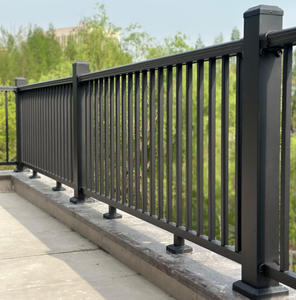
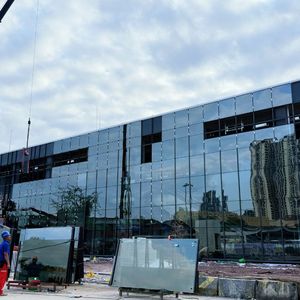
Altitude Barometric Equalization
Urban Acoustic Attenuation
Seismic Drift Resistance Compliant
Thermal Envelope Efficiency (W/m²·K)
Exporting double glazed units to Mexico City is not merely a matter of dimensional fabrication. The Valley of Mexico presents a rigorous triumvirate of physical challenges: high altitude barometric pressure, volatile seismic subsoil amplification, and acute acoustic pollution from dense urban mobility.
Standard hermetic double-glazed units manufactured at low-altitude or sea-level ports face severe internal gas expansion when shipped to Mexico City (atmospheric pressure approx. 77.4 kPa). Unmitigated, this differential causes outward optical convex distortion, structural seal shearing, and premature seal failure. Our factory equips all CDMX-bound units with calibrated stainless capillary breathing tubes (tubos capilares) or active equilibrium valves, factory-crimped or sealed on site upon altitude equilibration to maintain structural planarity.
Mexico City sits over lacustrine clay beds (Zone III) susceptible to long-period earthquake wave amplification. Fenestration systems must absorb substantial lateral interstory drift (γ ≥ 0.012 to 0.015) without glass-to-frame edge contact. Our OEM profiles integrate deep glass pocket depths (25mm minimum), structural silicone secondary edge seals, and custom co-extruded EPDM setting blocks that decouple seismic frame distortion from the insulated glass panel, preventing catastrophic fracture.
Avenue noise along Periférico, Insurgentes, and Circuito Interior regularly exceeds 82 dBA. Symmetrical IGUs (e.g., 6mm + 12A + 6mm) exhibit critical coincidence frequency dips where traffic rumbles easily penetrate. We manufacture asymmetric architectural configurations—such as 8mm Low-E outer pane + 16mm Argon spacer + 6.76mm acoustic PVB/SentryGlas laminated inner pane—achieving lab-certified STC ratings above 44 dB to secure quiet luxury indoors.
CDMX receives intense ultraviolet solar irradiance due to reduced atmospheric filtering at 2.2km above sea level, paired with sharp diurnal temperature drops at night. We apply magnetron sputtering dual-silver and triple-silver Low-E coatings that drop Solar Heat Gain Coefficients (SHGC) down to 0.24 while maximizing Visible Light Transmission (VLT > 65%), matching NOM-008-ENER and NOM-020-ENER guidelines for energy-efficient commercial and residential building envelopes.
| Performance Characteristic | Standard Low-Cost Windows | OEM/ODM CDMX-Targeted Engineering | Local Mexico City Advantage |
|---|---|---|---|
| Barometric Pressure Equalization | Factory hermetically sealed at sea level without valves | Equipped with capillary breathing tubes & altitude valves | Zero pillowing or seal rupture at 2,240m |
| Seismic Displacement Tolerance | Shallow glazing pocket (< 15mm), rigid glazing beads | Deep 25mm pocket with dynamic EPDM gaskets & drift clips | Full compliance with NTC-CDMX 2023 |
| Acoustic Isolation (Urban Transit) | Symmetric 5mm + 9A + 5mm (STC ~29 dB) | Asymmetric 8mm Tempered + 16A + 8.76mm Acoustic Laminated (STC ≥ 43 dB) | Eliminates Periférico / Reforma low noise |
| Thermal Transmittance (U-Value) | Non-thermal break aluminum (U ≥ 4.8 W/m²·K) | Polyamide PA66GF25 thermal barrier (U ≤ 1.4 W/m²·K) | NOM-020-ENER-2011 compliant (LEED points) |
| Solar Heat Gain Control (SHGC) | Clear float glass (SHGC ~0.78) | Triple-Silver Magnetron Sputtered Low-E (SHGC ≤ 0.26) | Cuts CDMX HVAC mechanical loads by 42% |
From modern verticality in Santa Fe to historical conservation zones in Roma Norte, architectural demands vary drastically across the delegaciones of Mexico City. Discover how our customizable OEM/ODM assemblies integrate seamlessly.
Subject to severe windward pressures through canyon winds and high seismic vulnerability. Demands heavy-duty unitized structural curtain walls and ultra-thick thermal break profiles capable of carrying jumbo double glazed units up to 3.8m floor-to-ceiling heights without structural deflection.
Architects require ultra-slim sightlines that respect early 20th-century French and Art Deco architectural envelopes while delivering world-class acoustic insulation against dense cafe and nightlife noise. Custom minimalist thermally broken steel-look aluminum windows preserve heritage geometry.
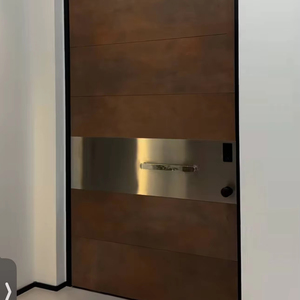
Characterized by expansive seamless indoor-outdoor living requirements. Large multi-track motorized sliding systems and pivot entrance doors with recessed floor tracks, integrated capillary equalizers, and marine-grade anodized or powder-coated finishes engineered to resist high UV degradation.
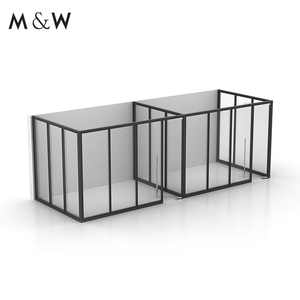
Demands stringent LEED Gold and EDGE zero-carbon envelope qualifications. Requires modular acoustic office partitions, fire-rated glass spandrels, and high-performance double glazed storefront configurations delivering total solar rejection and rapid installation schedules to match aggressive developer timelines.
Understanding regulatory enforcement, corporate decarbonization targets, and the nearshoring manufacturing influx reshaping fenestration procurement in central Mexico.
Mexico's Energy Regulatory Commission (CONUEE) has intensified compliance checks under NOM-020-ENER-2011 (energy envelope calculation for residential buildings) and NOM-008-ENER-2001 (non-residential). Outdated single glazed and uninsulated aluminum frames are being rapidly eliminated from developer blueprints in favor of verified thermal-break systems that reduce building cooling loads by up to 45%.
The relocation of international automotive, tech, and aerospace headquarters into Mexico has triggered an influx of multinational executives into CDMX neighborhoods like Cuauhtémoc, Miguel Hidalgo, and Álvaro Obregón. Institutional developers (FIBRAs) are mandating European-spec acoustic and thermal double glazing as a core differentiator to secure premium rental yields and long-term asset values.
Institutional capital and Mexican REITs require third-party environmental validation. Our factory provides complete Environmental Product Declarations (EPD), verified U-values, and recycled-content documentation for 6063 virgin-grade aluminum extrusions, directly empowering general contractors to claim essential credits under LEED v4 Material & Resources and Energy & Atmosphere categories.
As a specialized OEM/ODM fenestration manufacturer with over 15 years of international project delivery, our manufacturing lines bridge custom architectural designs with industrial-scale precision. We provide end-to-end processing from primary 6063-T6 aluminum extrusion, precision thermal break crimping, automated IGU assembly with warm-edge spacers, to laser-checked pre-assembly.
Every batch destined for the Mexican market undergoes rigorous optical distortion inspection via laser interferometry, secondary seal adhesion peel testing, and helium leak detection for argon-filled insulated glass units.
Direct Maritime Routes: Door-to-Port shipping to Puerto de Manzanillo (Pacific) and Veracruz (Gulf) with bonded logistics forwarding directly to your job site in Mexico City.
Direct, transparent answers regarding customs importation, altitude specifications, seismic warranties, minimum order quantities, and on-site alignment.
We install surgical-grade stainless steel capillary breathing tubes (tubos de compensación barométrica) or dynamic pressure relief valves directly through the secondary silicone seal during manufacturing. These tubes allow internal air or argon pressure to equalize safely as the container ascends from the sea-level port of Manzanillo or Veracruz up into the Valley of Mexico. Once on site in CDMX, the tubes are either crimped and sealed with structural sealant or regulated to maintain flat optical reflection.
Yes. In full accordance with the Reglamento de Construcciones para el Distrito Federal (Normas Técnicas Complementarias para Diseño por Sismo), our framing profiles are engineered with deep glass edge engagement (edge clearance ≥ 12mm; pocket depth ≥ 25mm). Coupled with high-elasticity silicone wet-glazing or vulcanized EPDM gaskets, our systems absorb interstory drift lateral movements of over 1.5% without frame binding or glass pane fracturing.
Products are shipped under Incoterms (CIF Manzanillo/Veracruz or DDP Mexico City). As the buyer or importing general contractor, shipments clear Mexican customs under HS Code 7610.10 (Aluminum doors, windows, and frames) using an authorized Mexican customs broker (Agente Aduanal) and Padrón de Importadores. We provide complete documentation: commercial invoice in English/Spanish, certified packing list, Bill of Lading (BL), mill test certificates, and Certificate of Origin.
Absolutely. Over 60% of our architectural output is custom OEM/ODM production. If our catalog of over 400 existing aluminum extrusion dies does not match your architectural vision, our tooling facility creates custom extrusion dies within 12 to 16 days. We work directly with AutoCAD, Revit, and BIM models to guarantee millimeter-accurate fabrication tolerances.
For high-noise transit corridors exceeding 80 dBA, we specify an asymmetric laminated double-glazed composition: 8mm tempered Low-E exterior pane + 16mm warm-edge spacer filled with 90% Argon gas + 8.76mm acoustic PVB (or 1.52mm SentryGlas) interior pane. This configuration achieves an acoustic rating of STC 44 to 46 dB, mitigating both low-frequency bus rumbles and high-frequency vehicle sirens.
At 2,240m elevation, UV radiation degrades sub-standard coatings rapidly. We use certified architectural powder coatings from AkzoNobel or PPG (conforming to AAMA 2604 and 2605 standards) and high-thickness architectural anodizing (20 to 25 microns). These finishes carry a 15 to 25-year warranty against chalking, fading, peeling, and UV degradation under intense Mexican solar exposure.
Standard fabrication lead time is 25 to 35 business days from approved shop drawings and hardware sign-off. Maritime transit from major export hub ports to Puerto de Manzanillo typically takes 18 to 22 days, followed by 3 to 5 days for customs clearance and bonded rail or truck transit directly to Mexico City metropolitan distribution yards or site staging zones.
We utilize reinforced, fumigated solid timber crates and heavy-duty steel A-frames custom welded to 40-foot HQ shipping container dimensions. Glass panels are separated by anti-vibration rubber shims, wrapped in moisture-resistant polyethylene wrap with desiccants, and braced with high-tensile steel banding to resist pitch-and-roll dynamic forces during maritime transit.
Accelerate your project cycle, eliminate altitude seal failures, and secure competitive direct-factory pricing for your residential or commercial developments in Mexico City.