
Direct factory production lines for Brazilian building contractors, window fabricators (fabricantes de esquadrias), and commercial curtain wall installers. Available in 6000-series structural alloys with custom cut-to-length CNC capabilities.
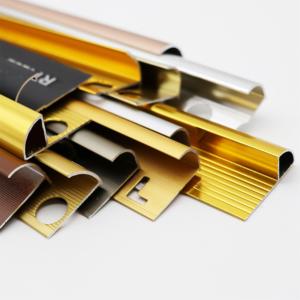
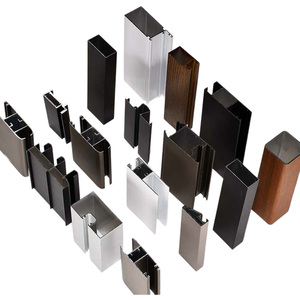
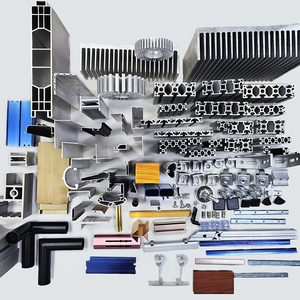
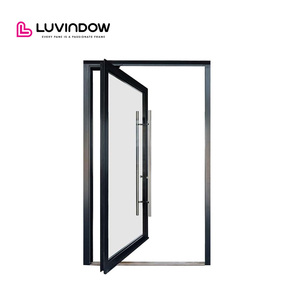
Brazil presents a highly distinct fenestration environment ranging from aggressive South Atlantic coastal salinity to extreme tropical downpours and hyper-dense urban wind pressure zones. Our OEM/ODM profile systems are engineered specifically to overcome these environmental and structural challenges.
Coastal development corridors across São Paulo state (Santos, Guarujá, Litoral Norte), Rio de Janeiro (Barra da Tijuca, Niterói), and the bustling luxury skyline of Balneário Camboriú in Santa Catarina endure relentless marine microclimates characterized by high humidity, salt spray, and temperatures frequently exceeding 38°C. Conventional architectural extrusions suffer from micro-pitting and premature coating failure within months if the substrate preparation and surface protection fall short of international standard thresholds.
To directly address this, our manufacturing facilities produce extruded profiles verified under ABNT NBR 12609 (anodized aluminium for architectural use) and ABNT NBR 14125 (electrostatic thermosetting powder coatings). For coastal installations, we configure profiles with minimum 20–25µm Class A25 anodic oxidation films or Qualicoat Seaside-grade fluoropolymer (PVDF) and TGIC-free architectural polyesters. This metallurgic control suppresses galvanic reaction, stops filiform corrosion along profile edges, and prevents chalking induced by harsh Southern Hemisphere UV radiation.
The Brazilian architectural window and door sector has steadily shifted away from traditional, lightweight economy extrusions (such as generic Linha 25 or outdated Linha Suprema sections) toward heavy-duty, clean-line structural systems. Discerning engineering contractors demand profiles compatible with high-capacity European-style multi-point hardware, concealed European grooves (Canal Europeu), and frameless flush integrations popular in high-end projects designed by top Brazilian architectural practices.
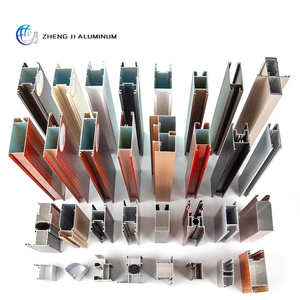
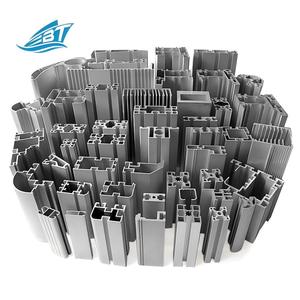
Our OEM/ODM factory lines support Brazilian systemic standards with customized dies matching both standard and bespoke local profiles:
By controlling extrusion tolerances within ±0.15mm (conforming to EN 755-9 and ASTM B221), we guarantee that Brazilian window fabricators experience rapid, zero-gap mitre corner crimping (cravamento de cantoneiras) and flawless perimeter EPDM gasket compression on the assembly floor.
Balneário Camboriú, Santos, and Fortaleza skyline residential towers requiring wind-pressure load certifications, multi-point interlocks, and 25µm anodized profiles proofed against persistent Atlantic salt fog.
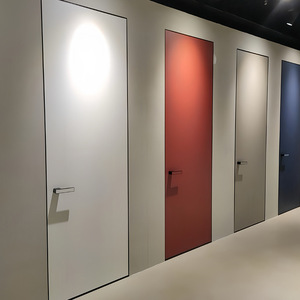
High Wind Load / Severe MarineExclusive gated communities in Alphaville (Barueri/Campinas) and beachfront villas in Trancoso and Angra dos Reis demanding monumental pivot doors, concealed invisible frames, and seamless minimalist aesthetics.
Architectural Minimalist LuxuryHigh-traffic public entrances, glass store fronts, and interior modular acoustic partitions across São Paulo, Belo Horizonte, and Brasília demanding thermal breaks and ABNT NBR 15575 acoustic compliance.
Acoustic & Heavy-Traffic DurabilityFull traceability from 99.7% virgin A00 aluminium ingots to precision billet casting, isothermal extrusion, automated quenching, and artificial aging furnaces.
| Alloy & Temper | Tensile Strength (Rm MPa) | Yield Strength (Rp0.2 MPa) | Elongation (A50 mm %) | Typical Brazilian Application Scope | Standard Certifications |
|---|---|---|---|---|---|
| 6060-T5 / T6 | 160 – 215 MPa | 120 – 160 MPa | ≥ 8% | Complex architectural trims, tile edging, interior partition mullions | ASTM B221, EN 573-3 |
| 6063-T5 | ≥ 175 MPa | ≥ 130 MPa | ≥ 8% | Standard casement window sashes, lightweight residential sliding doors | ABNT NBR 7000, GB/T 5237 |
| 6063-T6 | ≥ 215 MPa | ≥ 170 MPa | ≥ 10% | High-rise sliding door frames, structural interlocks, pivot door frames | ABNT NBR 10821, Qualicoat |
| 6005A-T6 | ≥ 270 MPa | ≥ 225 MPa | ≥ 8% | Curtain wall transoms, structural glass fins, heavy commercial framing | EN 755-2, Qualanod |
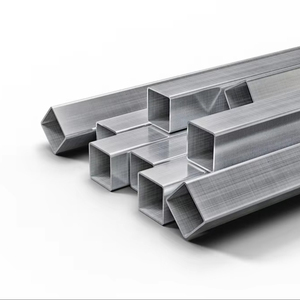
| 6061-T6 | ≥ 290 MPa | ≥ 240 MPa | ≥ 10% | Extreme load mullions, industrial square hollow sections, architectural brackets | ASTM B241, ISO 6362 |
For Brazilian fenestration fabricators, surface failure is the single greatest cause of warranty disputes. Our finishing lines are fully automated to guarantee uniform chemical etching and continuous seal hydration:
Every extrusion die engineered at our facility undergoes computer-modeled rheological flow simulation to guarantee that extrusion pressure is uniformly distributed across asymmetrical thin walls and screw bosses. This eliminates internal tensile residual stress that leads to profile twisting or bow deformation after cooling.
Our profile straightness tolerance is maintained at ≤ 1.0 mm per meter, with total angularity variation held within ±1°. For Brazilian system assemblers utilizing high-speed automatic corner-crimping machinery (cravadeiras pneumáticas) or automated CNC cutting centers, these tight metallurgical tolerances prevent blade jamming, prevent burr formation, and ensure tight mechanical interlock joins without requiring manual post-machining rectification.
Analysis from our B2B market intelligence desk highlighting the technical transitions in Brazilian real estate, facade engineering, and residential architecture.
Brazilian luxury projects increasingly reject bulky 80mm face widths in favor of ultra-narrow central interlocks of just 18mm to 25mm. Our specialized 6063-T6 slim sliding profiles accommodate glass loads up to 400kg per leaf while concealing 95% of the outer perimeter frame inside ceiling and floor reveals.
With Brazilian building standard NBR 15575 strictly regulating acoustic insulation in multi-family dwellings, window frames must prevent acoustic leakage along perimeter joints. Our profiles incorporate dual-gasket multi-cavity EPDM seals and polyamide thermal break strips (RPT) delivering sound attenuation exceeding 34 dB.
While historically overlooked in tropical regions, thermal break systems (Poliamida RPT) are surging in southern Brazil (Curitiba, Porto Alegre, Serra Gaúcha) and in energy-efficient LEED-certified corporate skyscrapers across Rio and São Paulo to dramatically lower air-conditioning thermal bridge loads.
Over the last decade, Brazilian window and door fabrication was dominated by standard off-the-shelf local profile catalogs. However, the consolidation of prominent Brazilian architectural developers (such as Cyrela, JHSF, Even, and Gafisa) and the explosion of luxury vertical residences in coastal Santa Catarina have elevated consumer expectations. End-users now insist on effortless rolling operation, zero sill obstructions, concealed motorized actuators, and floor-to-ceiling glass expanses measuring 3.2 to 4.5 meters in height.
Meeting these design mandates using generic profiles is structurally impossible: the interlock mullions deflect excessively, leading to air infiltration, whistling noises during windstorms, and roller track binding. Our OEM/ODM die-customization program empowers Brazilian facade engineering companies to develop their own exclusive patented profiles. Fabricators can supply proprietary systems with their brand logo debossed into the extrusion cavity, bypassing intermediary distributor margins while delivering bespoke performance.
Authoritative operational details addressing customs clearance, Mercosul classifications, tooling investments, packaging protocols, and container consolidation.
Our extruded profiles are customarily classified under NCM 7604.21.00 (Perfis ocos de ligas de alumínio / Hollow profiles of aluminium alloys) or NCM 7604.29.00 (Outros perfis de ligas de alumínio / Solid shapes). For pre-machined, punched, or assembled framing components, classification under NCM 7610.10.00 (Portas, janelas e seus caixilhos, alizares e soleiras) is utilized. We supply full technical datasheets and commercial invoices configured to streamline your RADAR Siscomex import license process.
Ocean transit from Chinese ports to Brazilian ports (Santos, Paranaguá, Itapoá, Navegantes) typically requires 32 to 45 days through equatorial temperature swings. We mitigate condensation risk by applying low-tack protective PE film on all exposed faces, wrapping profile bundles in high-density VCI (Vapor Corrosion Inhibitor) paper, inserting heavy-duty silica gel desiccant packs, and securing bundles in fully fumigated ISPM-15 compliant wooden cases or steel reinforced racks to prevent transit vibration damage.
For bespoke profile systems (custom Linha Minimalista, proprietary curtain wall sections), high-precision H13 steel extrusion dies are engineered and CNC milled within 10 to 14 working days. We produce a physical cross-section sample and airmail it via DHL/FedEx to your Brazilian engineering team along with an optical CMM dimension inspection report for rapid sign-off. Tooling fees are refunded in full once order volumes cross predetermined container tonnage thresholds.
Yes. Our standard and custom dies faithfully integrate standard European Groove (Canal Europeu / Euro-groove Tipo 1 and Tipo 2) geometry. This guarantees 100% plug-and-play alignment with high-security hardware components commonly specified in Brazil, including Roto Frank, Savio, Fapim, Giesse, and Udinese accessories, eliminating the need for manual on-site filing or re-drilling.
For existing die profiles, our minimum production run is 300 kg to 500 kg per section, provided total container consolidation reaches at least one 20GP (approx. 10–12 metric tons) or 40HQ container (approx. 22–25 metric tons). You may combine 10 to 25 distinct profile shapes within a single 40HQ container along with accessories, tile edging trims, and structural brackets to balance inventory turnover.
Every production batch is tested in our in-house metallurgical laboratory. We provide Mill Test Certificates (MTC) documenting chemical composition via optical emission spectrometry, tensile yield strength, Webster hardness (≥12 HW for 6063-T6), and coating adhesion cross-hatch tests. Sashes engineered from our profiles are routinely tested in accredited chambers for air permeability, water tightness, and structural wind pressure loads.
Consolidating cutting-edge extrusion technology with rigorous German and Japanese quality management systems to supply tier-1 contractors worldwide.
Operating multiple hydraulic presses from 600 metric tons up to 3,600 metric tons, enabling extrusion of micro-trims as small as 8mm up to massive curtain wall mullions spanning 350mm in cross-section with zero warping.
Custom cut lengths up to 7.0 meters tailored precisely to 40ft container interiors, eliminating jobsite offcut waste. Precision CNC miter cutting, drilling, and slotting available directly on the factory floor before shipping.
Fully enclosed automated vertical coating facilities with multi-stage pre-treatment, ensuring flawless finish consistency across all faces without touch marks, color deviation (ΔE ≤ 0.5), or film thickness variations.
Exclusive utilization of certified primary A00 aluminium ingots. Every casting batch is spectrographically analyzed to prevent scrap iron or copper contamination that compromises structural ductility and corrosion resistance.
Our bilingual technical design engineers support AutoCAD, SolidWorks, and Revit file formats. We translate your architectural concepts into production-ready die blueprints with verified inertia moments (Ix, Iy).
Decades of export experience handling international documentation, Bill of Lading (BL), Certificate of Origin (Form A / CO), packing lists, and sea freight booking to all major Brazilian container terminals.
Whether you are engineering a custom ultra-slim sliding door series, launching a proprietary facade system, or securing stable container volumes with aggressive mill-direct pricing, our technical team is ready to review your CAD files and bill of materials.
Inquire Now