Architectural Fenestration Export Whitepaper

Hurricane Impact Windows Exporter & Exporters for the Seattle Market

High-Design-Pressure (DP), Ultra-Low U-Value Glazing Systems Engineered for Pacific Northwest Atmospheric Microclimates, Seismic Resilience & Port of Seattle DDP Supply Chains

Precision Fenestration Portfolio

Featured Export Fenestration & Structural Glazing Systems

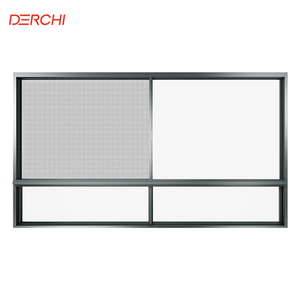
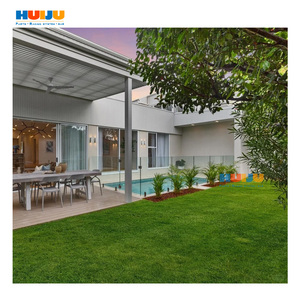
Our specialized export program delivers high-performance aluminum thermal break windows, hurricane-rated laminated safety glass, and marine-grade balustrades tailored directly to Washington State structural and climatic thresholds.
15+

Years Engineering Precision

1,200+

Global Verified Projects

DP 100

Max Design Pressure Peak

U≤0.14

Thermal Envelope Efficiency

Engineering Whitepaper & Market Context

Why Hurricane Impact Fenestration Is Essential for Greater Seattle Architecture

While Greater Seattle and King County do not lie along tropical hurricane corridors, structural engineers, developers, and architects increasingly specify ASTM E1886/E1996 Large Missile Impact and extreme Design Pressure (DP) fenestration systems. The intersection of severe atmospheric rivers, bomb cyclones, coastal salt winds, and ultra-strict energy codes creates an unmatched technical imperative.

The Pacific Northwest Microclimate Challenge: Wind-Driven Rain & Bomb Cyclones

In locations across Puget Sound, West Seattle blufffronts, Magnolia, Bainbridge Island, and Lake Washington shorelines, structures endure intense cyclonic winter storms with sustained gale-force winds exceeding 70 to 90 mph. Conventional residential fenestration certified only for light duty (DP 20 to DP 30) routinely fails under the hydro-pneumatic pressure of PNW "Pineapple Express" atmospheric rivers. When wind-driven rain bombards building envelopes for consecutive days, the positive-negative pressure oscillations force water through micro-gaps, leading to concealed rot, structural mold, and catastrophic envelope failure.

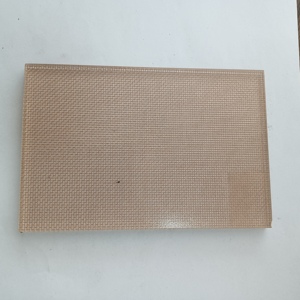
By engineering hurricane impact-grade fenestration with structural multi-chamber aluminum profiles (Pak Alco / Chawla high-tensile extrusions), continuous EPDM compression gaskets, and SentryGlas® (SGP) or high-load PVB laminated interlayers, our exported systems deliver continuous water infiltration resistance up to 15 PSF (equivalent to 77+ mph driven rain) and ultimate structural wind resistances surpassing Design Pressure DP 70 to DP 100.

Seismic Displacement & Lateral Drift

Located in the Cascadia Subduction Zone, Seattle building codes enforce stringent seismic drift margins under ASCE 7-16 and SBC Chapter 16. Hurricane impact window glass lamination prevents glass fallout during inter-story seismic racking, maintaining life-safety egress corridors.

  • Laminated SGP interlayer anchors shattered lites in place
  • Structural silicone wet-glazing prevents perimeter perimeter pop-out
  • Compliant with Washington seismic drift criteria

Urban Acoustic Attenuation (STC 42+)

Seattle’s rapid transit expansion, waterfront maritime traffic, and flight pathways near Sea-Tac / Boeing Field demand superior sound attenuation. Thick laminated hurricane glass assemblies naturally decouple audio vibrations across diverse frequency spectrums.

  • Asymmetric glass lite thickness mitigates sound resonance
  • Acoustic PVB options achieve Sound Transmission Class ≥ 43 dB
  • Essential for high-density South Lake Union & Bellevue condos

Forced-Entry Defense & Glazing Security

Commercial storefronts and luxury residences across urban King County face rising burglary and civil vulnerability. Hurricane impact fenestration acts as an impenetrable physical deterrent, passing rigorous ASTM F588 forced-entry resistance standards.

  • Withstands sustained crowbar and sledgehammer assault
  • Multi-point perimeter locking deadbolts on all sashes
  • Eliminates need for unsightly roll-down security grilles
Energy Code Synchronization

Seattle Energy Code (SEC 2021) & WSEC Thermal Compliance Matrix

The City of Seattle enforces one of the most demanding municipal energy standards in North America. Commercial and multi-family fenestration must balance severe wind-load resistance with radical thermal performance. See how our engineered export systems achieve both without compromise.

Performance Characteristic Standard Commercial Glazing Seattle Energy Code 2021 Baseline Our Hurricane Impact Thermal Break Export
U-Factor (Overall Assembly) U-0.38 – U-0.45 BTU/h·ft²·°F U ≤ 0.28 (Fixed), U ≤ 0.24 (Target) U-0.12 to U-0.20 (Quad/Triple Pane Thermal Break)
Solar Heat Gain (SHGC) 0.35 – 0.50 SHGC ≤ 0.38 (Climate Zone 4C Marine) 0.22 – 0.29 (Spectrally Selective Low-E Coating)
Design Pressure (DP Rating) DP 25 – DP 35 DP 45 – DP 55 (Site Elevation Dependent) DP 70 – DP 100 (ASTM E330 Structural Deflection)
Air Infiltration Rating ≤ 0.30 cfm/ft² ≤ 0.20 cfm/ft² (AAMA/WDMA/CSA 101) ≤ 0.04 cfm/ft² (Triple EPDM Gasket Compression)
Water Penetration Resistance 6.0 PSF (~50 mph) 8.0 PSF (~58 mph) 15.0 PSF (~78 mph continuous cyclic deluge)
Condensation Resistance (CRF) CRF 45 – 50 CRF ≥ 55 Recommended for King County CRF ≥ 72 (Polyamide PA66 34mm Insulating Core)
Localized Project Engineering

Geographic Fenestration Applications Across Puget Sound

Different micro-environments throughout King, Snohomish, and Pierce counties demand customized glazing compositions. Our factory configures custom glass layups, profile depths, and finishes according to micro-topography.

Puget Sound Waterfront Bluffs

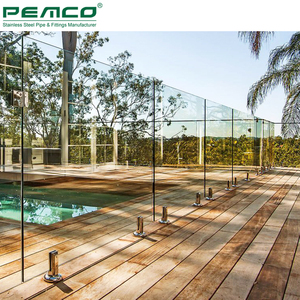
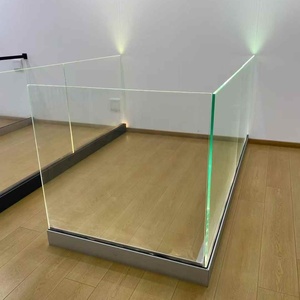
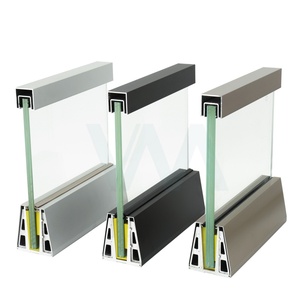
High-velocity maritime winds in Magnolia, Alki Point, and Edmonds attack envelope thresholds. We recommend heavy U-channel frameless glass balustrades combined with DP 80 tilt-turn systems with stainless marine fittings.

Downtown Multi-Family Towers

Mid-rise and high-rise developments in Capitol Hill and Denny Triangle require acoustic containment and zero air leakage. Our soundproof thermal break sliding doors preserve thermal credits under Seattle Master Use Permits (MUP).

Eastside Luxury Estates (Bellevue / Mercer)

Panoramic view requirements on Lake Washington necessitate massive glass openings without visual mullion bulk. Quadruple pane German tilt-and-turn windows offer ultra-narrow sightlines with Passivhaus thermal integrity.

Hospitality & Luxury Interiors

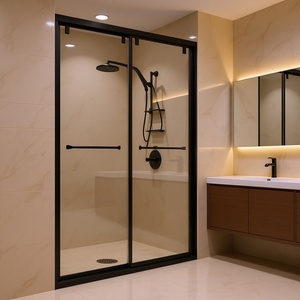
Hotel projects and executive penthouses require seamless wet/dry separation and minimalist aesthetic balance. The AOMEJA ultra-clear frameless shower enclosure provides durable PVD coatings tested against corrosive municipal water.

Precision Manufacturing Credibility

Why Pacific Northwest Developers Partner with Our Export Facility

With over 15 years of dedicated fenestration craftsmanship and more than 1,200 commercial and luxury residential installations delivered worldwide, our production floor combines robotic accuracy with certified aluminum metallurgical perfection.

Pak Alco & Chawla Structural Profiles

We use 100% certified 6063-T6 and 6005-T5 architectural aluminum alloys from Pak Alco and Chawla. Profile wall thicknesses range from 1.6mm up to 3.2mm structural sections, providing unmatched torsion and wind load deflection rigidity.

  • Tough tensile strength preventing corner miter deflection
  • Multi-chamber thermal struts containing Technoform PA66 bars
  • AAMA 2604 / 2605 fluoropolymer and marine anodized coatings

Direct DDP Logistics to Port of Seattle & Tacoma

We manage end-to-end supply chain delivery via The Northwest Seaport Alliance (NWSA) marine terminals. Shipments arrive pre-cleared with verified customs documentation, ISPM-15 export crating, and direct jobsite flatbed staging.

  • Turnkey FOB, CIF, or DDP site delivery across King County
  • Steel-reinforced A-frame crates preventing edge micro-fractures
  • Barcoded labeling aligned with architectural window schedules

Full NFRC & AAMA Engineering Submittals

Avoid Seattle Department of Construction and Inspections (SDCI) plan review delays. We furnish complete PE-stamped structural calculations, thermal finite element analysis (THERM simulations), and Florida Product Approvals for impact equivalency.

  • Verified simulation reports for thermal envelope permitting
  • BIM Revit families and CAD section shop drawings supplied
  • Factory laser-calibration guaranteeing ±0.5mm dimensional fidelity
Contractor & Specifier Briefing

Frequently Asked Technical Questions (Seattle Exporter Market)

Crucial engineering, logistical, and building code considerations for general contractors, glazing sub-contractors, and developers sourcing fenestration for Pacific Northwest installations.

Why should a Seattle project use Hurricane Impact Windows rather than standard NAFS commercial windows?
While Seattle is outside the Atlantic hurricane track, its exposure to Pacific bomb cyclones and severe coastal windstorms produces dynamic pressure spikes comparable to Category 1 and 2 wind events. Hurricane impact-certified windows (tested per ASTM E1886/E1996 and TAS 201/202/203) provide superior laminated glass safety, zero water penetration during prolonged 15 PSF rainstorms, and phenomenal forced-entry security for urban residences and retail fronts. Furthermore, the laminated SentryGlas® or PVB core prevents glass from falling onto downtown sidewalks during Cascadia subduction earthquake events.
How do these windows comply with the stringent 2021 Seattle Energy Code (SEC)?
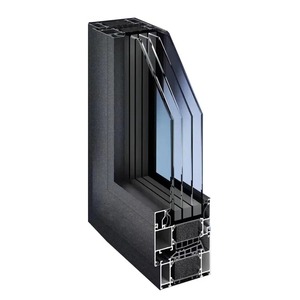
The 2021 Seattle Energy Code mandates vertical fenestration area-weighted U-factors as low as U-0.28 to U-0.24, with stringent targets for Passivhaus and target performance paths. Standard aluminum extrusions create thermal bridges that fail these standards. Our export assemblies use European-style multi-chamber polyamide thermal breaks (PA66 GF25) up to 34mm wide, paired with quadruple- or triple-pane insulated glass units (IGUs), warm-edge composite spacers, and dual low-E coatings with 90% Argon/Krypton fills. This configuration achieves whole-window assembly U-factors as low as U-0.12 to U-0.18, easily outperforming SEC and WSEC benchmarks.
What aluminum extrusion profiles and alloys are utilized for structural stability?
Our factory specifies premium 6063-T6 and 6005-T5 architectural aluminum alloys sourced from premier extruders Pak Alco and Chawla. Profile gauge thicknesses range from a minimum of 1.6mm up to heavy commercial sections of 3.0mm to 3.5mm for large glass wall spans. These heavy-wall profiles prevent frame twisting under positive and negative wind pressure cycles and ensure long-term structural integrity for massive multi-slide and pivot doors.
What is the lead time and shipping route for direct ocean container export to Seattle?
Typical factory production spans 30 to 45 business days following final architectural shop drawing and glass layup sign-off. Maritime freight is booked direct to The Northwest Seaport Alliance (NWSA) terminals at either the Port of Seattle (Terminal 5 / Terminal 18) or Port of Tacoma. Ocean transit typically averages 16 to 22 days. With pre-cleared customs documentation, container unloading and DDP flatbed transport directly to your Seattle or Eastside jobsite occurs within 48 to 72 hours of vessel discharge.
How are oversized glass panels crated and protected against marine moisture during transit?
All fenestration and structural glass items are sealed in custom-built, heavy-duty timber A-frame crates certified under ISPM-15 fumigation standards. Glass lites are separated by non-residue cork spacers and desiccant bags, then wrapped in hermetically sealed moisture-barrier foil membranes. Corner protectors and steel-banding reinforce every crate to withstand heavy ocean transit swell without racking or surface abrasion.
Can you supply engineering calculation books for Seattle DCI (SDCI) permit submittals?
Yes. We supply comprehensive structural and thermal submittal packages including structural engineering analysis (wind load deflection calculations per ASCE 7-16), NFRC simulation files (THERM / WINDOW 7 models), AAMA test documentation, and detailed 2D/3D CAD section details. We collaborate directly with Washington-licensed structural engineers (PE/SE) to furnish required engineering stamps for local plan approval.
What surface finishes are recommended for saltwater bluff exposure around Puget Sound?
For waterfront properties exposed to saline marine mist and high humidity, we strongly recommend AAMA 2605-compliant fluoropolymer (PVDF) coatings or Class I Architectural Anodizing (minimum 18-micron thickness). These finishes undergo 3,000-to-4,000-hour salt spray testing per ASTM B117, completely preventing chalking, pitting, and marine atmospheric degradation along coastal bluffs.
How do you handle laser site measurement verification and remote engineering coordination?
For Seattle contractors and property owners, we accommodate full 3D point-cloud laser scan files (e.g., Matterport, Leica BLK) or detailed laser site measurements. Our BIM drafting department overlays real site opening tolerances against aluminum rough openings (±1.0mm tolerance control), ensuring that zero shimming distortion or field re-cutting is required during site installation.

Engineered Fenestration for Your Next Pacific Northwest Project

Whether you are developing a luxury waterfront villa on Mercer Island, retrofitting a historic Seattle warehouse, or specifying commercial curtainwalls, our export engineering department delivers precision, compliance, and direct factory pricing.

Get Catalog