
High-specification modular components tested for line-load resistance up to 3.0 kN/m, designed for architectural terraces, rooftop penthouses, and public commercial façades.
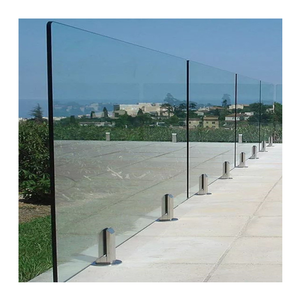
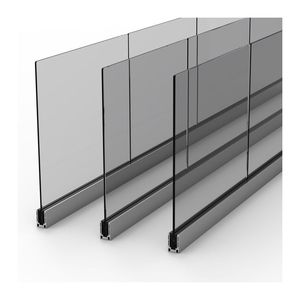
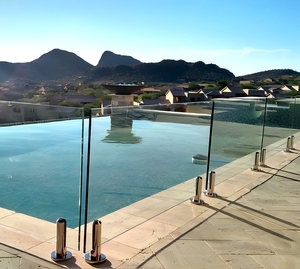
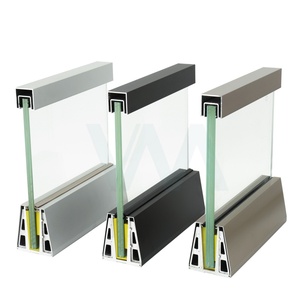
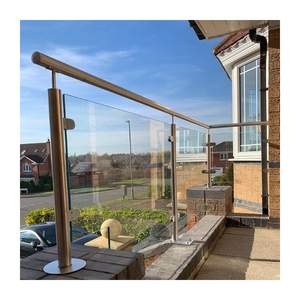
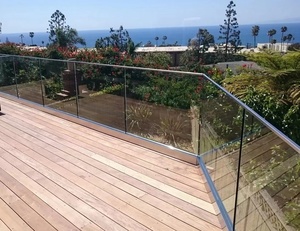
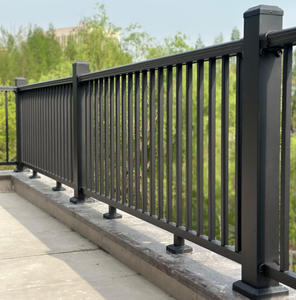
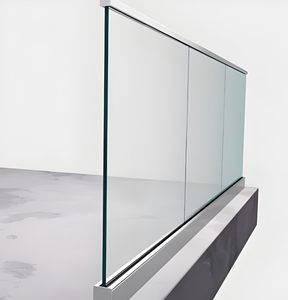
The Hungarian architectural landscape is undergoing an unprecedented modernization cycle. From the iconic luxury developments along the Budapest Danube riverbank (District V, IX, and XIII) to high-end residential enclaves in the Buda Hills and prestigious thermal lakeside hospitality developments in Lake Balaton, exterior glass railings have transformed from decorative luxuries into mission-critical structural safety elements.
In Hungary, exterior structural balustrades must navigate the dual challenges of the Pannonian continental microclimate—characterized by dramatic thermal swings from severe winter freezing (-15°C) to scorching continental summers (+38°C)—along with aggressive wind-load exposure dictated by MSZ EN 1991-1-4. Glass balustrades must not only provide uninterrupted panoramic vistas across the Danube basin or Hungarian wine hills, but also satisfy the stringent statutory provisions of the OTÉK (Országos Településrendezési és Építési Követelmények - Government Decree 253/1997).

A rigorous B2B comparison matrix engineered for Hungarian specifiers, facade structural engineers, and commercial procurement heads.
| Balustrade Configuration | Base Channel / Support Metallurgy | Glass Laminate Build (EN 12600 / 12150) | Horizontal Line Load | Recommended Hungarian Project Application |
|---|---|---|---|---|
| Monolithic Base Shoe (Recessed) | Extruded Aluminum EN AW-6063 T6 (Yield Strength ≥ 210 MPa) | 8.8.4 (17.52mm) or 10.10.4 (21.52mm) VSG with 1.52mm SGP | 1.5 kN/m to 3.0 kN/m | Budapest high-rise rooftops, Danube-facing public embankments, class-A commercial towers. |
| Surface Mounted U-Channel | Extruded Aluminum EN AW-6005A T6 (Heavy-Duty Bending Resistance) | 10.10.2 (20.76mm) Toughened Laminated with Clear PVB | 1.0 kN/m to 1.5 kN/m | Multi-family residential terraces in Debrecen, Szeged, and Győr luxury developments. |
| Standoff Point-Fixing (Inox Discs) | Stainless Steel AISI 316L (1.4404) Austenitic Marine Alloy | 12.12.4 (25.52mm) SGP Structural Safety Glass | 1.0 kN/m to 2.0 kN/m | Modern villa cantilever stairwells, lakeside terraces in Siófok and Balatonfüred. |
| Slender Post & Clamp System | AISI 304 / 316 Architectural Grade with Satin 320 Grit Finish | 10mm to 12mm ESG Monolithic Toughened Glass | 0.74 kN/m to 1.0 kN/m | Standard private balconies, suburban developments in Buda hills, hotel interior atriums. |
Different regions of Hungary present distinctive aesthetic requirements, municipal zoning guidelines, and climatic exposure challenges.
In central Budapest (Districts V, VI, and VII), modern penthouse extensions require ultra-minimalist floor-recessed U-channels that respect historic façade lines. Our concealed base shoes install flush with terrace decking, allowing developers to meet UNESCO-adjacent urban heritage aesthetic mandates while delivering uncompromised 1.5 kN/m fall prevention for multi-story residential blocks.
Installations along Lake Balaton (Balatonfüred, Tihany, Siófok) face severe environmental stressors: high moisture, seasonal ice freezing, algae exposure, and persistent lakeside wind gusts. We deploy Qualanod 25μm architectural anodized profiles paired with SentryGlas interlayers, preventing edge-delamination and pitting corrosion caused by freshwater mist and winter freeze-thaw cycles.
Eastern Hungary's massive manufacturing boom in Debrecen, driven by international automotive and battery battery-gigafactory developments, demands industrial-grade safety balustrading. Our standardized, container-ready modular aluminum railing units offer accelerated installation timelines, comprehensive CE Declaration of Performance (DoP), and full ISO 9001 quality audits for commercial administration centers.

The Hungarian balustrade and architectural railing industry is rapidly moving beyond simple stainless post-and-clamp setups toward integrated, technologically sophisticated building envelope elements.
Three definitive trends dominate Hungarian tenders and master-planned specifications today:
Direct factory-to-project manufacturing capabilities engineered to eliminate distributor markups and guarantee uncompromising dimensional tolerance.
Drawing on over a decade and a half of specialized architectural metal and structural glass fabrication. We operate multi-axis CNC extrusion cutting lines delivering +/-0.5mm tolerances across continuous 6-meter balustrade channels.
Every commercial development opening is modeled before profile extrusion. We produce complete Revit/BIM structural models and precise anchoring schematics tailored for Hungarian engineering submittals and pre-pour embeds.
No uncertified recycled scrap alloys. We extrude exclusively from certified 6063 and 6005A primary aluminum billets, finished with Qualanod anodizing (up to 25μm) or Qualicoat Seaside-class architectural powder coating.
Direct palletized and containerized shipping straight to job sites throughout Budapest, Pest County, Debrecen, and the Transdanubian regions, accompanied by comprehensive factory batch test certificates and CE marking documentation.
Technical clarity regarding Hungarian statutory standards, building codes, hardware selection, and factory ordering procedures.
Under Hungarian OTÉK (Government Decree 253/1997, Section 67), any floor, balcony, or terrace where the potential fall height is between 0.80m and 6.0m requires a protective barrier at least 0.95m high. Where the fall height exceeds 6.0m—typical of multi-family buildings and commercial office towers—the barrier must be at least 1.10m high (or 1.20m in specific institutional environments). Horizontal design line loads must comply with Eurocode MSZ EN 1991-1-1, ranging from 1.0 kN/m for residential applications to 2.0–3.0 kN/m in crowded public areas.
While monolithic tempered glass (ESG) possesses high flexural strength, it shatters into granular pieces upon localized high-velocity impact or spontaneous nickel-sulfide (NiS) inclusion fracture. If installed on an exterior balcony without handrails, this results in an immediate opening and fatal fall hazard. Hungarian construction authorities insist on laminated safety glass (VSG) composed of two heat-strengthened or fully toughened plies bound by an elastomeric interlayer (PVB or SGP). If one or both glass plies fracture, the interlayer retains structural cohesion, maintaining fall protection until glass replacement occurs.
SentryGlas (ionoplast interlayer) is approximately 100 times stiffer and 5 times stronger than traditional PVB. In Hungary, SGP is essential for exposed, frameless balustrades without top-edge handrails, particularly in high-wind regions such as the Danube corridor, rooftop penthouses, and lakeside properties along Lake Balaton. Standard PVB is prone to atmospheric moisture intrusion and edge delamination over severe Hungarian winter freeze-thaw cycles. SGP has nearly zero moisture absorption, preventing edge fogging and ensuring the glass pane remains upright even if both glass panels break.
Water stagnation inside base shoe profiles is the primary cause of gasket failure, delamination, and sub-structure concrete degradation during freezing Hungarian winters. Our extruded aluminum channels feature engineered lateral drainage ports and integrated drainage spacer blocks. These allow rain and melting snow to evacuate through calibrated weep holes directly into the building's exterior terrace drainage matting, completely preventing standing water build-up around the laminated glass bottom edges.
To avoid thermal bridging (hőhíd) in Hungarian buildings governed by strict energy efficiency standards, the balustrade base shoe cannot simply be bolted through soft insulation. We supply structural thermal isolation standoffs and heavy-duty galvanized structural steel brackets that tie directly into the load-bearing reinforced concrete slab (C25/30 minimum). The thermal insulation is wrapped around the structural posts, and waterproofing membranes are sealed with pre-formed EPDM flashings before the exterior channel is mounted.
For every project shipment, we provide comprehensive Factory Production Control (FPC) documentation, CE Declarations of Performance (DoP) under EN 1090-1 and EN 12150, mill test certificates for aluminum 6063/6005A alloys, structural calculation reports validating line-load capacity under Eurocode 1, and third-party pendulum body impact test reports conforming to MSZ EN 12600. This complete documentation package streamlines approvals with municipal building inspectors and engineering supervisors across Hungary.
Standard architectural anodized or powder-coated aluminum base channels are held in stock or extruded within 10 to 15 business days. Custom CNC-machined extrusions and project-specific toughened laminated glass (with cut-outs or ceramic frit) require a production cycle of approximately 3 to 4 weeks. Direct logistics to Budapest, Debrecen, or Transdanubian project sites typically takes 3 to 7 transit days via consolidated European road freight or direct B2B flatbed container logistics.
We work seamlessly with Hungarian project managers, architects, and facade contractors. After receiving architectural drawings (DWG/IFC/Revit), our structural engineers generate shop drawings, wind-load calculation submittals, anchor embedment calculations, and installation sequence manuals. We offer real-time technical coordination via video conference and direct messaging, ensuring flawless execution from initial slab casting through final dry-glaze wedge alignment.
Collaborate directly with our engineering division on your upcoming Hungarian residential, hospitality, or commercial development. Get customized extrusion pricing, structural wind-load simulations, and comprehensive sample kits delivered directly to your project office.