
As the Arab Republic of Egypt advances iconic national infrastructure initiatives under Egypt Vision 2030—from the towering commercial skyscrapers of the New Administrative Capital (NAC) to the ultra-luxury coastal hospitality developments across New Alamein and the Red Sea Riviera—procuring certified structural safety glazing systems has become paramount. Our ISO 9001-certified OEM manufacturing facility engineers, tempers, laminates, and custom-machines precision glass balustrade assemblies designed specifically to resist the extreme diurnal temperature deltas, abrasive Saharan sandstorms (Khamsin winds), and hyper-saline maritime environments characteristic of the Egyptian landscape.
Engineered for rapid deployment across Egyptian commercial, hospitality, and residential developments. Each system meets strict international ASTM E2358, IBC, and European EN standards with factory-direct OEM customizability.
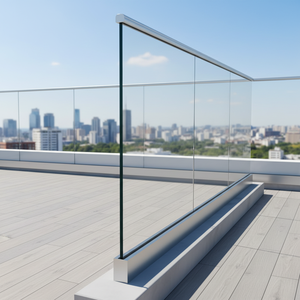
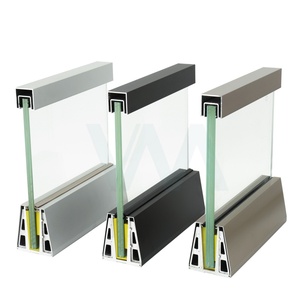
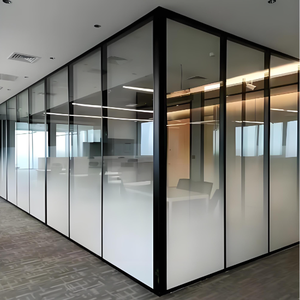
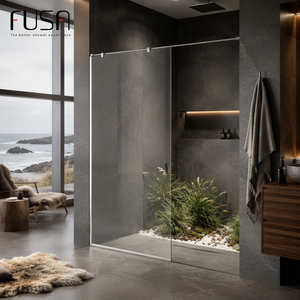
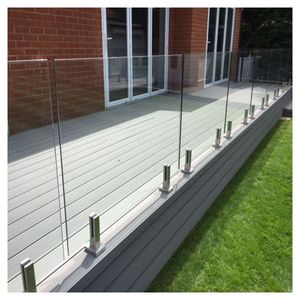
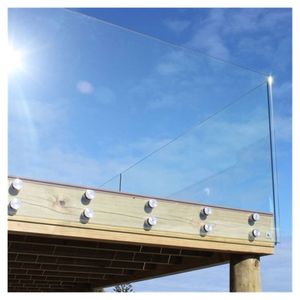
Designing exterior architectural glass balustrades for Egypt requires calculating complex physical stresses that European or East Asian baseline specifications overlook. The confluence of arid inland thermal cycling, abrasive desert windborne silt, and hyper-saline coastal humidity requires precise metallurgical selection and glass processing chemistry.
In Cairo and Upper Egypt, ambient solar irradiance causes glass surface temperatures to soar above 65°C during peak midday hours, followed by rapid radiative cooling after sunset. Low-spec tempered glass suffers catastrophic spontaneous failure under such thermal cycles due to microscopic Nickel Sulfide (NiS) inclusions.
Factory Solution: Every panel exported to Egypt undergoes strict Heat Soak Testing (HST) in accordance with EN 14179-1. By holding tempered glass at 290°C for over two hours, prospective NiS inclusions are deliberately detonated inside the furnace rather than on your construction site.
Standard Polyvinyl Butyral (PVB) interlayers experience significant viscoelastic breakdown, edge delamination, and yellowing when exposed to continuous UV radiation and prolonged temperatures exceeding 40°C.
Factory Solution: For high-rise balcony balustrades in the New Capital and public promenades, we recommend SentryGlas® Ionoplast (SGP) structural interlayers. SGP is five times tougher and up to 100 times stiffer than standard PVB, maintaining structural panel post-breakage barrier integrity under severe Egyptian atmospheric conditions.
Egypt’s northern coastline (Alexandria to Mersa Matruh) and eastern Red Sea corridor feature airborne chloride concentrations that trigger rapid pitting and crevice corrosion in conventional 304 or lower-grade architectural stainless steels within months.
Factory Solution: Our factory manufactures all frameless spigots, standoffs, and base brackets intended for coastal Egyptian projects using certified Duplex 2205 Stainless Steel (PREN > 35) or heavy-anodized 6063-T6 aluminum alloys treated to 25µm coating thicknesses conforming to Qualanod specifications.
| System Type | Hardware Composition | Recommended Glass Spec | Impact / Wind Rating | Ideal Egyptian Regional Application |
|---|---|---|---|---|
| Continuous Base Shoe U-Channel | Extruded 6063-T6 Aluminum (25µm Hard Anodized) | 17.52mm / 21.52mm Toughened SGP Laminated | Up to 3.0 kN/m (High-Velocity Wind Zone) | NAC High-Rise Towers & Alamein Balconies |
| Heavy-Duty Frameless Spigots | Cast Duplex 2205 Marine-Grade Stainless Steel | 12mm / 15mm Monolithic Heat-Soaked Tempered | 1.5 kN/m (Standard Residential / Terrace) | North Coast Seafront Villas & Infinity Pools |
| Side-Mount Standoff Pin Balustrades | Solid Turned 316 / Duplex 2205 Stainless Steel | 17.52mm Tempered PVB / SGP Laminated | 1.8 kN/m (Architectural Cantilever) | Commercial Atriums, Cairo Office Showrooms |
| Post & Clamp Balustrade System | 316 Stainless Steel Satin / PVD Matte Black Coated | 10mm or 12mm Flat Toughened Clear Glass | 1.0 kN/m (Internal / Low Wind Zone) | Interior Mezzanines, Sheikh Zayed Residential |
From high-density civil centers to windswept maritime leisure developments, architectural glass must perform against distinctly varied structural demands across Egypt.

The NAC Central Business District, anchored by the Iconic Tower, demands balustrades with extraordinary dynamic wind deflection performance. In high-rise environments, gusts frequently generate positive and negative wind pressures exceeding 2.4 kPa.
Factory Customization: We engineer high-moment aluminum base shoes integrated with heavy internal isolators and multi-layered SGP structural laminates. This prevents catastrophic glass deflection while ensuring clean, uninterrupted floor-to-ceiling panoramic views over the Green River parkway.

Modern corporate headquarters in West Cairo prioritize light transmission, biophilic design, and stringent acoustic privacy ratings (STC values) to separate conference zones from open-plan workspaces.
Factory Customization: Our acoustic office partition glass walls combine double-glazed 10mm and 12mm tempered panels with slimline aluminum perimeters. Interlocking EPDM gaskets and drop-down thresholds damp sound transmission up to 42 dB while preserving architectural elegance.

New Alamein's beachfront towers and private beachfront villas in Marassi, Hacienda, and Sidi Abdel Rahman face aggressive continuous salt-laden marine air, humidity swings, and severe seasonal winter storms.
Factory Customization: We supply monolithic and laminated systems utilizing Duplex 2205 core-drilled or surface-mounted spigots. Combined with hydrophobic self-cleaning nano-coatings on the glass, salt incrustation is easily washed away during regular maintenance cycles without clouding or surface etching.

High-end coastal resort developments require frameless glass pool fencing, terrace windscreens, and premium walk-in bathroom shower enclosures that harmonize with barefoot leisure luxury while guaranteeing total guest safety.
Factory Customization: Fully frameless spigot-mounted pool fences eliminate child climb hazard footholds in compliance with international pool barrier codes. Internal wet-area glass screens feature baked-in anti-limescale coatings that endure high-mineral local resort water supply.
Procurement patterns across Egypt's architectural, engineering, and construction (AEC) sectors are evolving rapidly. Understanding these market dynamics enables developers and contractors to optimize their supply chain choices.
Traditional residential architecture across Egypt historically relied on ornate wrought iron or masonry balustrades. Modern urban master plans in Mostakbal City, New Cairo, and West Cairo now emphasize unobstructed views, natural light harvesting, and clean geometric minimalism.
This aesthetic transformation has accelerated demand for structural U-channel base shoes that recess completely into the floor slab, creating seamless floating glass balustrades that enhance property valuation and leasing yield.
Major institutional developers in Egypt are aligning bids with the Egyptian Green Building Council's TARSHEED certification and international LEED standards. Glass balustrades, daylighting partitions, and perforated sunshade screens directly contribute toward energy reduction credits.
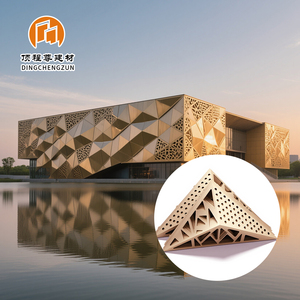
Our CNC-perforated architectural facade panels and low-iron ultra-clear tempered glass railings (with visible light transmittance over 91%) help engineering consultants achieve strict sustainability and daylight-harvesting scorecards.
Structural engineers across Cairo and Alexandria must verify that balustrades comply with the Egyptian Code of Practice for Calculating Loads and Forces in Structural and Building Works (ECP 201).
Our OEM design engineering team provides Egyptian structural engineering teams with comprehensive finite element analysis (FEA) calculation packages, glass thickness verification calculations, and anchor bolt pull-out certifications prior to production.
Critical operational answers covering customs clearance under NAFEZA, ACID number registration, structural glass certification, freight timelines, and factory OEM warranties.
We are fully integrated with the Egyptian National Single Window for Foreign Trade Facilitation (NAFEZA). Before cargo dispatch, we register your Advance Cargo Information (ACID) number on all commercial documentation, Bills of Lading, and certified packing lists. Our export team coordinates through CargoX for instantaneous blockchain-verified transmission of documents to your Egyptian customs brokerage team, preventing demurrage costs at Alexandria, Port Said, or Ain Sokhna.
Production typically takes 18 to 25 business days depending on OEM glass processing requirements (such as CNC beveling, cut-outs, or heat soak testing). Direct containerized sea freight from our deep-water loading terminal to Port Said or Alexandria averages 22 to 30 days. For Red Sea hospitality projects in Hurghada or Sharm El Sheikh, shipments are routed directly to the Port of Ain Sokhna for accelerated domestic transit via the Sokhna-Zafarana corridor.
During spring, Khamsin dust storms carry high-velocity micro-crystalline quartz silica that can pit and haze untreated glass over time. Our factory applies an advanced baked-in polysiloxane sol-gel chemical treatment creating a high-density, diamond-like covalent surface layer (pencil hardness > 9H). This treatment provides extreme abrasion resistance, hydrophobic self-cleaning characteristics, and repels static sand accumulation.
Yes. Our multi-axis CNC glass fabrication lines perform high-speed waterjet cutting, countersunk drilling, edge polishing (flat polished with arris), and radius corners matching your architectural CAD/BIM shop drawings down to ±0.5mm tolerances. All machining is finalized prior to the thermal tempering furnace process to guarantee edge stress uniformity and zero structural weakness.
Every shipment includes an exhaustive Engineering Quality Dossier: Mill Test Certificates (EN 10204 3.1) verifying hardware metallurgy (chemical spectrometer assays for SS316/Duplex 2205), Tempered Glass Impact Test Reports (EN 12600 Class 1A / ANSI Z97.1), Heat Soak Test Certificates (EN 14179), and Structural Load Test Reports verifying line-load ratings (kN/m) for Egyptian municipal approvals.
Glass panels are interleaved with non-adhesive micro-foam sheets or mold-inhibiting cork tabs, then encased within fully enclosed, fumigated solid plywood crates (ISPM 15 compliant). Crates feature internal steel strapping, desiccants to neutralize maritime container condensation, and external tilt/shock indicators. Containers are mechanically blocked and braced using heavy timber dunnage to withstand heavy sea rolling.
Yes. Beyond satin brushed and mirror polished stainless steel, we operate commercial Physical Vapor Deposition (PVD) titanium coating chambers. We supply spigots, standoffs, top-caps, and aluminum profiles in architectural Matte Black, Champagne Bronze, Brushed Gold, and Gunmetal Grey. PVD finishes offer superior hardness, UV stability, and will not peel or oxidize under Egyptian solar exposure.
Our flexible OEM production line accommodates both boutique luxury villa developments (minimum orders starting from 50 linear meters) and full-scale commercial high-rises requiring multiple 40-foot high-cube containers (over 3,000+ linear meters). We also provide consolidated mixed-product container loads containing balustrades, shower screens, and facade panels.
We combine advanced automated machinery with strict metallurgical traceability, bridging the gap between factory-floor precision and demanding on-site architectural reality.
Unlike trading intermediaries who outsource processing to fragmented subcontractors, every step of our production workflow—laser scanning, automated double-edging polishing, high-pressure waterjet profiling, tempering, and autoclave laminating—is executed inside our facility under ISO 9001 supervision.
This vertical integration allows complete control over glass edge quality, reducing microscopic border micro-fractures and eliminating on-site alignment problems for your installation teams.
We operate an engineering support division familiar with coordinating with Egyptian project managers, consultants, and international architectural practices. After analyzing your site plans, we generate comprehensive 2D CAD shop drawings, 3D Revit/BIM models, and anchor layout details.
This collaborative virtual pre-check mitigates costly site redesigns, slab-edge re-drilling, and profile mismatch delays before the steel and glass ever reach the port.
Our customer commitment extends past port container release. We supply comprehensive installation instruction manuals, video assembly walkthroughs, and spare hardware kits (including extra expansion anchors, alignment wedges, and EPDM replacement gaskets) with every export container.
Our engineering desk remains directly on call to assist your installation contractors with real-time technical advisory support throughout the commissioning phase.
Directly connect with our OEM technical engineering team. Receive rapid, comprehensive budgetary quotations, detailed CAD shop drawings, structural wind load evaluations, and certified glass samples delivered to your offices across Cairo, Giza, or Alexandria.