Engineered for commercial, hospitality, and high-end residential master developments across Johannesburg, Cape Town, and Durban. Manufactured to strict global standards with custom profile extrusion tolerances.
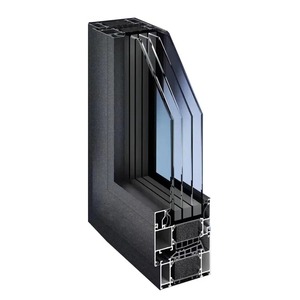
Sourcing aluminium louver windows for South African commercial and residential projects demands precise compliance with local structural codes. Low-grade imports routinely fail South Africa’s extreme UV exposure and coastal gale conditions.
In accordance with AAAMSA (Association of Architectural Aluminium Manufacturers of South Africa) and SANS 613 testing standards, fenestration products installed in high-wind regions such as the Western Cape coastline and coastal KwaZulu-Natal must endure cyclic structural wind loads ranging from 1500 Pa (A1) to 3000 Pa (A3). Our OEM factory utilizes virgin 6063-T6 architectural-grade billet extrusions with engineered internal ribbing to prevent blade flutter, perimeter air leakage, and water ingress under monsoon-level driving storms.
| Performance Metric | Standard Import Grade | Our OEM Louver Specification | South African Code Compliance |
|---|---|---|---|
| Aluminium Alloy & Temper | Recycled 6063-T4 / Scrap blend | Primary Billet 6063-T5 / 6063-T6 | SABS 998 / AAAMSA Design Guide |
| Extrusion Wall Thickness | 0.9 mm – 1.1 mm (Prone to warp) | 1.5 mm – 2.5 mm Heavy Duty | Exceeds SANS 10400 Part B Structural |
| Surface Anodizing / Coating | Standard Anodized (10–12µm) | Qualicoat Seaside Class 2 (25µm) | SANS 1796 Coastal Salt-Spray Proof |
| Air Infiltration Rate | > 2.5 L/s·m² at 75 Pa | < 0.6 L/s·m² (EPDM Double-Lipped) | SANS 613 A3 Approved |
| Solar Heat Gain Coefficient | SHGC 0.72 (High thermal gain) | SHGC 0.18 – 0.32 (Adjustable Louver) | SANS 10400-XA Compliant |
| Burglar-Deterrent Resistance | Plastic Clips / Friction friction pins | Interlocking Extruded Core Retainers | SANS 10400 Part T Physical Security |
South Africa’s macro-environment spans diverse climatic regions—from corrosive coastal maritime zones to intense UV highveld plateaus. Our custom OEM louver configurations are engineered to solve specific regional construction challenges.
Properties across Camps Bay, Clifton, and Hermanus face the abrasive "Cape Doctor" southeasterly gales and continuous salt sea mist. Standard louvers experience rapid pitting and oxidation within 18 months. Our Western Cape OEM series utilizes 25-micron Qualicoat Class 2 fluorocarbon/PVDF coatings or heavy marine anodizing, accompanied by grade 316 stainless steel drive-pins and internal linkages to eliminate galvanic corrosion.
Johannesburg and Pretoria sit at 1,700m altitude, experiencing intense UV solar irradiation, sudden summer hailstorms, and sharp winter night drops. Louvers engineered for Midrand, Sandton, and Waterfall commercial developments integrate thick 2.0mm aerofoil blades that deflect severe hail impact without denting, while acting as thermal radiant barriers that decrease internal HVAC requirements under SANS 10400-XA building energy metrics.
From Durban North to Zimbali and Ballito, coastal humidity averages 80% year-round with high fungal growth indices. Our sub-tropical OEM louver systems feature self-draining sill channels, antimicrobial Santoprene / vulcanized EPDM gaskets, and adjustable multi-angle blades that foster non-stop passive cross-ventilation, preventing moisture condensation in luxury residential villas and high-density estates.
Due to ongoing grid unreliability (load shedding) across South Africa, mechanical HVAC downtime is frequent. Furthermore, architectural guidelines in Steyn City, Val de Vie, and Pecanwood prohibit unattractive steel burglar bars. Our OEM security louver windows replace internal bars with reinforced interlocking aluminium louvers equipped with tamper-proof shoot-bolts, delivering secure natural cooling even during total power outages.
Procurement directors, façade consultants, and quantity surveyors are pivoting toward intelligent, energy-saving fenestration to satisfy carbon reduction mandates and volatile energy costs.
With Eskom tariffs rising exponentially, green building certifications (Green Star SA) require commercial developments to minimize mechanical HVAC runtime. Aerofoil motorized louvers linked to Building Management Systems (BMS) dynamically track solar azimuth, shedding solar heat load before it enters the envelope, cutting cooling power draw by up to 34%.
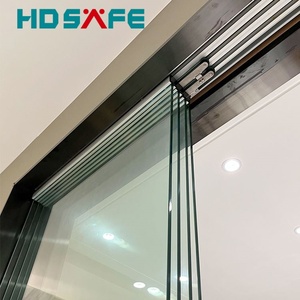
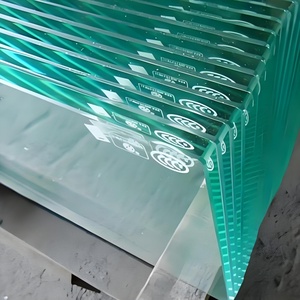
Modern South African residential architecture leans heavily toward biophilic, seamless indoor-outdoor transitions. Architects are phasing out bulky framing in favor of frameless toughened glass louvers (Jalousie systems) with concealed motorized actuators recessed directly into concrete bulkheads and structural curtain wall mullions.
Urban densification in Sandton, Rosebank, and the Cape Town City Bowl has driven demand for acoustic louver windows. These units integrate sound-dampening mineral infills inside hollow extruded blades, achieving STC (Sound Transmission Class) ratings above 38 dB while still facilitating continuous natural air exchange.
Direct OEM sourcing bypasses local distributor markups while securing guaranteed batch metallurgical consistency, custom extrusion dies, and certified structural warranty packaging.
In-house CNC die-casting and extrusion fabrication for custom blade profiles, elliptical solar louvers, and bespoke frame extrusions matched exactly to project elevation drawings.
Raw material spectroscopy testing guarantees pure virgin 6063-T5/T6 alloy composition without scrap contaminants, ensuring maximum yield strength and zero structural embrittlement.
Laser-guided mitering, automated multi-head hydraulic corner crimping, and pre-aligned driving linkages mean defect-free installation right out of the shipping crate on site.
Each louver frame is enveloped in scratch-proof protective film, cushioned with corner edge guards, and crated in fumigated ISPM-15 plywood cases with silica gel desiccant packs for sea voyages.
Essential regulatory, logistical, and technical insights for South African developers, architects, and main contractors importing custom aluminium louvers.
Our custom OEM manufacturing processes align strictly with the South African National Standard (SANS) framework. For SANS 10400-XA (Energy Usage in Buildings), we provide thermal performance documentation detailing the Solar Heat Gain Coefficient (SHGC) and U-values of our louver assemblies, including thermally broken frames and low-emissivity glass louver configurations. For structural compliance under SANS 613, our extrusion sections (1.5mm to 2.5mm wall thickness in 6063-T6 temper) are engineered and tested to satisfy deflection limits under design wind pressures exceeding 1500 Pa (Category A1) through to 3000 Pa (Category A3) for exposed coastal elevations. Comprehensive test certificates, structural finite element analysis (FEA), and CAD/Revit BIM files are provided for seamless submission by your project engineer to local South African city councils (such as City of Cape Town or City of Johannesburg).
South Africa’s coastal environments are classified under ISO 9223 as C4 (High) to C5-M (Very High Marine). Standard interior-grade 10-micron anodizing or economy powder finishes fail rapidly in these salty atmospheres. For projects located within 5 kilometers of the shoreline (such as Umhlanga Rocks, Ballito, Camps Bay, or Waterfront Cape Town), we specify Qualicoat Seaside Class 2 architectural powder coatings (such as AkzoNobel Interpon D2525) or high-spec Class AA25 (minimum 25 microns) architectural anodizing. These surface treatments undergo neutral salt spray testing according to ISO 9227 exceeding 3,000 hours, ensuring resistance to filiform corrosion, chalking, and salt crusting. Additionally, all pivot pins, operating link bars, and structural fasteners are supplied exclusively in Marine Grade 316 Stainless Steel.
Load-shedding frequently shuts down HVAC systems in commercial and residential properties across South Africa, leading to rapid heat buildup and poor indoor air quality. Louver windows provide an optimal passive cooling strategy. By manipulating blade pitch, our engineered louvers facilitate high free-air area (up to 85% effective airflow area, compared to less than 45% for conventional sliding windows). This enables cross-ventilation through stack effect cooling without requiring grid power. For automated configurations, our 24V DC actuators can be integrated into solar-powered backup inverters or UPS systems, ensuring that louver ventilation remains fully operational during Eskom grid failures.
Yes. Physical security is a primary consideration in South African architectural design. Traditional windows often require secondary internal steel burglar bars, which detract from aesthetic appeal and lower property resale values in high-end estates. Our OEM security louvers feature heavy-wall 6063-T6 extruded blades with interlocking internal channels that resist prying. The drive mechanism is fully concealed within the side jambs, preventing manual manipulation from the outside. Furthermore, we offer multi-point key-locking handles, internal stainless steel security mesh integrations, and tamper-proof fasteners that achieve forced-entry resistance equivalent to standard security grilles while maintaining a clean architectural appearance.
We provide comprehensive CIF (Cost, Insurance, and Freight) or DDP (Delivered Duty Paid) logistics support for South African commercial consignments. Standard sea container transit times from our manufacturing facilities to Durban Container Terminal (Pier 1/Pier 2) average 22 to 28 days, and approximately 26 to 32 days to the Cape Town Container Terminal (CTCT). Cargo is shipped under HS Code 7610.10 (Aluminium doors, windows, and their frames). We supply complete export packs including Bill of Lading, Commercial Invoice, Packing List, Certificate of Origin, and pre-shipment quality inspection reports. South African clearing agents typically require 3 to 5 business days for SARS Customs clearance at the port before direct flatbed delivery to your job site in Gauteng, Western Cape, or KZN.
Yes, our core factory capability is custom OEM engineering. We manufacture a comprehensive range of blade profiles, including standard 100mm/150mm aerofoil sunshade louvers, high-performance acoustic blades with internal sound-damping rockwool, double-drainable chevron (Z-blade) storm louvers designed to prevent water penetration at air intakes, and frameless glass louvers. For smart buildings, our adjustable systems can be configured with high-torque 24V linear or rack-and-pinion actuators (compatible with Somfy, Tuya, KNX, or BACnet building automation protocols). These actuators can be linked with localized weather stations, rain sensors, and smoke evacuation fire-control panels for automatic opening during emergencies.
For standard extrusion profiles and standard RAL powder coat colors (such as Matt Charcoal, Matt Bronze, Black, and White, widely used in South African architecture), our minimum order quantity starts as low as 50 square meters, making it accessible for luxury private residences and boutique developments. For fully custom extrusion dies requiring specialized architectural profiles, our MOQ is typically 500 kilograms of raw aluminium extrusion. Production lead times range from 18 to 25 days following technical drawing and color chip sign-off, with high-volume commercial runs (1,000+ sqm) scheduled in phased container dispatches to match your construction site pouring schedule.
Ocean transport across the Indian Ocean exposes freight to high humidity and rough handling. Every frame and blade manufactured in our facility undergoes rigorous multi-layer export packing: individual components are masked with non-marking UV protective tape, wrapped in micro-foam PE cushioning, and grouped with reinforced edge guards. Complete window modules are packed in custom-built, fully enclosed ISPM-15 compliant fumigated plywood crates with internal structural timber supports that prevent racking or shifting inside the shipping container. We place industrial desiccants inside each crate to absorb condensation and eliminate moisture trapping during ocean transit.
Yes. Our in-house engineering and drafting team works directly with architects, quantity surveyors, and façade engineers. Upon receipt of architectural opening schedules or PDF/DWG elevation plans, we generate full shop drawings within 48 to 72 hours. These submittals include 1:1 scale section details, fixing anchor calculations, wind load moment of inertia (Ix/Iy) values, structural mullion reinforcement specifications, and perimeter flashing integration details. This technical pack ensures that your South African structural engineer (PR.Eng) can sign off on council Form 2 and Form 4 structural and fenestration submissions without delay.
Procuring directly from our OEM factory yields substantial cost savings—typically 25% to 40% compared to local South African fabricators who purchase regional stock profiles from intermediaries and assemble with manual workshop tools. Local fabricators carry high inventory markups and overheads that inflate square-meter rates on large developments. By sourcing directly from our high-precision CNC manufacturing facility, you gain factory-direct tier-1 pricing, certified batch consistency, customized profile geometry, and comprehensive hardware warranties, while retaining total control over your project’s architectural specifications.
Send us your door and window schedule, architectural elevations, or bill of quantities (BOQ). Our structural fenestration specialists will prepare a comprehensive engineering cost analysis and factory supply proposal tailored to the South African market.