Factory-direct fenestration, balustrades, and structural facades fabricated from certified 6063-T5/T6 alloys, engineered specifically to withstand maritime salt spray, seismic activity, and tropical cyclones across the Philippines.
The Philippine archipelago presents one of the world's most unforgiving testing grounds for external building envelopes. Situated squarely within the Pacific Typhoon Belt and governed by tropical oceanic meteorological patterns, structures in Manila, Cebu, and coastal provinces are regularly battered by wind velocities exceeding 250 km/h (Category 5 Super Typhoons under PAGASA classifications), accompanied by torrential monsoonal rains and relentless UV irradiance.
For decades, local developers relied on traditional residential sliding windows or outdated jalousies. However, structural and forensic building assessments reveal significant failure points: excessive air leakage, catastrophic water penetration along sill tracks under cyclic pressure, and frame buckling caused by inadequate profile moment of inertia (Ix, Iy). As the National Structural Code of the Philippines (NSCP 2015, Volume 1) tightens wind design criteria, modern casement fenestration has transitioned from an architectural luxury to a mandatory structural safeguard.
As a specialized China wholesale aluminium casement windows factory and exporter serving the Philippines, our engineering protocols align directly with DPWH standard specifications, ASTM performance test standards, and the local realities of containerized sea-freight procurement.
1. Coastal Microclimates: Atmospheric chloride content in coastal zones (e.g., Mactan, Batangas, Boracay) rapidly corrodes low-spec mill-finish aluminium and inferior zinc-alloy hardware, inducing galvanic corrosion and operational jamming within 18 months.
2. Extreme Cyclic Wind Loads: High-rise developments in Bonifacio Global City (BGC), Ortigas, and Makati experience extreme negative wind pressures (suction) along building corners, requiring casement friction stays rated to dynamic forces upward of 3,500 Pa to prevent sash pull-out.
3. Monsoonal Driving Rain: The southwest monsoon (Habagat) delivers sustained torrential downpours. Conventional window drainage slots often back up under positive wind loads, forcing water over interior dams and ruining interior drywall, parquet flooring, and structural slabs.
Engineered for high-end residential estates, vertical commercial developments, and hospitality projects. Every series is manufactured using virgin 6063-T5 or 6063-T6 architectural aluminium billets with structural wall thicknesses exceeding national baseline codes.
| System Model | Wall Gauge | Thermal Barrier | Glazing Specification | Wind Load (NSCP) | Water Tightness | Primary Philippine Application |
|---|---|---|---|---|---|---|
| Series 55 Heavy-Duty Casement | 1.4mm – 1.8mm | Non-Thermal / Monolithic | 6mm + 12A + 6mm Double Tempered | 2,500 Pa (Class 5) | 450 Pa (ASTM E331) | Mid-rise Condominiums, Residential Subdivisions (Cavite, Laguna, Clark) |
| Series 65 Coastal Security Casement | 1.8mm – 2.0mm | Integrated Cavity Chamber | 8mm High-Impact Laminated / DGU | 3,500 Pa (Class 7) | 600 Pa (ASTM E331) | Beachfront Resorts & Oceanfront Villas (Cebu, Palawan, Boracay) |
| Series 75 Iso-Thermal Casement | 2.0mm – 2.2mm | PA66-GF25 Polyamide 24mm Strip | 6mm Low-E + 16Ar + 6mm Tempered | 4,200 Pa (Super Typhoon) | 750 Pa (ASTM E331) | BGC, Makati, Rockwell Luxury Penthouse Enclosures & Green Buildings |
| Series 80 Hurricane + Mesh Integrated | 2.0mm – 3.0mm | Optional Thermal Barrier | 10mm + 1.52PVB + 10mm Laminated | 5,000 Pa (Category 5+) | 900 Pa (Severe Cyclone) | Coastal Critical Infrastructure, Hospitals, Tagaytay Ridge Estates |
Dengue prevention and home intrusion defense remain critical priorities for Philippine villa owners and developers. Our Series 80 systems incorporate a heavy-duty, marine-grade 0.8mm wire gauge 304 or 316 stainless steel high-tensile security mesh flush-mounted within a dual-sash frame. This architectural integration permits 100% unrestricted natural cross-ventilation while providing severe impact resistance and keeping tropical insects outside without unsightly add-on grilles.
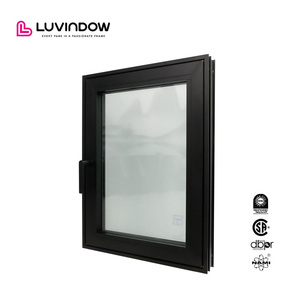
Single-point handles fail catastrophically under fluctuating gust pressures. Our export casement systems utilize heavy-duty stainless steel transmission drives connecting 3 to 5 perimeter locking mushroom cams into high-strength zinc-alloy keeps. When the architectural handle is engaged, the sash pulls inward uniformly across the top, bottom, and hinge stiles, creating complete acoustic isolation and sealing against rain driven by 200+ km/h squalls.
With electricity rates in the Philippines among the highest in Southeast Asia (averaging ₱10–₱12 per kWh), cooling thermal loss is an expensive operational overhead. Our thermal break series decouples the exterior and interior aluminium frame extrusions with 24mm German Technoform polyamide 66 reinforced with 25% structural glass fibers. This isolates heat transfer, lowers Solar Heat Gain Coefficients (SHGC), and slashes commercial HVAC load requirements by up to 34%.
From dense urban megalopolises to remote island micro-climates, our fenestration engineering is tuned to the specific environmental stressors of the archipelago.
Primary Challenge: Extreme urban noise from traffic arteries (EDSA, C-5, Buendia), intense solar heat island effects, and severe inter-story seismic drift.
Configured Solution: Heavy-gauge Series 75 casements with asymmetrical acoustic laminated glazing (6mm Clear + 1.14 Acoustic PVB + 8mm Tinted) and structural perimeter silicone glazing. Delivers an STC (Sound Transmission Class) rating of 42 dB, effectively turning high-traffic urban racket into a whisper-quiet executive sanctuary.
Primary Challenge: Hyper-saline ocean air, constant fine sea spray, and violent typhoon landfalls (e.g., Eastern Visayas and Palawan corridors).
Configured Solution: Series 65 Coastal Casement with minimum 25-micron Architectural Anodized finish (Class AA25) or 3-coat Kynar 500 PVDF fluorocarbon coatings exceeding AAMA 2605 standards. All hinges and friction stays are upgraded to marine Duplex 2205 or SUS316 stainless steel to eliminate tea-staining, pitting, and structural seizure.
Primary Challenge: High interior-exterior temperature fluctuations, perpetual high relative humidity, moisture condensation, and hill-terrain wind acceleration.
Configured Solution: Dual-action Tilt-and-Turn casement systems. The top-tilt position provides secure ventilation during damp, foggy weather while preventing driving rain ingress. Insulated Warm Edge glass spacer bars eliminate internal perimeter window sweat and secondary mold contamination.
• Philippine Green Building Code (PGBC): Mandatory energy efficiency metrics for air-conditioned envelopes. Demands strict window-to-wall ratios (WWR) and optimized Solar Heat Gain Coefficients (SHGC ≤ 0.40).
• BERDE Green Building Rating System: Fenestration must contribute to daylighting optimization without penalizing thermal cooling demand or allowing acoustic infiltration.
• NSCP 2015 Chapter 2 (Wind Loads): Basic wind speed parameters designated up to 315 km/h for Zone 1 (Eastern seaboard) require certified mock-up laboratory structural test reports.
The construction sector across the Philippines is undergoing an unprecedented modernization curve. Rapid urbanization in provincial growth corridors like Clark New City, Iloilo Business Park, and Davao City has accelerated the adoption of institutional-grade curtain walls and precision aluminium fenestration.
Philippine real estate developers, contractors, and general consultants are increasingly circumventing conventional middlemen traders and high-markup local downstream fabricators. Local fabrication shops frequently lack automated double-miter CNC cutting tables, pneumatic crimping rigs, and temperature-controlled silicone curing lines, resulting in inconsistent field assembly, unsealed miters, and sash misalignment.
By engaging directly with our China export manufacturing facility, Philippine B2B buyers access factory-floor economies of scale, European-standard automated fabrication accuracy (within ±0.5mm tolerance), structural calculation sign-offs, and custom extrusion die development at 30% to 50% lower capital outlay.
Combining 15+ years of dedicated fenestration craftsmanship with cutting-edge German CNC digital machinery, our factory floor delivers scalable, export-certified architectural systems tailored to overseas delivery.
We reject recycled scrap aluminium. All profile extrusions use primary virgin billets with strictly controlled magnesium and silicon ratios, ensuring high tensile yield strength and flawless surface finish adhesion.
Miter corners, drainage slots, and hardware lock mortises are executed on high-precision CNC multi-axis milling machining centers. Every corner joint is pneumatically crimped with cast aluminium corner cleats and epoxy injected.
100% of custom window openings are test-assembled on factory squaring racks prior to crating. Glazing gaskets, friction stays, corner miters, and lock engagements undergo rigorous physical inspection.
Our export trade division coordinates full container loads (20GP / 40HQ) shipped directly from Foshan/Shenzhen to Manila South, Manila North, Subic, or Cebu ports, handling all packaging and fumigation protocols.
Clear, direct technical answers addressing customs tariffs, wind load verifications, site measurement practices, and ocean transit logistics.
Connect directly with our senior structural fenestration estimators. Receive itemized factory-direct pricing, complete structural CAD shop drawings, and full technical specifications within 24 hours.