Acoustic Physics & Fenestration Science
The Engineering of Decibel Attenuation: Overcoming the Coincidence Dip in French Architecture
Specifying high-performance soundproof windows for France requires engineering far beyond standard double glazing. Standard symmetric double-glazed units (such as 4mm Float / 16mm Air / 4mm Float) exhibit a severe acoustic vulnerability known as the coincidence frequency dip ($f_c$). In this critical zone—typically between 2,000 Hz and 3,200 Hz—the flexural wave speed in glass matches the velocity of airborne sound waves, causing the glazed pane to become acoustically transparent to motorcycle exhausts, tire friction, and commuter railway screech.
Our China manufacturing center utilizes asymmetric acoustic lamination with specialized polyvinyl butyral (PVB) acoustic damping cores. By pairing panes of varying mass and stiffness (e.g., an 8mm outer pane, a 16mm 90% Argon gas cavity, and an inner 44.2 Acoustic PVB composite pane), we split the critical frequencies. Sound waves encountering the exterior pane lose coherent resonant energy; remaining vibrational vectors are transformed into shear strain and dissipated as microscopic thermal energy inside the viscoelastic acoustic polymer layer.
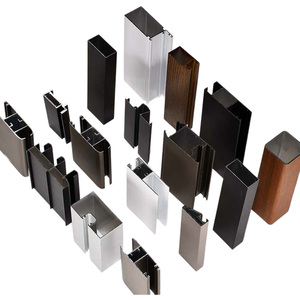
In addition, our thermal-break aluminum profiles incorporate multi-chamber PA66GF25 polyamide isolators injected with acoustic mineral foam, creating an uninterrupted damping barrier that prevents structure-borne acoustic flanking through outer frames into the building envelope.

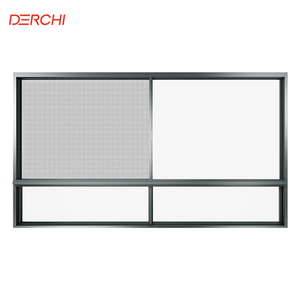
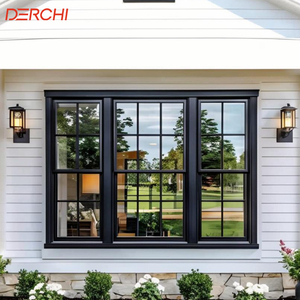 Acoustic Double-Hung