
Direct factory-engineered systems manufactured with aerospace-grade 6063-T6 aluminum alloys, precision thermal breaks, multi-point perimeter locking hardware, and high-efficiency double/triple insulated glazing.
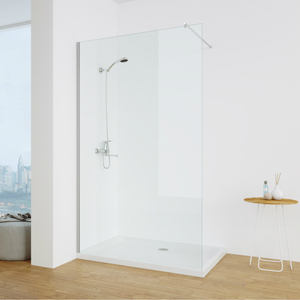
The contemporary European fenestration industry is undergoing an unprecedented structural transition. In Germany, the stringent mandates of the Gebäudeenergiegesetz (GEG 2024 / Building Energy Act), escalating energy prices, and skyrocketing on-site installation costs have driven architects, general contractors (Generalübernehmer), and real estate developers to reconsider conventional fenestration supply chains. Historically, domestic manufacturers in Germany—anchored around North Rhine-Westphalia, Baden-Württemberg, and Bavaria—have represented the benchmark of mechanical precision. However, delivery lead times exceeding 20–26 weeks, combined with extreme domestic production premiums, have created critical bottlenecks for high-end residential housing and commercial refurbishment.
Concurrently, China's premier architectural aluminum extrusion and fabrication conglomerates (concentrated in industrial clusters like Foshan and Shandong) have evolved beyond low-cost volume fabrication. Through multi-million-dollar capital investments in 5-axis German elumatec CNC profile processing centers, automated robotic assembly, and direct integration with world-class component suppliers (such as Technoform Bautec polyamide thermal breaks, Siegenia, Roto Frank, and GU hardware), leading Chinese manufacturers now deliver structural systems that strictly align with or exceed DIN EN 14351-1 product standards.
This document presents a comprehensive technical examination of how leading Chinese residential aluminum window manufacturers engineer, fabricate, and deliver advanced architectural systems tailored specifically for German building codes, microclimates, and regional aesthetic expectations.

Cross-examining material science, thermal barrier thermodynamics, acoustic isolation, and weather resistance ratings under European testing frameworks.
| Performance Parameter | German Standard (DIN / GEG / RAL) | Top-Tier China Manufacturing Specification | Compliance & Verification Protocol |
|---|---|---|---|
| Alloy Metallurgy & Billet Quality | EN AW-6060 / EN AW-6063 (DIN EN 573-3, EN 755-2) | Virgin A00 electrolytic aluminum ingot, Alloy 6063-T6 / 6060-T66, wall thickness 1.8mm–3.0mm | EN 10204 3.1 MTC Certified |
| Thermal Insulation ($U_w$ Value) | GEG Requirement: $U_w \le 1.3\text{ W}/(\text{m}^2\text{K})$ Passivhaus: $U_w \le 0.8\text{ W}/(\text{m}^2\text{K})$ |
Multi-chamber system with 34mm–54mm Technoform PA66 GF25 low-lambda bars: $U_w \le 0.79\text{ W}/(\text{m}^2\text{K})$ | IFT Rosenheim / CE Validated |
| Air Permeability | DIN EN 12207 Class 4 (600 Pa test pressure) | Class 4 achieved via triple-seal continuous EPDM co-extruded foam vulcanized corner gaskets | EN 1026 Standard Tested |
| Watertightness Under Wind | DIN EN 12208 Class 9A (600 Pa) or Exxx (> 600 Pa) | Class E1050 to E1200 (1050–1200 Pa) featuring independent pressure-equalized cascade drainage | EN 1027 Water Penetration Proof |
| Wind Load Resistance | DIN EN 12210 Class C5 / B5 (2000 Pa design load) | Class C5 (< 1/300 deflection) with reinforced structural mullion stiffeners and corner crimping | EN 12211 Dynamic Cyclic Stress |
| Acoustic Attenuation ($R_w$) | DIN 4109 Sound Class 3–5 ($R_w \ge 35\text{–}45\text{ dB}$) | Asymmetric acoustic laminated triple glazing (e.g., 8mm SoundControl + 16Ar + 6mm + 16Ar + 8.76 PVB): $R_w$ up to 48 dB | ISO 717-1 Acoustic Testing |
| Surface Anodizing & Coating | Qualicoat Class 2 / Qualanod 20–25 µm | AkzoNobel / Tiger Drylac PVDF fluorocarbon (AAMA 2605) & Qualanod-certified architectural hard anodizing | 3,000-Hour Salt Spray Proof |

Aluminum possesses an inherent thermal conductivity of roughly $205\text{ W}/(\text{m}\cdot\text{K})$, rendering untreated extrusion sections highly conductive. To achieve the rigorous insulation figures demanded by the German climate (Zone 3 and Zone 4 heating degree-days), advanced Chinese manufacturers implement multi-chamber composite designs.
By integrating continuous, glass-fiber reinforced polyamide bars (PA66 GF25) with transverse cavity baffling and low-emissivity aerogel insulating foams within the profile core, the thermal bridging coefficient ($\psi$) is virtually eliminated. Combined with triple-glazed units containing argon (90%+ gas retention) and warm-edge composite spacers (such as Swisspacer Ultimate), window units effortlessly achieve total frame values ($U_f$) under $1.1\text{ W}/(\text{m}^2\text{K})$ and assembled window values ($U_w$) under $0.80\text{ W}/(\text{m}^2\text{K})$.
From suburban villa developments in Hesse to historical Altbau refurbishments in Leipzig, our systems address explicit regional building vernaculars and engineering mandates.
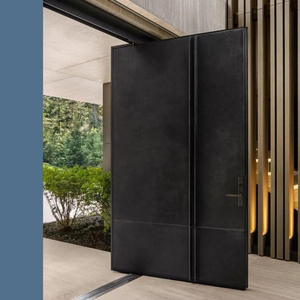
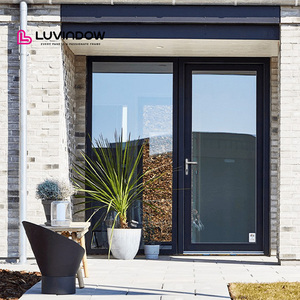
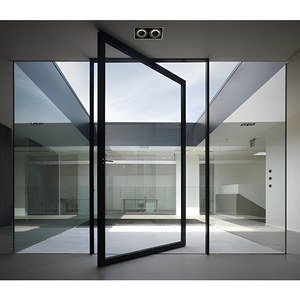
Modern luxury private villas across Munich, Stuttgart, and Lake Starnberg demand ultra-narrow visual sightlines (minimalist profiles) coupled with oversized glass panels. Our ultra-slim sliding door profiles and floor-to-ceiling pivot entry doors eliminate heavy frames, inviting unrestricted natural sunlight while maintaining structural rigidity against Alpine gusts.
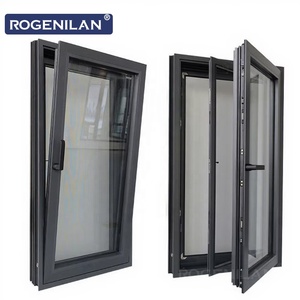
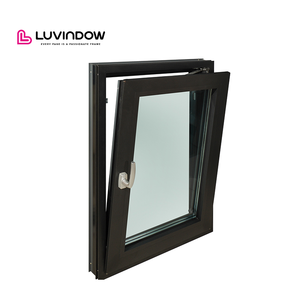
Subsidized by the Kreditanstalt für Wiederaufbau (KfW), green home construction necessitates thermal envelope integrity. Our tilt-turn triple-glazed casement windows feature specialized Low-E coatings (soft-coat silver) providing high solar heat gain coefficients ($g$-value $\ge 0.50$) in winter while halting infrared radiation escape, drastically dropping energy loads.
Renovating multi-family historical structures (Altbauten) situated along major urban transit corridors in Berlin, Frankfurt, or Hamburg requires specialized soundproofing. Our acoustic casements utilize asymmetrical laminated glass with Vanceva acoustic PVB interlayers, suppressing ambient street decibels from 80 dB down to an interior whisper of 32 dB.
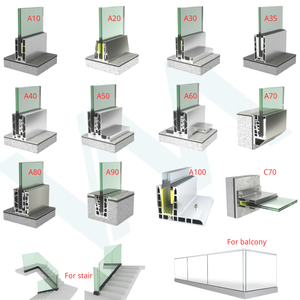
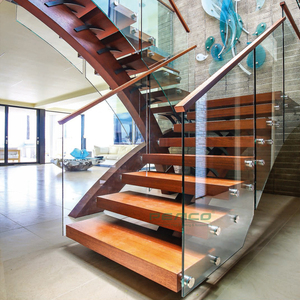
German safety guidelines (DIN 18008-4 for barrier-glazing subjected to impact) dictate strict line-load tolerances for balustrades and cantilevered glass railings. Chinese automated tempering and laminating furnaces produce heat-soaked toughened glass (ESG-H) and laminated safety glass (VSG) bonded with structural SentryGlas (SG) interlayers.
Coupled with base U-channel extruded aluminum shoe profiles anchored with Hilti chemical anchoring fasteners, our balustrade systems withstand dynamic human-crowd loads up to $1.5\text{ kN/m}$, delivering transparent sightlines for balconies, rooftop penthouses, and external terraces without compromising structural building safety.

How next-generation circular aluminum alloys, mechatronic automation, and embedded smart sensors are shaping B2B architectural requirements across Europe.
Driven by the EU Corporate Sustainability Due Diligence Directive (CSDDD), German developers seek verified Environmental Product Declarations (EPDs). Leading Chinese manufacturers utilize closed-loop recycled aluminum billets smelting with hydroelectric power, reducing embodied carbon to < 4.0 kg CO2 per kg of extruded aluminum.
Modern commercial properties and smart homes integrate KNX/Zigbee bus protocols directly into fenestration. Concealed motorized actuators allow automated nighttime natural ventilation cooling, while hidden magnetic contacts (reed switches) link directly to VdS-approved intruder alarms.
Replacing mechanical external Venetian blinds (Raffstoren) that are prone to wind damage, electronically tintable smart glass dynamically modulates daylight transmission (VLT) and solar heat gain (SHGC) via low-voltage pulse, reducing active chiller AC consumption by up to 28%.
To bypass severe on-site skilled labor shortages across German metropolitan construction zones, windows are supplied with pre-fitted perimeter expanding sealing tapes (Illbruck / Tremco illmod 600) and factory-integrated structural anchor lugs for single-day installation.
With more than 15 years of international architectural fenestration manufacturing, our plant combines massive structural capacity with the exacting discipline required by European quality guidelines.

Direct feedback from international property developers and commercial contractors who have specified our high-performance fenestration systems.
"Procuring custom thermal-break tilt-turn windows and oversized entry pivot doors for our luxury multi-villa residential project in the Munich suburbs was seamless. The profile finishes, tight tolerances, and pre-adjusted German locking gear met every demand of our structural site inspector."

"We saved roughly 42% on fenestration packages compared to domestic tenders without dropping our KfW 40 insulation criteria. The triple-pane Low-E insulated glazing units arrived without a single scratch in reinforced steel shipping stills. Outstanding engineering."

"The engineering department translated our complex architectural drawings into millimeter-accurate shop drawings within 48 hours. The flush interior profiles and frameless glass balustrades gave our penthouse development the sleek, modern aesthetic we promised the buyers."

In-depth answers addressing structural conformity, customs tariff classifications, warranty terms, and site installation compatibility.
Every window and door system intended for the European Union is fabricated under strict Factory Production Control (FPC) systems conforming to EN 14351-1. We supply the complete Declaration of Performance (DoP), thermal transmittance documentation calculated under EN ISO 10077-1/2, and verify that safety glass meets EN 12150 (toughened) and EN 14449 (laminated) with indelible CE markings etched on the glass corner.
Yes. Our flagship thermal break series utilize 40mm to 54mm multi-cavity PA66 GF25 low-lambda insulating struts, internal aero-insulation foams, and triple-glazing with argon fill ($U_g = 0.5\text{–}0.6\text{ W}/(\text{m}^2\text{K})$). This results in total window values ($U_w$) between $0.78$ and $0.85\text{ W}/(\text{m}^2\text{K})$, well exceeding the standard GEG requirements and qualifying for German KfW 40 green energy grants.
We seamlessly integrate authentic German architectural hardware, including Siegenia Titan AF, Roto NT / Roto NX, Gretsch-Unitas (GU), and Hoppe handles. We can also integrate premium Asian hardware platforms upon request. Because our extrusions are CNC-milled with standard European 16mm hardware grooves, any European replacement component is 100% interoperable for future long-term servicing.
We provide comprehensive shipping terms, including CIF (Hamburg or Bremerhaven) and full DDP (Delivered Duty Paid) right to your job site anywhere in Germany. All customs documentation, including TARIC commodity codes (aluminum windows fall under HS Code 7610.10), bills of lading, commercial invoices, and EUR.1 movement certificates, are prepared by our dedicated foreign-trade documentation division.
Units are secured in custom welded, anti-shock steel transportation stills with integrated rubber shock pads. Each glass sash is mechanically locked in a neutral stress position with transit wedges. Desiccant bags inside moisture-barrier shrink films prevent surface oxidation and gasket degradation during the 24–30 day ocean crossing through varied maritime temperature zones.
We offer a 10-year structural warranty on aluminum profiles and thermal break bond integrity, a 10-year warranty against insulated glass seal failures (desiccant saturation or internal fogging), and a 5-year replacement guarantee on all mechanical hardware and EPDM gasket sealing elasticity under normal maintenance conditions.
Request our comprehensive 2025/2026 Architectural Systems Catalog, BIM/CAD libraries, and arrange a direct structural consultation with our senior facade engineering team.