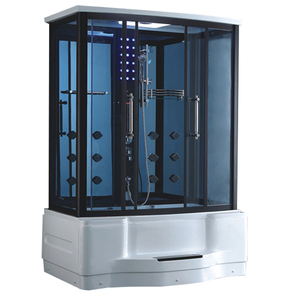
Sanitary & Wellness Glazing

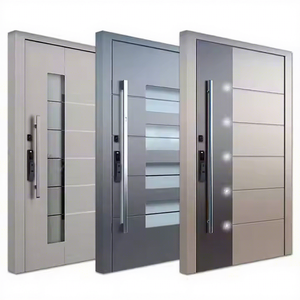
Explore our integrated portfolio of tempered laminated safety railings, heavy-duty commercial pivot entrances, high-acoustic windows, and exterior facades engineered for Southeast Asian environmental and luxury project demands.
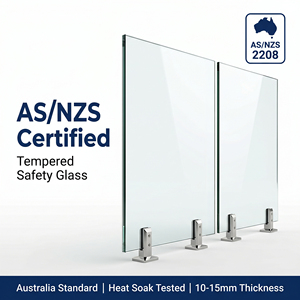
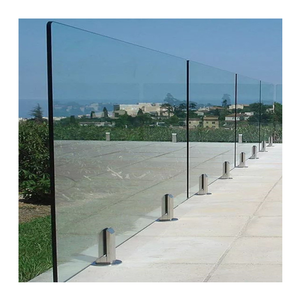
In contemporary Indonesian commercial and luxury residential developments—ranging from towering high-rises in Jakarta's SCBD to ocean-facing infinity villas in Uluwatu, Bali—the cantilevered structural channel glass railing (often termed a base-shoe or U-channel glass balustrade) has transitioned from an aesthetic option to a core structural element. Delivering unobstructed panoramic sightlines while ensuring life safety demands rigorous engineering, alloy selection, and glass lamination chemistry calibrated precisely to Indonesia's equatorial, high-humidity, and seismically active environment.
Balustrades installed along Indonesia's coastlines and volcanic seismic zones must resist continuous horizontal live barrier loads up to 1.5 kN/m, survive violent coastal wind gusts under SNI 1727:2020 load combinations, and completely eliminate glass interlayer delamination caused by perpetual 80%+ relative humidity.
The structural integrity of a frameless glass balustrade relies fundamentally upon the base channel (base shoe). Unlike point-fixed spigot systems that concentrate bending moments onto small, localized holes in tempered glass, a continuous structural U-channel base shoe distributes cantilever bending stress across the entire linear run of the concrete slab or structural steel kerb.
We engineer our continuous profiles utilizing architectural grade 6063-T6 and high-yield 6005A-T6 structural aluminum alloys. The 6005A-T6 alloy delivers a minimum tensile strength of 270 MPa and yield strength exceeding 225 MPa, providing the high flexural rigidity required to resist horizontal overturning moments without elastic deformation under crowd loading.
Dimensional tolerances are held strictly to ±0.5mm across extruded lengths up to 5.8 meters (optimized for standard 20ft and 40ft high-cube sea freight containers). Profiles incorporate internal serrated keyways engineered to interlock mechanically with dry-glaze engineered wedge mechanisms (such as high-density polyamide locking blocks and EPDM elastomer pressure pads). This dry-glaze wedge technology enables millimetric plumb alignment of glass panels on-site without wet expanding grouts, drastically speeding up installation cycles across multi-story developments in Jakarta and Surabaya.
Indonesia sits along the Pacific Ring of Fire, requiring facade elements and edge balustrades to comply with strict dynamic drift limits governed by SNI 1726:2019 (Tata Cara Perencanaan Ketahanan Gempa untuk Struktur Bangunan Gedung). Cantilevered balustrades must not only bear static loads but also accommodate inter-story seismic drift without brittle fracture of the glass panels or anchorage pull-out.
Under SNI 1727:2020 (Beban Desain Minimum dan Kriteria Terkait untuk Bangunan Gedung), design wind pressures ($q_z$) along coastal corridors—such as Pantai Indah Kapuk (PIK), North Jakarta, and Benoa, Bali—frequently exceed 1.2 to 2.4 kPa at elevations above 30 meters. Our technical export desk calculates specific glass panel flexure and deflection ratios ($\delta \le L/60$ or $25\text{ mm}$ max limit under serviceability limit state) based on localized wind pressure profiles:
| Base Shoe Mounting Configuration | Recommended Glass Build | Moment Capacity ($M_u$) | Linear Line Load Rating | Optimal Indonesian Application |
|---|---|---|---|---|
| Top-Mount Surface U-Channel (6063-T6) | 12mm Monolithic Tempered / 17.52mm PVB | 2.85 kNm/m | 0.74 kN/m (Residential) | Private Residential Balconies, Bandung Villas |
| Side-Mount / Fascia Channel (6005A-T6) | 17.52mm (8+1.52+8) SGP Laminated | 4.10 kNm/m | 1.00 kN/m (Commercial C1) | Hotel Atriums, Coastal Infinity Terraces, Bali Resorts |
| Recessed / In-Slab Concealed Shoe | 21.52mm (10+1.52+10) SGP Laminated | 6.35 kNm/m | 1.50 – 3.00 kN/m (C3/Crowd) | Jakarta Supertowers, Malls, PIK Promenades, IKN Civic |
| Heavy Structural Commercial Profile | 25.52mm (12+1.52+12) SentryGlas® | 8.80 kNm/m | 3.00 kN/m (Extreme Impact) | Rooftop Skybars, Helipads, Stadium Viewing Decks |
A critical failure mode in tropical glass installations across Southeast Asia is interlayer delamination and clouding ("milky edges"). Conventional architectural balustrades frequently utilize standard Polyvinyl Butyral (PVB) or standard Ethylene-Vinyl Acetate (EVA) interlayers. In climates like Jakarta, Medan, or Denpasar—where relative humidity routinely averages 75% to 90% combined with high ambient UV index—unprotected open glass edges absorb moisture over 18 to 36 months, leading to hydrophobic breakdown, edge bubbling, and structural debonding.
For frameless glass railings installed in Indonesia without top cap channels, our technical recommendation mandates SentryGlas® (SGP) ionoplast interlayers. Developed specifically for high-stress structural glazing:
Coastal Indonesian projects (such as seaside resorts in Jimbaran, Sanur, Labuan Bajo, and beachfront developments in PIK 2) present severe salt aerosol challenges. Standard architectural finishes corrode rapidly under electrolytic saline deposition.
Our structural U-channels and architectural hardware are available with Class I Architectural Anodizing (20–25 microns thickness) meeting Qualanod marine standards, or Qualicoat Class 2 / AAMA 2605 PVDF Fluoropolymer Electrostatic Coatings. These coatings undergo 3,000-hour continuous salt spray testing (ASTM B117) with zero blistering, flaking, or pitting. Base channel profiles also feature precision CNC-machined internal weeping weep-holes and isolation drain blocks that purge accumulated moisture, preventing galvanic corrosion between concrete anchor bolts (SUS316 or Duplex 2205) and the extruded aluminum alloy.
From high-velocity wind loads on metropolitan penthouses to coastal salinity on beachfront luxury resorts, our channel railing configurations match specific microclimates and regional engineering requirements.
Overlooking crashing surf in Uluwatu, Canggu, or Labuan Bajo, balustrades face perpetual chloride-laden sea spray. We supply side-mounted fascia U-channels with 25-micron marine anodizing and 17.52mm SentryGlas® laminated glass to deliver total transparency with zero salt pitting or edge clouding.
Condominium towers in SCBD, Mega Kuningan, and West Jakarta require balustrades engineered for significant cyclic wind fatigue and stringent pedestrian fall safety. Base shoes are embedded directly into reinforced concrete floor slabs with 21.52mm tempered laminated glass, maintaining zero line deflection under gale-force gusts.
The construction of Indonesia's new sustainable capital (IKN) and Greenship-certified corporate buildings demands environmentally verified materials. Our aluminum base channels utilize high-recycled-content billets, paired with non-toxic, lead-free EPDM gaskets and Low-E laminated glass options to support high ESG and energy-saving ratings.
Analysis of ongoing structural, regulatory, and design transitions influencing procurement directors and architectural specifiers throughout the Republic of Indonesia.
Indonesian luxury developers are moving away from traditional framed stainless steel post balusters toward completely concealed base shoes cast into balconies or covered with marble flooring. This design creates an uninterrupted transition between indoor porcelain tiles and outdoor tropical scenery, providing clean architectural aesthetics while meeting strict local building code requirements.
Following high-profile regional incidents with spontaneous tempered glass fractures caused by nickel sulfide (NiS) inclusions in monolithic panels, top-tier Indonesian structural consultants (Konsultan Struktur) now consistently mandate heat-soaked tempered laminated glass for high-rise balconies. Our factory provides 100% calibrated heat-soaking ovens, significantly mitigating in-situ failure risks.
Beyond the traditional Jakarta-Bali axis, infrastructure projects across Lombok (Mandalika), Labuan Bajo, Sumba, and Manado have increased demand for durable, pre-engineered modular channel systems. Contractors require standardized prefabricated kits that can be transported smoothly via inter-island sea routes and installed quickly by local labor without specialized welding machinery.
Combining 15+ years of architectural fabrication experience and 1,200+ global project handovers with direct export capabilities, full technical documentation, and accountable after-sales support.
Every extrusion die, glass dimension, and structural base is custom fabricated to opening dimensions with laser-level precision, eliminating field cutting and on-site alignment compromises.
From precision base-shoe extrusion to CNC pre-drilling of elongated anchoring slots and glass polishing, all manufacturing operations remain fully integrated in-house for complete quality control.
Heavy-duty, fumigated solid timber A-frames equipped with moisture-barrier wrapping and active silica gel desiccants prevent glass surface corrosion during tropical ocean shipping to Indonesian ports.
We supply Indonesian developers and facade consultants with comprehensive submittal packages, including finite element analysis (FEA) reports, CAD details, calculation books, and structural test certificates.
Practical answers regarding shipping logistics, port clearance, Indonesian structural compliance, installation options, and product longevity.
Whether you are detailing a luxury clifftop villa development in Bali, a high-rise condominium in Central Jakarta, or a commercial development in IKN Nusantara, our engineering desk provides wind load calculations, custom extrusion dies, and consolidated containerized export shipments across Indonesia.