
Manufactured under ISO 9001 certified quality control using 6063-T6 virgin architectural alloy, high-tensile dry-glaze aluminum shoes, and certified safety interlayers tailored to Southeast Asian tropical environments.
A comprehensive design manual for Malaysian architects, CIDB Grade G7 contractors, structural engineers, and property developers specifying balcony balustrades in tropical high-velocity microclimates.
Under the Malaysian Uniform Building By-Laws (UBBL 1984), By-Law 87 strictly governs parapet and balustrade safety. For balconies in residential apartments and commercial buildings exceeding a drop of 1 meter, the minimum balustrade height is fixed at 1,000 mm, with contemporary high-rise towers in Kuala Lumpur and Penang routinely specifying 1,100 mm to 1,200 mm.
Furthermore, Malaysian safety codes mandate that vertical openings between balusters or glass panels must not permit the passage of a 100 mm diameter sphere to prevent infant entrapment. Our frameless U-channel profiles and spigot systems ensure edge-to-edge gaps remain under 30 mm while integrating mechanical interlocks.
Malaysia is subject to severe tropical monsoon squalls (the "Sumatra squalls") and local convective downbursts. According to Malaysian Standard MS 1553:2002 (Code of Practice on Wind Loading for Building Structure), basic wind speeds (Vb) range from 32.5 m/s to 33.5 m/s across Peninsular and East Malaysia.
At high altitudes—such as 40+ storey condominiums in Mont Kiara, KLCC, or Gurney Bay—local gust pressure (qp) frequently exceeds 1.8 kPa to 2.4 kPa on windward balcony edges and negative vortex corners. Our structural glass balustrades utilize finite element calculation models to verify deflection limits (span/65 or 25 mm max) under peak 50-year return period aerodynamic loads.
A fatal error in Malaysian high-humidity environments (where average relative humidity stays between 80% and 90% year-round) is the use of standard interior-grade PVB (Polyvinyl Butyral) in exposed frameless balustrades. Moisture ingress at exposed top and side edges causes progressive edge delamination, milky cloudiness, and interlayer degradation within 24 to 36 months.
We engineer exterior Malaysian installations using SentryGlas® (SGP) ionoplast interlayers. SGP is 100 times stiffer and 5 times tougher than standard PVB, with unmatched moisture immunity that eliminates edge delamination even in coastal saline zones. In the rare event of glass fracture, SGP maintains structural rigidity upright, preventing catastrophic collapse.
Cross-referenced against MS 1553:2002 wind load thresholds, BS 6180:2011 impact criteria, and CIDB construction specifications.
| Installation Zone / Height | Calculated Design Pressure | Recommended Glass Spec | Interlayer Type | Base Fixation System | Alloy / Hardware Finish | Certification Status |
|---|---|---|---|---|---|---|
| Landed Villa / Terrace (1–3 Storeys) Petaling Jaya, Shah Alam, Iskandar |
0.75 – 1.00 kN/m² | 12mm Toughened or 13.52mm Laminated | 1.52mm PVB / SGP | SS316 Spigots or Surface U-Channel | Duplex 2205 / Powder Coat 6063 | SIRIM & UBBL Compliant |
| Mid-Rise Residential (4–15 Storeys) Cyberjaya, Melaka, Kota Kinabalu |
1.00 – 1.50 kN/m² | 17.52mm (8+1.52+8mm) Toughened Lam. | 1.52mm SentryGlas (SGP) | Continuous Sub-floor Embedded Shoe | 6063-T6 / Anodized AA25 (>25µm) | BS 6180 Heavy Duty |
| High-Rise Towers (16–45 Storeys) KLCC, Bangsar South, Mont Kiara |
1.60 – 2.20 kN/m² | 21.52mm (10+1.52+10mm) Heat Strengthened | 1.52mm / 2.28mm SGP | Structural Aluminum Monoblock + Handrail | 6005-T5 Hardened / PVDF AkzoNobel | Engineered Wind PE Calc |
| Ultra High-Rise & Waterfront (>45 Storeys) Gurney Drive Penang, Forest City JB |
2.40 – 3.20+ kN/m² | 25.52mm (12+1.52+12mm) SGP Laminated | 2.28mm SentryGlas Plus | Heavy-Duty Anchor Bracket + Stiffener | C5-M Marine Finish / Grade 2205 | Custom Project Sign-off |
From dense urban high-rise skylines in Greater Klang Valley to high-salinity seafront environments in Penang and Johor Bahru, our systems resolve precise localized architectural challenges.

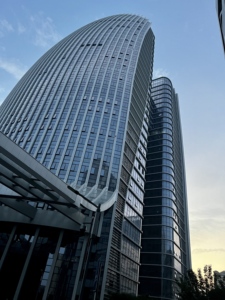
Modern luxury residential high-rises across Kuala Lumpur, Mont Kiara, and Bangsar demand maximum acoustic isolation and unobstructed panoramic city skyline views. Conventional framed balustrades disrupt facade aesthetics and collect carbon soot from dense metropolitan traffic.
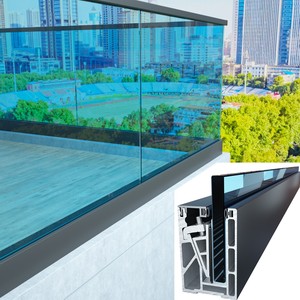
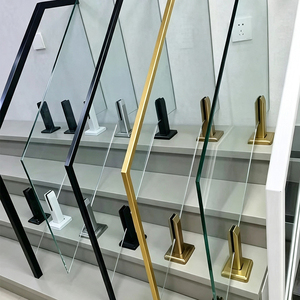
Our continuous frameless dry-glaze U-channel systems sit flush with interior marble floor tiling, creating seamless indoor-outdoor transitions. Utilizing extra-clear Low-Iron tempered glass panels up to 1,300 mm in height, the balustrade minimizes visual distortion while acting as an effective acoustic baffle against city traffic noise, dampening street decibels by up to 34 dB when paired with integrated balcony sliders.

Seafront developments along Penang's Gurney Drive, Tanjung Bungah, and Langkawi's luxury resorts face ISO 9223 C4/C5-M corrosive marine atmospheres. High ambient salinity, constant sea breeze aerosols, and intense UV blistering destroy inferior hardware, causing pitting rust on standard 304 stainless steel within months.
We supply balustrade packages engineered exclusively with Duplex 2205 and marine-grade SS316 mirror-polished spigots, alongside aluminum shoes protected by minimum 25-micron architectural anodization (Grade AA25) or AkzoNobel Interpon D2525 ultra-durable fluorocarbon powder coating. This provides tested resistance exceeding 3,000 hours in continuous salt spray testing (ASTM B117) with zero surface blistering.

Large-scale commercial developments, mixed retail promenades, and master-planned waterfront villas in Southern Johor demand massive delivery throughput, uniform modular installation speeds, and strict structural repeatability to meet CIDB IBS (Industrialised Building System) mandates.
Our prefabricated modular aluminum base channels are supplied pre-drilled to exact structural anchor centers, equipped with patented mechanical expansion wedges that allow alignment adjustment (+/- 5 mm) without messy chemical grout or wet mortar. Contractors achieve an installation tempo of up to 45 linear meters per crew per day, drastically shortening structural critical path schedules.
Key technological, environmental, and structural trends shaping commercial tender documents and high-end residential balustrade specifications across Southeast Asia.
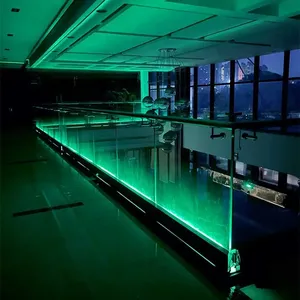
High-end residential sky villas in Bukit Bintang and Tropicana are replacing conventional exterior lighting with LED-integrated smart glass railings. Sub-channel and handrail profiles now incorporate concealed IP67-rated 24V LED ribbon diffusers emitting indirect ambient light.
Our systems feature thermal management extrusion recesses that dissipate LED heat in warm tropical ambient air (32°C to 38°C), preventing lumen degradation. Integrated DMX controllers allow programmable architectural facade lighting that synchronizes with central Building Management Systems (BMS).
Malaysia's Green Building Index (GBI) and Singapore's BCA Green Mark enforce aggressive embodied carbon metrics for commercial and residential developments. Developers receive higher rating points by specifying sustainable, endlessly recyclable building envelopes.
We supply low-carbon aluminum railing profiles extruded from billets refined with minimum 40% certified post-consumer recycled aluminum, cutting manufacturing carbon footprint to under 4.5 kg CO2e per kg Al. When combined with solar-control Low-E laminates, balcony balustrades aid overall facade shading coefficients.
The Malaysian Construction Industry Development Board (CIDB) mandates increased Industrialised Building System (IBS) scores for government, commercial, and major private developments to reduce dangerous on-site manual wet-work and improve quality consistency.
Our prefabricated balustrade modules arrive on-site pre-assembled to precision project bay dimensions. CNC-machined interlocking ends click seamlessly into pre-cast concrete structural anchor pockets, raising developer CIDB IBS ratings while eliminating on-site cutting, grinding, or welding sparks entirely.
Combining 15+ years of precision extrusion expertise, custom CNC engineering, and rigorous multi-stage QA/QC to deliver factory-direct architectural balustrades directly to Malaysian job sites.
Rooted in 15+ years of specialized architectural metal and structural glazing fabrication, our manufacturing operations enforce tolerances tighter than ±0.5 mm across all extrusion profiles, glass cut lines, and hardware CNC drill points. Unlike rigid traders with fixed off-the-shelf catalog lengths, every single glass panel, aluminum continuous shoe, and top slimline cap rail is custom manufactured to your project's architectural drawings.
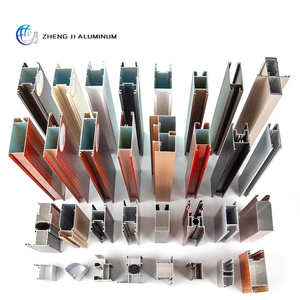
We utilize certified 6063-T6 and 6061-T6 structural aluminum ingots, extruded on automated 1,800 to 3,600-ton horizontal extrusion presses. Profile wall gauges are engineered from 2.5 mm up to 5.0 mm heavy-duty structural sections, guaranteeing unshakeable rigidity under extreme Malaysian tropical wind squalls.

Our products undergo comprehensive in-house mechanical testing before export: 50 kg twin-tire soft-body pendulum impact tests (BS EN 12600 Class 1B1), horizontal line load hydraulic pull tests up to 3.0 kN/m, and accelerated salt-fog testing (ASTM B117) to ensure absolute structural integrity.
We provide full container load (FCL) and consolidated (LCL) freight direct to Port Klang (North/West Port), Tanjung Pelepas (Johor), and Penang Port. Handled with fumigated ISPM-15 wooden crates with internal moisture-absorbing desiccants and EVA corner guards.
Under the ASEAN-China Free Trade Area (ACFTA), our export documentation includes certified Certificate of Origin Form E. This eliminates basic Malaysian import customs duties (bringing duties down from 15-20% to 0%), maximizing commercial competitiveness for your project budget.
Direct technical answers regarding customs clearance, UBBL compliance, structural engineering, glass replacement logistics, and on-site contractor coordination.
Through the ASEAN-China Free Trade Agreement (ACFTA), goods exported with an authenticated Certificate of Origin (Form E) enjoy preferential tariff treatment. In Malaysia, architectural aluminum profiles and glass fittings normally incur an import duty of 5% to 20%. With Form E issued by our customs bureau, the tariff rate drops to 0%, leaving only the standard local Sales and Service Tax (SST) upon customs clearance at Port Klang or Penang.
Yes. Local councils in Malaysia inspect balustrades strictly against UBBL 1984 By-Law 87 (parapet height and climbability) and structural load ratings. We provide complete project calculation sheets signed by qualified structural engineers, verifying horizontal line load deflection compliance with BS 6180:2011 and MS 1553:2002 wind pressures. These calculation books are routinely accepted by Malaysian Principal Submitting Persons (PSP) for submission to local authorities.
For standard project extrusions and tempered laminated glass, manufacturing takes 15 to 25 business days from shop-drawing sign-off. Direct sea freight transit time to Port Klang (West/North Port) or Port of Tanjung Pelepas (PTP) is typically only 5 to 8 days, with an additional 3 days for port customs clearance. Total door-to-jobsite delivery timeframe typically averages 28 to 38 calendar days.
Absolutely. We use certified architectural powder coatings from AkzoNobel (Interpon D series) and Jotun (Durasol / Facade series). We can precisely match any RAL color, metallic bronze, dark charcoal grey matte, or timber-grain finish specified by Malaysian architects, with certified 15- to 25-year warranty against chalking, fading, or peeling under intense tropical ultraviolet radiation.
While our tempered laminated safety glass and export packaging virtually eliminate transit damage, on-site accidents do happen during civil construction. Every glass panel carries a laser-etched fabrication serial code linked to its exact CNC cut file. In the event of site damage, we can expedite an exact duplicate replacement within 48 hours for air-freight dispatch directly to Kuala Lumpur International Airport (KLIA) or Penang Airport.
Yes. We support 3D BIM integration and supply fully detailed Revit (.rfa) and AutoCAD (.dwg) family files for architects to drag-and-drop into their master architectural models. If your site team conducts a 3D point-cloud laser scan, our technical department can directly ingest the raw survey data to fabricate customized profile lengths and glass shapes that match structural slab variations down to the millimeter.
According to BS 6180 (the primary reference standard adopted by Malaysian structural engineers), when laminated glass without a high-shear interlayer is utilized, a continuous structural slimline top-rail is mandatory to provide fallback support in the event of glass breakage. However, when specifying our SentryGlas® (SGP) ionoplast laminated balustrades, structural engineers can legally approve 100% frameless top-rail-free installations because the rigid SGP interlayer remains self-standing even if both lites shatter.
We work under standard international Incoterms including FOB, CIF (Port Klang / Penang / PTP), and DDP (Delivered Duty Paid directly to your project laydown site). Payment structures are typically handled via confirmed, irrevocable Letters of Credit (L/C at sight) or Telegraphic Transfer (T/T) tied to milestone production approvals and pre-shipment third-party inspection sign-offs (SGS / TÜV).
Submit your architectural drawings, tender schedules, or bill of quantities (BQ). Our engineering desk will deliver an itemized export quotation, wind load structural analysis, and Form E tariff assessment within 24 hours.