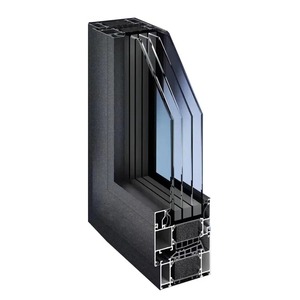
German Standard Aluminum Tilt & Turn Passive Quadruple Pane Windows
Engineered for absolute thermal break performance and acoustic attenuation in urban towers, featuring multi-point locking perimeter seals.
Engineered to integrate seamlessly with automatic sliding headers, curtain walls, and structural balconies in high-demand hospitality, commercial, and residential projects.
Engineered for absolute thermal break performance and acoustic attenuation in urban towers, featuring multi-point locking perimeter seals.
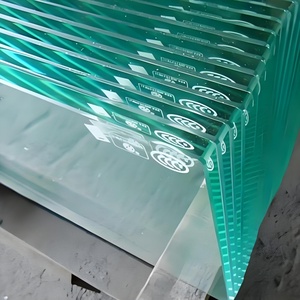
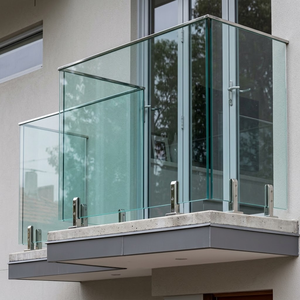
Heavy structural tempered balustrade panels engineered to withstand coastal salt air and continuous outdoor exposure in Mombasa & Naivasha resorts.
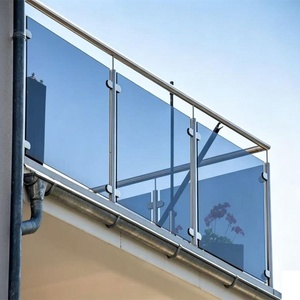
Precision AISI 304/316 grade modular clamp posts supporting laminated safety glass for corporate atriums and high-traffic shopping complexes.
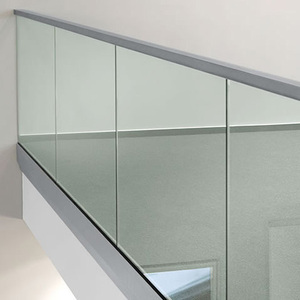
Continuous visual clarity with concealed base shoe channels, engineered for high-altitude wind resistance in Nairobi high-rise apartments.
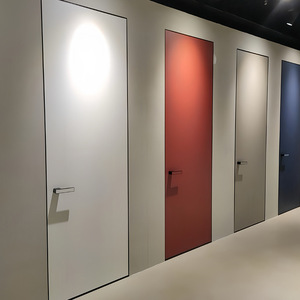
Minimalist invisible profile sub-frames engineered for executive boardrooms and modern luxury developments, compatible with magnetic latching.
A turnkey engineering solution for real estate developers requiring rapid installation, robust 6063-T6 aluminum alloys, and low lifetime maintenance.
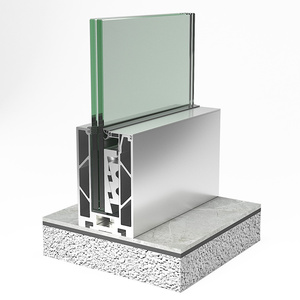
Heavy extrusion aluminum dry-glaze base channels with ergonomic slim-profile handrails, providing rigid structural containment without wet mortar.
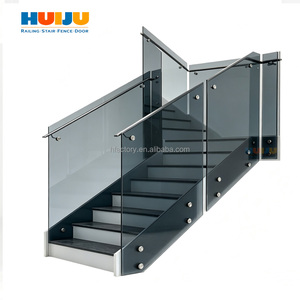
Solid stainless steel side-mount point fixings designed for cantilevered staircases, commercial mezzanines, and luxury villa entranceways.
As architectural standards rise across Kenya—from Grade-A commercial towers in Nairobi's Upper Hill to luxury coastal resorts in Kilifi and Diani—the engineering requirements for automated fenestration systems have shifted from simple convenience to structural endurance, electrical resilience, and environmental optimization.
A true commercial automated sliding entrance is not merely a conventional door fitted with an external motor; it is a synchronized mechatronic ecosystem. In East Africa, where regional power fluctuations, high particulate dust concentrations, and intense solar radiation create extreme operational friction, our manufacturing methodology focuses on four core technical pillars:
1. Direct-Drive Brushless DC (BLDC) Actuation: Standard induction motors suffer from brush degradation, heat accumulation, and high idle power drain. Our commercial sliding door operators utilize high-torque, enclosed 24V/36V DC brushless motors (similar to German Dunkermotoren specifications). By eliminating mechanical brushes, these operators achieve over 3,000,000 continuous duty cycles without thermal breakdown, operating quietly below 55 decibels. The built-in 100-pulse optical encoder precisely monitors millimeter-level leaf positioning, dampening kinetic movement during the deceleration phase to eliminate frame slam and structural fatigue.
2. Structural Profile Extrusion & Thermal Barrier Mechanics: Sub-standard framing sections warp under Kenya's pronounced diurnal temperature variations (spanning chilly 12°C Nairobi nights to 32°C high-noon solar loads). Our fabrication utilizes heavy-duty architectural-grade aluminum alloy 6063-T6, with wall gauges varying from 2.0mm to 3.5mm on load-bearing header profiles. Heavy sections are reinforced with polyamide PA66 thermal barrier struts to arrest heat gain, significantly lowering HVAC loads in LEED-targeted commercial buildings.
3. Advanced Sensor Fusion & Bidirectional Safety: Our systems utilize combined dual-technology activation and threshold safety sensors. Microwave Doppler radar provides volumetric motion detection adjustable for approach speed, rejecting cross-traffic interference from street-facing pedestrian traffic. Simultaneously, an active infrared curtain projects up to 24 discrete safety zones directly across the door track, preventing leaf closure should an individual, wheelchair, or luggage trolley hesitate within the threshold.
| Operator Parameter | Standard Commercial (Single / Bi-Part) | Heavy Industrial Telescopic | Hermetic Medical Cleanroom |
|---|---|---|---|
| Motor Type | Brushless DC 24V, 75W–100W | Dual Brushless DC 36V, 150W | Synchronous BLDC Micro-drive |
| Maximum Door Weight | 1 × 150 kg or 2 × 130 kg | 2 × 180 kg or 4 × 140 kg | 1 × 200 kg (Solid core / Lead lined) |
| Opening Speed (Adjustable) | 150 – 500 mm/sec per leaf | 200 – 650 mm/sec per leaf | 100 – 350 mm/sec controlled |
| Standby Power / Peak | < 5W / 120W Max | < 10W / 240W Max | < 8W / 150W Max |
| Environmental Sealing | EPDM High-Density Acoustic Mohair | Multi-Lip Heavy Neoprene | Perimeter Inflatable / Drop-Down Silicone |
| Kenyan Grid Voltage Tolerance | 200V – 250V AC, 50Hz Surge Protected | 180V – 260V AC, Industrial MOV Surge | Isolated Dual Medical PSU + UPS Backup |
Kenya does not present a uniform operational environment. A sliding entrance system in the Mombasa coastal salt belt requires radically different metallurgy, seals, and electronics than an automated glass entry in Nairobi's dry, dusty highlands or a high-traffic regional hospital in Kisumu.
Deployments across Westlands, Upper Hill, and Kilimani focus on high-throughput efficiency, architectural transparency, and integration with building access control systems (RFID, biometric facial recognition, and turnstiles). Designed with sleek frameless or ultra-slim profile systems, these entrances maintain HVAC efficiency in conditioned office towers while keeping street pollution and ambient vehicle noise outside.
Coastal marine environments destroy ordinary operators within 24 months through airborne chlorides. Our coastal packages feature marine-grade 6063-T6 aluminum treated with 25-micron class anodization or architectural PVDF fluorocarbon coatings, complemented by 316 stainless steel carriage brackets and fully conformal-coated electronic PCBs that resist saline fog, humidity, and coastal sand abrasion.
Healthcare facilities like the Kenyatta National Hospital complex, Aga Khan University Hospital, and private surgical centers require hands-free, touchless sliding access. Our hermetically sealed sliding doors utilize an intelligent track drop-down track mechanism that depresses the leaf against the rubber floor seal and jamb, maintaining clinical air pressure cascades and preventing cross-contamination.
Situated in the Maasai Mara, Samburu, and Naivasha, eco-lodges demand ultra-quiet operation and expansive glazed panels that open interior spaces to nature. Our motorized sliding systems incorporate ultra-quiet nylon-flanged rollers, concealed header boxes, and solar low-E insulated glass units designed to minimize UV transmission and reflect infrared heat while operating smoothly off solar-battery hybrid microgrids.
The industrial surge around the Nairobi Northern Bypass and Special Economic Zones (SEZs) calls for rugged, high-clearance entrances. We build oversized telescopic automatic sliding doors that double usable passage width, allowing rapid, uninterrupted transit for electric pallet jacks and personnel while preserving dust-free, pest-sealed conditions within sensitive storage facilities.
From Two Rivers Mall and The Hub Karen to Westgate, shopping center entrances experience sustained bi-directional customer footfall. Our heavy-traffic automatic entrances feature break-out emergency leaves (swinging open manually under pressure in fire emergencies) and intelligent self-learning microprocessors that automatically adjust dwell time based on peak crowd densities.
Under the banner of Kenya Vision 2030 and rapid urbanization, the East African commercial real estate market is undergoing a structural transformation. Building developers and architectural specifiers are prioritizing green credentials, post-pandemic hygienic standards, and smart-city grid adaptability.
1. Compliance with the Kenya Green Building Society (KGBS) & EDGE Certification: Energy efficiency is now an economic imperative rather than a luxury. With electricity tariffs in Kenya remaining a critical operational expense for commercial landlords, entrance systems must act as dynamic thermal airlocks. Uncontrolled infiltration through open doors accounts for up to 30% of a commercial tower's HVAC energy waste. Automatic sliding doors equipped with optimized opening cycles, rapid close sensors, and double-glazed low-emissivity glass (Low-E argon-filled units) maintain the integrity of the building envelope, directly assisting developers in achieving IFC EDGE (Excellence in Design for Greater Efficiencies) and LEED ratings.
2. Contactless Automation as an Enduring Hygiene Standard: In high-density corporate environments, the touchless movement of building occupants has become foundational. Traditional push-pull entrance hardware presents a continuous bacterial vector. Integrating microwave Doppler motion radar, active infrared threshold scanning, and optional contactless optical hand-wave sensors ensures seamless, hygienic accessibility without tactile engagement, aligning with modern corporate occupational safety policies.
3. Grid Resiliency and Power Management: Grid power fluctuations in regional hubs like Eldoret, Nakuru, and Kisumu require intelligent power supplies capable of absorbing voltage sags and surges between 180V and 260V without destroying motor drive controllers. Our engineering integrates continuous battery backup systems (Lithium-iron-phosphate or Sealed Lead-Acid UPS) that automatically power up to 300 cycles during mains outage, with programmable fail-safe modes that automatically park the doors open during a confirmed fire alarm.
With over 15 years of precision engineering and more than 1,200 commercial and residential sites completed, we eliminate the friction between architectural concept and on-site operational performance.
We do not operate on rigid catalogue modularity. Every frame, header, and glass panel is custom-milled and cut to the precise millimeter measurements of your rough opening, whether you require standard 2.1m heights or dramatic 3.8m full-height architectural openings.
Our structural door profiles use certified 6063-T6 architectural grade extrusions. Wall thicknesses exceed standard commercial grades, preventing sag, rail deflection, and roller bind over decades of relentless pedestrian throughput.
We provide full project accountability from survey to commissioning. Measurement begins with advanced 3D laser scanners to map structural plumb, camber, and floor level variances, ensuring the track carriage functions with virtually zero rolling resistance.
By keeping aluminum cutting, corner-cleat crimping, gasket insertion, and motor testing completely inside our dedicated manufacturing floor, we eliminate third-party quality variance and deliver tight, predictable dispatch timelines.
No vague pricing or hidden substitutions. Every quotation detailing profile gauge, glass treatment (tempered vs. laminated), motor torque, optical encoder grade, and hardware warranty is documented in an unambiguous technical schedule before production.
Managing East African developments from abroad? Our engineering coordination desk provides live BIM integration, milestone high-resolution photo/video progress reporting, and scheduled coordination calls to ensure seamless handover on site.
Technical, logistical, and regulatory answers for Kenyan quantity surveyors, structural engineers, developers, and facility directors.
All our automatic sliding systems and glazing products comply fully with Kenya Bureau of Standards (KEBS) requirements under the Pre-Export Verification of Conformity (PVoC) program. Shipments arrive with an accredited Certificate of Conformity (CoC), ensuring rapid customs clearance at the Port of Mombasa or the Inland Container Depot Nairobi (ICDN) without customs delays or re-inspection fines.
Our microprocessor drive units feature integrated wide-band switch-mode power supplies (SMPS) with built-in metal-oxide varistors (MOVs) designed to absorb high-voltage transients up to 4kV. They regulate input variances from 180V to 260V AC smoothly, feeding clean 24V/36V DC to the brushless motor, preventing burnt circuit boards common with cheaper systems.
Our systems comply with EN 16005 and ANSI A156.10 standards for power-operated pedestrian doors. For emergency fire egress, our systems integrate with building Fire Alarm Control Panels (FACP) to trigger an immediate fail-safe open command via internal spring or battery backup. We also supply mechanical breakout models where sliding leaves swing outwards under outward manual pressure.
In Nairobi, where high-altitude solar radiation creates high heat gain, we recommend 6mm Low-E + 12mm Argon + 6mm Clear tempered insulated glazing units (IGUs) to minimize HVAC load. In coastal Mombasa, where windborne sand and salt corrosion dominate, we specify double-laminated safety glass (5mm + 1.52mm PVB + 5mm) with marine-grade 25μm anodized frames to eliminate salt pitting.
Yes. Our microprocessors feature dry-contact I/O terminals, RS-485 interfaces, and optional Modbus/BACnet modules. They connect directly to third-party building management systems (BMS), biometrics, card readers, infrared barrier gates, and motorized night-security drop bolts.
With high-grade nylon-composite carriage wheels running on heavy-duty aluminum track liners, the mechanical hardware has an expected operating lifespan exceeding 10 years or 2,000,000 cycles. We advise a basic six-month preventive maintenance schedule that involves cleaning the floor guides, adjusting belt tension, and inspecting rubber seals.
Following approved shop drawings and laser dimensions, factory precision manufacturing requires approximately 12–18 business days. Consolidated maritime freight via standard container shipping to Mombasa Port takes 22–28 days, while urgent project header modules can be air-freighted directly to Jomo Kenyatta International Airport (JKIA) within 5–7 days.
We offer an end-to-end project management framework. Once your structural team prepares the opening, we coordinate directly via laser point clouds or detailed dimensional photos. We pre-assemble and pre-wire the automated header boxes before crating, allowing straightforward on-site installation by local structural teams supported by our remote engineering team.
Get in touch with our technical team today for comprehensive BIM models, opening shop drawings, wind load calculations, and commercial factory-direct quotations tailored to your Kenyan development.