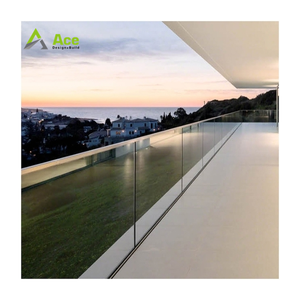
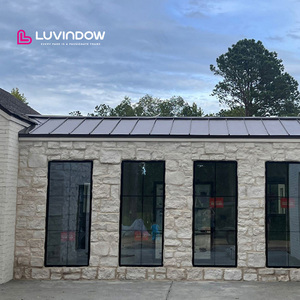
Direct factory-engineered casement systems, tilt-turn fenestration, balustrades, and structural envelopes engineered to endure Scandinavia's severe freeze-thaw cycles and high Baltic wind loads.
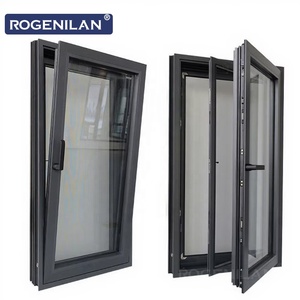
Lowest Certified Assembly Uw-Value for Passive House Standards
CE Marking EN 14351-1 & ISO 9001/14001 Compliant Fabrication
Polyamide Multichamber Thermal Barrier Insulation Strips
EN 12207 Air Tightness & EN 12210 Wind Load Resistance Verification
Sweden presents one of the most demanding environmental and regulatory landscapes for external building envelopes in Europe. Sourcing aluminium casement windows requires factory precision capable of overcoming steep thermal gradients, gale-force coastal wind pressure, and stringent environmental certifications.
Swedish building code Boverkets byggregler (BBR) sets explicit criteria for the overall specific energy use and envelope airtightness. For Swedish new builds and retrofits, average residential envelope Uw values must strictly reside below 1.0 W/(m²K), with premier low-energy projects demanding ≤0.80 W/(m²K).
In winter, indoor relative humidity combined with exterior temperatures falling below -25°C produces aggressive condensation challenges. Our aluminium casement designs deploy continuous, triple-tiered vulcanized EPDM gaskets engineered for flexibility in sub-zero Nordic conditions.
For installations in the Bohuslän coast, Skåne, or the Stockholm archipelago, salt spray and driving rain rapidly degrade substandard architectural finishes. We apply Qualicoat Class 2 / Seaside-certified fluorocarbon and polyester powder coatings exceeding 80 microns.
| Engineering Metric | Standard Commercial Grade | Sweden Climate Specification | Our Factory Export Standard | Compliance Status |
|---|---|---|---|---|
| Whole Window Uw-Value | 1.6 – 2.0 W/(m²K) | ≤ 1.0 W/(m²K) (BBR Mandate) | 0.78 – 0.92 W/(m²K) | Passive House Certified |
| Glazing Unit Structure | Double Glazed (4-12A-4) | Triple Glazed (4LowE-16Ar-4-16Ar-4LowE) | Triple/Quad Low-E with Argon 90% | EN 1279 Conforming |
| Thermal Break Depth | 14mm – 20mm Polyamide | ≥ 34mm Multichamber | 34mm – 54mm Technoform PA66-GF25 | Anti-Condensation |
| Airtightness (EN 12207) | Class 2 (300 Pa) | Class 4 (600 Pa) | Class 4 Verified (0.12 m³/h·m) | Zero Draft Guarantee |
| Wind Resistance (EN 12210) | Class B3 (1200 Pa) | Class C4 / C5 (≥2000 Pa) | Class C5 Structural Integrity (2400 Pa) | Coastal Tested |
| Acoustic Isolation (Rw + Ctr) | 28 – 32 dB | 35 – 38 dB (Urban Centers) | 38 – 45 dB (Acoustic Laminate Glass) | Soundproof Grade |
From the rugged exposed granite of the western archipelago to modern high-density urban multi-family residential towers in central Stockholm, each architectural context commands precise engineering adaptations.
Swedish coastal architecture prizes expansive glass facades to maximize daylight during fleeting Scandinavian winters. However, proximity to the North Sea and Baltic waters subjects glazing systems to relentless salt spray, horizontal cyclonic rain, and rapid wind loading.
Our outward-opening and tilt-turn aluminium casement systems feature Qualicoat Seaside-grade pre-anodized powder coatings that resist marine pitting. Multi-point mushroom-head locking cams around the sash perimeter exert continuous compression, preventing moisture migration even during 120 km/h autumn gales.

Urban real estate in Stockholm, Malmö, and Uppsala is bound by Sweden's ambitious carbon-neutral building certifications, specifically Miljöbyggnad (Gold & Silver) and the Nordic Swan Ecolabel (Svanen). Renovating older residential blocks requires replacing obsolete timber windows with ultra-low-maintenance, high-efficiency aluminium units.
Our custom profiles offer slim outer sightlines (down to 48mm) to match historical fenestration proportions while integrating modern acoustic glass panes achieving up to Rw 44 dB. Full material declarations, Byggvarubedömningen compliance, and factory Environmental Product Declarations (EPDs) are provided directly to general contractors.

In Sweden's northern zones, ambient winter temperatures regularly plunge beneath -30°C. In such conditions, standard aluminium window frames develop massive interior surface sweating, frost buildup, and frame warpage due to the steep temperature differential (ΔT > 50°C).
Our specialized casement windows deploy 54mm multi-cavity polyamide insulating strips augmented with polyolefin insulating foam cores. By decoupling the outer and inner aluminium extrusions completely, the indoor surface temperature remains comfortably above the dew point, completely eliminating condensation and interior draft convection.

As the Nordic market accelerates towards carbon neutrality and intelligent building automation, procurement managers must anticipate systemic shifts in material science and digital specifications.
While traditional Swedish housing historically relied on timber windows with external aluminium cladding (trä/alu), builders are increasingly shifting to full thermal-break aluminium systems. Timber cores are susceptible to rotting under moisture penetration, whereas 100% recyclable low-carbon aluminium offers an unyielding 50+ year service life with zero repainting costs.
Under Sweden's Climate Declaration Act for new buildings (Lag om klimatdeklaration för byggnader), developers must account for the carbon footprint of structural elements. Our manufacturing facility sources prime billets smelted using hydroelectric renewable energy, delivering certified third-party EPDs with embodied carbon levels under 4.0 kg CO² per kg aluminium.
Swedish modernism dictates flush, unadorned surfaces. Trends favor completely concealed heavy-duty hinges capable of supporting 180kg triple-glazed sashes, paired with concealed motorized chain actuators linked to building management systems (BMS) for automated night purge cooling during summer months.
Eliminate intermediary markups without sacrificing engineering pedigree. Our advanced facility integrates state-of-the-art German cutting centers, automated corner crimping, and precision QC protocols tailored to European B2B delivery.
Every profile section is processed through automated CNC machining centers. Drain slots, lock mortises, and hinge pilot holes are routed with sub-millimeter tolerances (±0.1mm), guaranteeing airtight hardware engagement and effortless site assembly.
Instead of rudimentary screw corners, our casement frames utilize heavy extruded aluminium corner brackets coupled with two-component polyurethane corner injection glue. This ensures absolute diagonal rigidity, lifetime water barrier tightness, and zero sagging.
We partner with premier hardware manufacturers including Siegenia, GU, and Roto. Every casement sash is equipped with anti-lift pins, micro-ventilation settings, and child-safe restrictor stays adhering to Swedish safety standard SS-EN 13126.
Clear, direct answers regarding Swedish import duties, European testing accreditations, site delivery logistics, and custom architectural manufacturing.
Yes. All fenestration products exported to Sweden fully comply with the European Construction Products Regulation (CPR 305/2011) and harmonized standard EN 14351-1:2006+A2:2016. Full Factory Production Control (FPC) documentation, testing reports for wind load, water tightness, and Uw thermal calculations, as well as official Declarations of Performance (DoP), are provided with every commercial shipment.
Standard factory production typically takes 25 to 35 business days following architectural CAD shop drawing sign-off and color approval. Ocean transit to key Swedish container terminals—including Port of Gothenburg (Göteborg), Port of Stockholm (Frihamnen/Norvik), and Port of Helsingborg—takes approximately 32 to 38 calendar days. Direct DDP (Delivered Duty Paid) trucking to job sites across Sweden is readily coordinated.
Condensation occurs when the interior glass surface temperature drops below the air's dew point. We prevent this by combining warm-edge hybrid polymer spacer bars (reducing linear thermal transmittance Ψ to ≤0.030 W/mK) with dual magnetron Low-E glass coatings, 90% Argon gas filling, and deep 34mm-54mm polyamide frame thermal breaks. This keeps interior edge temperatures high above the condensation threshold even at -25°C ambient exterior.
Absolutely. We provide full customization according to the international RAL Classic standard. We specialize in dual-color extrusion powder coating, which is highly popular among Swedish architects—for instance, a contemporary Matt Anthracite (RAL 7016) or Jet Black (RAL 9005) on the exterior facade, paired with a bright Signal White (RAL 9003) or natural anodized finish on the interior to match Scandinavian minimalist decor.
Fenestration units undergo a robust 4-layer packaging regimen: first, protective peelable film on all painted aluminium extrusions; second, shock-absorbent corner edge protectors; third, moisture-sealed heat-shrink wrapping; and fourth, heavy-duty fully enclosed fumigated plywood crates (ISPM 15 certified) with built-in forklift pockets and internal foam cushioning. Zero container movement guarantees pristine on-site arrival.
Aluminium windows imported into Sweden from outside the EU fall under HS Code 7610.10.00 (Doors, windows, and their frames). As an EU member state, Sweden applies standard EU external tariffs (typically 6% for finished aluminium joinery unless preferential trade agreements apply) along with standard Swedish VAT (mervärdesskatt / moms at 25%), which registered commercial entities can reclaim. Our documentation package includes complete commercial invoices, packing lists, and certified certificates of origin.
Yes. While traditional Swedish villas frequently specify outward-opening casements (side-hung or top-hung awning styles) to maintain tight weather seals under inward wind pressure, modern multi-story developments overwhelmingly favor European Tilt & Turn (dreh-kipp) configurations for effortless interior cleaning and controlled micro-ventilation. We engineer both opening typologies using robust concealed friction stays and multi-point perimeter locks.
We provide a comprehensive 10-year manufacturer warranty covering profile structural integrity, powder coating adhesion, and hermetic seal stability of the insulating glass units. Hardware mechanisms carry a 5-year replacement warranty. In addition, we ship extra sets of essential operational hardware, EPDM corner gaskets, and fasteners with every container to ensure your site installation crew is never delayed.