
Manufactured under strict ISO9001 and CE execution protocols. Each system is calibrated with continuous EPDM multi-chamber gaskets, multi-point perimeter locks, and heavy-duty concealed hinges to withstand severe wind loads and thermal extremes.
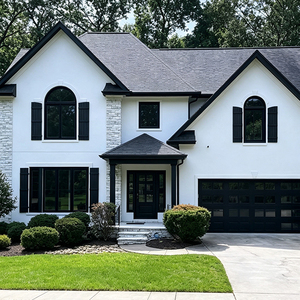
Reinforced structural alloy profiles engineered specifically for coastal hurricane wind pressures and extreme negative pressure resistance.
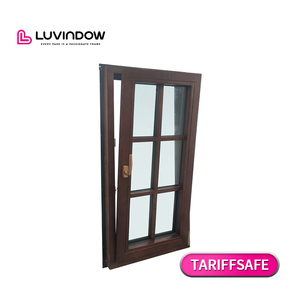
Fusion of interior architectural natural warmth and exterior maintenance-free powder-coated aluminum weathering resistance.
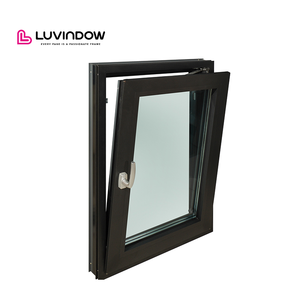
Smooth micro-ventilation gearing with dual-action sash balance, tested to 30,000+ uninterrupted opening-tilt cycles.
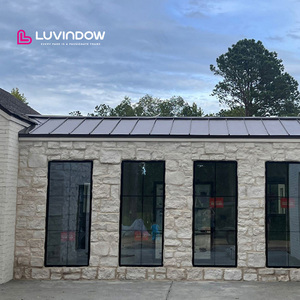
Minimalist architectural sightline delivering 18% greater glass surface area without sacrificing structural deflection limits.
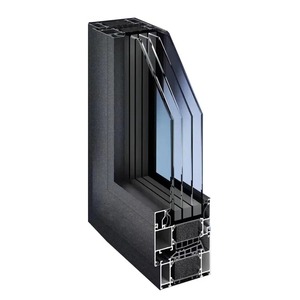
Ultimate building envelope thermal separation for zero-carbon architecture in sub-zero alpine and northern continental regions.
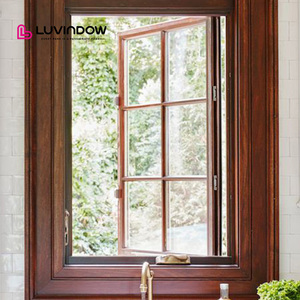
Custom extruded profiles matching preservation guidelines while providing modernized air-tightness Class 4 performance.
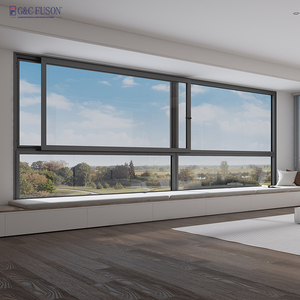
Patented mechanical linkage that releases sash from compression perimeter seals before smoothly gliding horizontally.
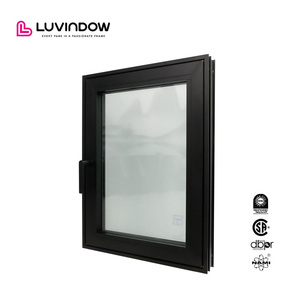
Factory direct custom sample program for real estate developers and general commercial building contractors.
Unlike standard broker-exporters or low-gauge assembly workshops, our manufacturing center executes integrated in-house extrusion, automated thermal-strut assembly, and robotic CNC corner crimping. We build fenestration systems tailored to strict architectural demands: from ASTM structural performance thresholds to European EN 14351-1 CE mandates.
Every profile section is extruded from certified prime 6063-T5 / 6063-T6 architectural grade aluminum alloy (including proven heavy-gauge profiles such as Pak Alco and Chawla technical standards), ensuring minimum web thickness of 1.8mm to 2.5mm for structural spans. We eliminate structural sagging and ensure airtight perimeter compression over decades of service.

Equipped with authentic Siegenia, Roto Frank, or Hoppe perimeter drive gears. Integrated mushroom-head locking cams, anti-slam buffer stays, and hardened steel anti-jemmy keeps achieve burglar resistance standard RC2 / RC3 without compromising tactile handle operation.
Triple-barrier continuous vulcanized corner gaskets prevent air permeability failures. Tested to European EN 12207 Class 4 and ASTM E283 air infiltration thresholds (<0.01 cfm/ft²), blocking howling wind acoustics and monsoon water penetration even under 900 Pa pressures.
To prevent transit racking, all glass-installed tilt-turn units are secured onto custom heavy-gauge steel A-frames with vacuum shock absorption layers, desiccant dry-packs, and corner armor guards. Guaranteed ready for direct installation on North American and European sites.
The global tilt and turn window market is shifting rapidly from conventional single-seal residential units to high-performance, intelligent building envelope components. Review key engineering advancements driving modern facade specifications.
Standard polyamide strips are being upgraded to multi-chamber low-density polyurethane foam insertions and aerogel core thermal breaks. By arresting internal cavity convection and thermal radiation, frame thermal transmittance ($U_f$) drops from 2.1 W/m²K down to 0.85 W/m²K, meeting strict Passive House Institute (PHI) criteria.
Architects demand uninterrupted clean interior sightlines. Next-generation concealed scissor stays and pivot bearings are hidden within the profile eurogroove, eliminating surface-mounted hinge barrels. Despite their hidden profile, advanced alloy pivots support massive triple/quadruple glazed acoustic sashes weighing up to 300 kilograms without sagging.
Modern commercial tilt-turn systems incorporate concealed 24V DC chain drives. Window sashes tilt automatically 100mm outward at night based on indoor CO₂ and temperature sensors to facilitate natural night-purge passive cooling, then seal into high-compression perimeter lockdown mode during daytime HVAC hours or sudden rainfall.
For international general contractors, real estate developers, and façade procurement teams, importing architectural windows requires evaluating macro supply chain shifts, embodied carbon mandates, and stringent fenestration testing certifications.
Institutional investors and LEED v4.1/BREEAM rating schemes now mandate third-party verified Environmental Product Declarations (EPDs). Procurement is prioritizing aluminum billet smelted using renewable hydroelectric energy (<4.0 kg CO₂e per kg aluminum). Choosing certified eco-billets significantly cuts upfront embodied carbon.
Importing non-certified fenestration creates severe building permit and occupancy certification bottlenecks. Professional procurement workflows require laboratory-backed NFRC 100/200 thermal simulation reports, CSA A440 testing certifications, and AAMA/WDMA/CSA 101/I.S.2/A440 fenestration performance grades (CW & AW classes).
Due to high site labor costs in North America, Europe, and Australia, developers are shifting entirely away from unglazed knocked-down frames. Factory pre-glazed tilt-turn windows with structural silicone and robotic edge-sealing arrive on site ready to crane directly into the rough masonry opening, cutting total installation hours by up to 65%.

A data-driven engineering assessment highlighting performance divergences between traditional horizontal sliders, standard casements, and our high-performance European-engineered tilt & turn systems.
| Performance Characteristic | Architectural Tilt & Turn (Our Standard) | Standard Outswing Casement | Traditional Horizontal Slider |
|---|---|---|---|
| Operating Modes | Dual Action (Top tilt 15° & 90°-180° full inward turn) | Single Action (Outward crank or swing) | Single Action (Sliding on nylon/steel rollers) |
| Air Infiltration (ASTM E283) | < 0.01 cfm/ft² (Perimeter continuous compression) | 0.08 - 0.15 cfm/ft² (Moderate compression) | 0.20 - 0.35 cfm/ft² (Brush seal friction leak) |
| Water Penetration (ASTM E331) | 730 - 900 Pa (Triple-chamber cascading drain) | 300 - 450 Pa (Weep hole overflow risk) | 150 - 250 Pa (Low sill track overflow risk) |
| Overall U-Value (Uw W/m²K) | 0.75 - 1.10 W/m²K (Passive House certified) | 1.40 - 1.85 W/m²K | 1.90 - 2.60 W/m²K (Poor thermal bridge) |
| Acoustic Attenuation (STC / Rw) | STC 42 - 48 dB (Asymmetrical laminated IGU) | STC 32 - 36 dB | STC 26 - 30 dB (Flanking track noise leak) |
| Burglar Resistance (EN 1627) | RC2 / RC3 (Multi-point perimeter locking cams) | RC1 / Standard latch keeper | Basic sliding latch (High jemmy risk) |
| Glass Exterior Cleanability | 100% Safe from Interior (90°-180° inward turn) | Difficult/Impossible above 2nd floor | Requires removing heavy sash panels |
Expert answers addressing structural engineering, thermal compliance, hardware longevity, and international logistics for architects and developers.
Traditional sliding windows rely on mohair wool-pile brush weatherstripping, which experiences continuous friction wear and allows pressurized air/moisture infiltration at track interlocks. Our tilt-turn windows utilize continuous closed-cell EPDM vulcanized rubber perimeter gaskets. When the drive handle is turned down, hardened alloy mushroom-head cams engage adjustable steel keepers along the entire perimeter, mechanically pulling the sash tightly against the frame with uniform compression.
Yes. We regularly manufacture and export systems tested to NFRC 100/200/500 thermal/solar parameters and CSA A440 / AAMA/WDMA/CSA 101/I.S.2/A440 air, water, and structural performance criteria. We configure our thermal-break profiles with warm-edge composite spacers (Technoform or Swisspacer) and double/triple silver Low-E soft coatings, routinely achieving total window thermal values (U-factors) down to 0.18 - 0.22 BTU/hr·ft²·°F (1.02 - 1.25 W/m²K).
We utilize certified 6063-T5 or 6063-T6 architectural grade aluminum extrusions with high-tensile wall thicknesses ranging from 1.8mm to 2.5mm for sashes and structural outer frames, far exceeding generic commercial 1.2mm builder grades. For our regional and export operations, profiles adhere to strict alloy metallurgy and certified manufacturing processes (such as Pak Alco and Chawla technical standards), ensuring absolute rigidity under severe positive and negative wind pressures.
Export units are placed in protective blue polyethylene film, bordered with heavy EVA corner bumpers, and anchored onto custom welded heavy-gauge steel A-frames or fumigated timber export crates. Glass panels undergo structural silicone edge bonding, and drive mechanisms are clamped with transport-lock clips. Shipments include humidity-indicating desiccant canisters and shock-recording sensors to ensure zero transit frame warping or micro-deflection.
We offer architectural AAMA 2604 / AAMA 2605 certified Fluorocarbon PVDF coatings (AkzoNobel / PPG) providing 20 to 30 years of resistance against UV degradation, gloss loss, and chalking in saline marine conditions. Additionally, we provide high-micron architectural anodizing (Class I, 18-25 microns) in clear, champagne, bronze, and deep black, resistant to salt-spray testing beyond 3,000 hours.
In addition to the 15° top-tilt and 90° inward turn, our hardware includes a 45° handle micro-ventilation setting. This releases the top seal by exactly 4mm to 6mm, creating a natural air exchange path while the perimeter mushroom cams remain engaged in their hardened anti-jemmy steel keepers. This enables secure, continuous fresh-air ventilation even when homeowners are asleep or away.
Yes. We work seamlessly with overseas property developers, architects, and expat clients. Following initial architectural elevation drawings, our engineering team generates detailed shop drawings, 3D BIM (Revit) models, and thermal calculation schedules. Laser-verified opening dimensions are reviewed via real-time digital walk-throughs, ensuring comprehensive approval prior to CNC billet cutting.
Our German-engineered transmission gearing is cycle-tested to 30,000+ full dual-action cycles, translating to over 35 years of standard daily operation. The hardware is coated with specialized zinc-nickel galvanic passivation (Fe/Zn-Ni) to resist red rust. Maintenance simply entails an annual application of acid-free silicone lubricant to moving drive points and visual inspection of corner gaskets.
Whether you require complete CSA/NFRC certified window schedules for luxury villa communities, commercial high-rise envelope systems, or custom-engineered Passive House fenestration, our engineering advisory desk is ready to review your shop drawings.