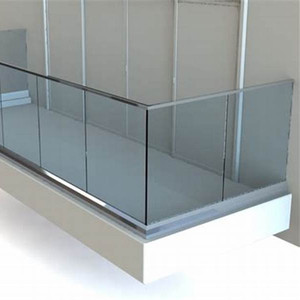
Exterior Outdoor Terrace Safety Laminated ESG VSG Glass Railing with U Channel
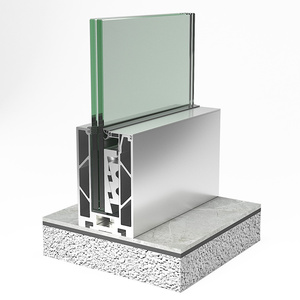
Spec: PVB/SGP Interlayer, Grade 6063-T6 U-Channel, Terrace & Deck Application.

Explore our export-certified architectural glass railings engineered for impact resistance, structural integrity, and contemporary aesthetic appeal across residential and commercial developments.
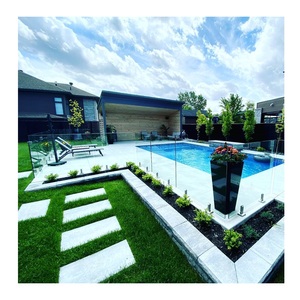
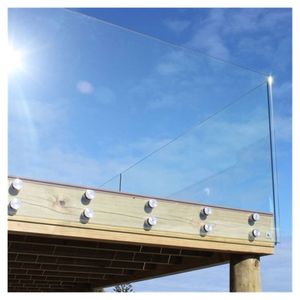
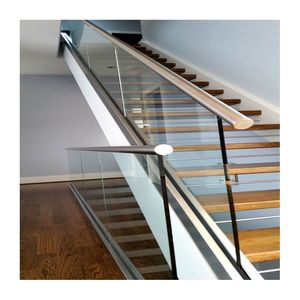
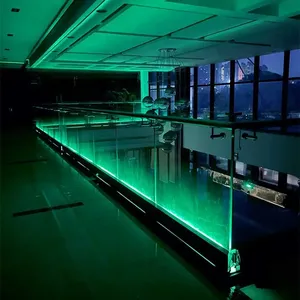
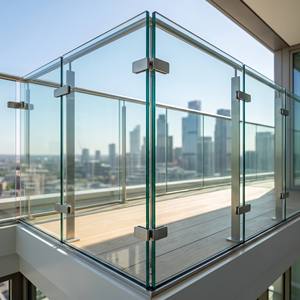
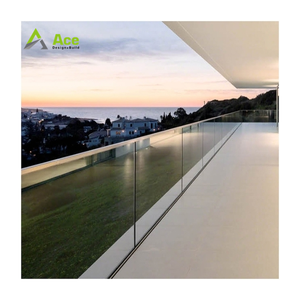
A rigorous architectural whitepaper perspective on why laminated glass balustrades represent the undisputed gold standard for human safety, wind resistance, and modern structural elegance.
Unlike monolithic tempered glass which shatters into fragments and leaves an unguarded void, laminated glass (ESG/VSG) remains bonded to the structural polymer interlayer upon fracture. This eliminates fatal fall hazards and satisfies high-rise building codes worldwide.
Multi-layered architectural balustrades withstand substantial uniform distributed loads (UDL) and point loads up to 3.0 kN/m. Engineered specifically to mitigate hurricane-force windward suction on balconies, rooftops, and coastal luxury villas.
High-density PVB and SentryGlas (SGP) interlayers block over 99% of damaging ultraviolet radiation while providing sound dampening coefficients exceeding 36 dB Rw, isolating exterior street traffic and mechanical plant noises from terraces.
Selecting the proper interlayer formulation is essential for balance between structural post-breakage stiffness, edge delamination resistance, and architectural lifecycle cost.
| Performance Characteristic | Standard PVB (Polyvinyl Butyral) | Structural SGP (Ionoplast / SentryGlas) | Procurement Recommendation |
|---|---|---|---|
| Mechanical Rigidity | Flexible; structural capacity drops under heat | Up to 100x stiffer and 5x stronger than PVB | Specify SGP for fully frameless exterior cantilevered barriers. |
| Post-Breakage Behavior | Panel may fold or sag over the channel shoe | Maintains upright vertical barrier barrier state | SGP is mandatory for high-rise open balconies and stairs without top rails. |
| Edge Delamination Risk | Moderate vulnerability in coastal/humid conditions | Superior moisture resistance; negligible creep | SGP prevents edge weathering in coastal and heavy rain climates. |
| Optical Clarity | Slight yellow hue index (YID > 1.0) | Ultra-clear pure transparent (YID < 0.5) | Use SGP combined with Low-Iron Extra Clear float glass for maximum transmission. |
| Cost / Application Fit | Cost-effective standard commercial solution | Premium initial capital investment | PVB fits post-mounted balconies; SGP fits frameless cantilever installations. |
Forward-thinking developers, global contractors, and commercial specifiers must anticipate these foundational shifts shaping the next generation of building envelope safety systems.
Wet-glazed silicone systems are rapidly being phased out globally. Modern procurement focuses on dry-glaze adjustable wedge systems that allow glass panel alignment within minutes, cutting field installation hours by 45% and eliminating wet-weather delays.
Architects are actively combining solar-harvesting BIPV glass railings with low-voltage architectural channel lighting. Glass balustrades are transforming from static safety guards into dynamic energy-producing and ambient lighting architectural features.
International environmental mandates demand verified EPD (Environmental Product Declaration) reports for aluminum extrusions. Specifiers are targeting recycled aluminum (Grade 6063-T6) combined with low-carbon float glass to satisfy LEED Platinum certifications.
Unlike trading intermediaries, our end-to-end direct manufacturing structure guarantees precision engineering, custom profile extrusion, and rigorous quality verification at every stage of fabrication.

Essential engineering and procurement answers covering certifications, glass configurations, channel hardware, and international freight protection.
For fully frameless cantilevered balustrades, structural building codes (such as IBC, BS 6180, and EN 12600) typically mandate a minimum of 17.52mm (8mm toughened + 1.52mm interlayer + 8mm toughened) or 21.52mm (10mm + 1.52mm + 10mm). For commercial applications subject to heavy crowd loads, 25.52mm tempered laminated glass is standard.
Monolithic tempered glass shatters completely upon impact into tiny blunt pebbles, immediately opening an unprotected void. In contrast, laminated glass retains its structural sheet barrier because the broken glass fragments remain adhered to the PVB or SGP interlayer, maintaining residual barrier load protection.
Yes. Our heavy-duty aluminum U-channels are extruded from architectural Grade 6063-T6 or 6061-T6 aluminum and receive a specialized anodized layer (20–25 microns) or Qualicoat Class 2 architectural powder coating. This prevents oxidation, pitting, and corrosion even in coastal marine environments.
Export glass shipments utilize specialized custom-built fumigated plywood crates with cork separation pads, desiccant bags to prevent moisture entrapment, and heavy-duty steel strapping. Channel extrusions are wrapped with protective peelable polyfilm to eliminate surface abrasion during sea transit.
Yes. Because we operate automated CNC cutting, waterjet shaping, and advanced autoclave bending furnaces, every project is tailored precisely to your architectural drawings. We supply curved curved balustrades, staircase rake panels, and custom-drilled standoff profiles without dimensional constraints.
Absolutely. We regularly coordinate with international general contractors, commercial developers, and expatriate property investors. We deliver complete CAD shop drawings, 3D BIM models, physical alloy and glass sample kits, and step-by-step video installation support.
Connect with our senior facade engineers and global export specialists. Receive comprehensive structural load assessments, custom CAD shop drawings, and competitive project quotations within 24 hours.