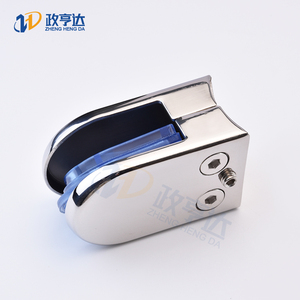
Direct from precision-controlled CNC manufacturing facilities. Each unit integrates structural thermal-barrier technology, oversized toughened architectural glass, and multi-point concealed mechanical locking hardware.
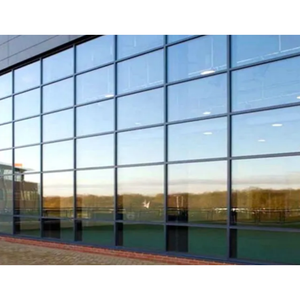
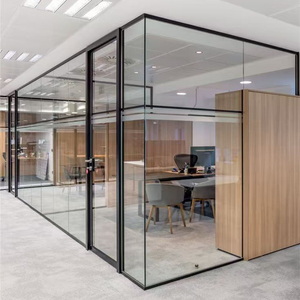
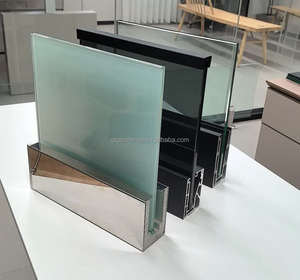
Evaluating engineering benchmarks, structural load mechanics, and certified fabrication protocols in top-tier Chinese extrusion facilities.
Contemporary architectural demand has shifted permanently toward borderless visual continuity. Leading Chinese factories utilize high-tensile 6063-T6 or 6061-T6 aluminum alloys combined with finite-element structural analysis (FEA) to reduce mullion and interlock sightlines down to an astonishing 16mm to 20mm without sacrificing wind pressure resistance under ASTM E330 or EN 12211 parameters.
Slim profiles can no longer compromise on thermal transmittance. Tier-1 factories integrate multi-chambered Polyamide 66 reinforced with 25% fiberglass (PA66GF25) thermal breaks. By pairing these isolators with polyurethane hollow cavity foamed filling and triple-pane warm-edge IGU glass, U-values are dialed down to $U_w \le 1.1\ \text{W/(m}^2\cdot\text{K)}$, qualifying for worldwide energy certifications.
Sash weights on modern architectural glass easily exceed 350kg to 600kg per leaf for expansive floor-to-ceiling heights. Sourcing directly from verified Chinese facilities gives global buyers access to custom CNC-milled heavy-duty stainless steel carriages, imported European multi-point shootbolt systems (Siegenia, Sobinco, Hoppe), and flush magnetic floor tracks that guarantee effortless single-finger glide operation.
A granular quantitative comparison illustrating where high-spec Chinese manufacturing creates quantifiable advantages in structural integrity, acoustics, and thermal efficiency.
| Engineering Metric | Standard Commercial Aluminum | Chinese Architectural Slim Series (Class A) | Global Compliance Standard |
|---|---|---|---|
| Interlock Sightline Width | 55mm – 75mm visible frame | 16mm – 22mm minimalist face | Architectural Aesthetic Spec |
| Billet Alloy & Temper | Secondary / Recycled Al (6063-T5) | Primary Virgin 6063-T6 or 6061-T6 | ASTM B221 / GB/T 5237 |
| Wall Thickness (Structural) | 1.2mm – 1.4mm profile gauge | 2.0mm – 3.0mm heavy-duty gauge | AAMA 101 / AS2047 High Wind |
| Thermal Barrier Spec | PVC or low-grade nylon strip (14.8mm) | Technoform PA66GF25 (24mm–34mm) | DIN 16941 / ISO 10077-2 |
| Glazing Configuration | 5mm + 9A + 5mm double clear | 6mm Low-E + 16Ar + 6mm + 16Ar + 6mm Triple | EN 1279 / ASTM E2190 |
| Max Sash Weight Capacity | 120 kg – 180 kg | 450 kg – 800 kg (Motorized / Heavy SS) | EN 13126-15 Cycle Tested |
| Acoustic Attenuation (STC) | 28 dB – 31 dB | 38 dB – 44 dB (Acoustic PVB Lamination) | ASTM E90 / ISO 717-1 |
| Surface Finish Standard | Standard Polyester 40μm | Qualicoat Class 2 / PVDF 3-Coat Fluropon | AAMA 2605 (10-Year Coastal Warranty) |
Strategic supply-chain shifts impacting wholesale ordering, carbon taxation, structural safety codes, and automated architectural building envelopes.
The next frontier for slim sliding and bi-folding windows is frictionless movement. China's top fabricators are integrating concealed brushless magnetic levitation (Maglev) tracks inside upper head jambs. Controlled via RS485, KNX, or Zigbee home automation protocols, multi-ton glass spans move silently with under 5 watts of operational power, accompanied by optical safety sensors embedded directly inside the 20mm slim interlocks.
With the European Union's Energy Performance of Buildings Directive (EPBD) and North American ASHRAE 90.1 ratcheting down permissible fenestration U-values, Chinese factories are investing heavily in hybrid systems featuring tempered Vacuum Insulated Glass (VIG). An 8.3mm VIG unit achieves the center-of-glass thermal performance of a 40mm triple-glazed IGU ($U_g \le 0.45\ \text{W/(m}^2\cdot\text{K)}$), dramatically decreasing weight load on slim structural aluminum frames.
Driven by CBAM (Carbon Border Adjustment Mechanism) tariffs in Europe, tier-1 Chinese manufacturers are swapping coal-smelted aluminum for renewable hydro-powered certified ingots with verified Environmental Product Declarations (EPD). Sourcing fenestration profiles with less than 4.0 kg CO2e per kg of primary aluminum is swiftly transforming from a boutique sustainability choice into a mandatory wholesale procurement baseline.
Traditional glazing beads are completely disappearing in the newest generation of slim frame products. Chinese assembly lines are utilizing automated robotic CNC application of Dow Corning 983 two-part structural silicone adhesive. By chemically locking the outer pane of glass continuously to the anodized aluminum sash, frames gain high torsional rigidity, allowing sash profiles to shrink below 18mm while resisting 3500 Pa cyclic wind loads.
Crucial quality-control checkpoints to inspect before issuing Letters of Credit (L/C) or approving high-volume production deposits.
Verify whether the supplier extrudes in-house or purchases profiles from outside brokers. Superior factories operate 2,500-ton to 5,500-ton extrusion presses utilizing primary A00 virgin aluminum billets. Request spectrometer chemical test reports certifying Silicon (0.2–0.6%) and Magnesium (0.45–0.9%) ratios for true 6063-T6 tensile strength exceeding 205 MPa.
Slim profile joinery accepts zero tolerance errors. Ensure the factory utilizes German or Italian 4-axis / 5-axis CNC machining centers (e.g., Emmegi or Elumatec) capable of drilling drainage slots, lock pockets, and corner key crimping in a single clamping setup to maintain tolerances within ±0.1mm, eliminating on-site air leaks.
For coastal or high-UV projects, inspect the surface coating line. Standard electrostatic spray fails quickly. Insist on automated vertical powder coating lines certified by Qualicoat (Class 2 or 3) using AkzoNobel or PPG fluorocarbon PVDF resins (AAMA 2605 compliant) providing film thickness $\ge 65\mu m$ and salt spray testing exceeding 3,000 hours.
Glass represents 85% to 92% of a slim window's surface. Confirm the factory's glass line holds international certifications: SGCC (ANSI Z97.1) for North America, CE (EN 12150) for Europe, and SAI Global (AS/NZS 2208) for Australasia. Inspect automatic double-seal secondary butyl and silicone extruders to avoid catastrophic seal failure and fogging.
Reputable manufacturers will never flat-pack complex slim systems without trial erection. Require 100% pre-assembly of corner joints, roller tracks, and motorized drives in the factory. Advanced facilities have on-site AAMA 501.1/501.2 dynamic water spray racks to verify weep hole performance under simulated torrential rain before shipment.
Slim frames and oversized glass panes are fragile over 30-day ocean transits. Ensure packaging specifications state fumigated non-coniferous wooden crates lined with waterproof plastic wrapping, corner foam bumpers, steel strapping, and internal desiccant bags, with glass sheets separated by non-residue cork spacers.
Over 15 years of precision engineering heritage, powering iconic commercial towers, boutique hotels, and luxury modern residential estates globally.
We refuse secondary aluminum scrap. All profile systems are extruded strictly from authenticated, high-tensile Pak Alco and Chawla virgin aluminum ingots, guaranteeing structural integrity under intense wind pressures and seismic drift conditions.
Unlike standardized catalogue suppliers, our digital engineering desk customizes every extrusion die, mullion depth, and glass makeup directly from client CAD/BIM models. Whether you require 6-meter sliding sashes or bespoke radius curved facades, we cut to fit.
Every production run undergoes strict quality gates: ultrasonic coating thickness checks, 100,000-cycle hardware endurance trials, optical glass distortion scanning, and laser straightness indexing to maintain under 1mm deflection per 3 meters.
From structural shop drawing generation and wind load calculations to container loading plans, our engineering support desk stands ready to collaborate with your team on your next landmark development.
Send an InquiryStraightforward answers covering structural deflection, international certifications, sea freight breakage risks, and customized engineering specifications.
Our engineering team analyzes architectural elevation drawings and provides complete cost-optimized structural calculations within 24 to 48 hours.
Send an Inquiry