Our export-grade product portfolio combines structural 6063-T6 virgin aluminum profiles with precision acid-etched, tempered, and laminated acoustic glass engineered to stringent international standards.
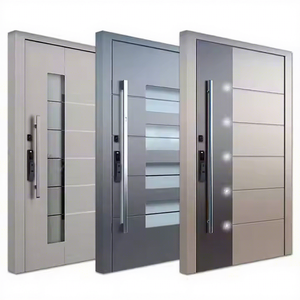
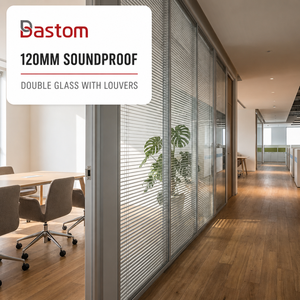
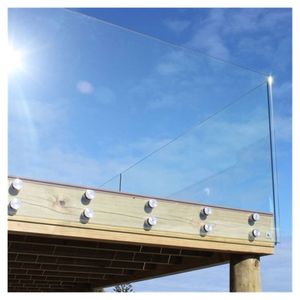
In high-density corporate headquarters, healthcare facilities, and luxury hospitality developments, modern demountable glass partition systems must balance visual acoustic confidentiality with natural light harvesting. As China’s premier frosted glass partition manufacturer and direct exporter, our technical processes surpass generic sandblasting, utilizing multi-stage chemical acid etching and precision CNC acoustic channeling.
Architectural interior glazing has evolved from basic physical demarcation into a high-performance building sub-assembly. Specifying frosted partition systems requires a multi-disciplinary understanding of light transmittance coefficients (VLT), surface roughness depth (Ra), and sound isolation mechanics. Traditional sandblasted glass utilizes high-velocity garnet particles to scour the float glass plane, producing a coarse microscopic surface prone to sebum and lipid absorption from fingerprints, chemical degradation, and high micro-crack density that impairs glass flexural tensile strength. In contrast, our chemical hydrofluoric acid-etching bath process selectively dissolves fluorosilicate matrices, yielding an ultra-fine, silky, non-porous surface morphology with zero residual internal tensile stress and exceptional resistance to stain retention.
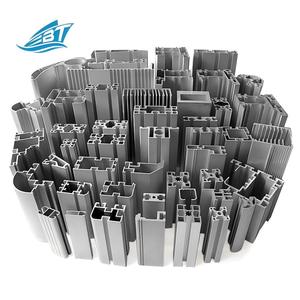
Furthermore, structural stability in high-traffic commercial corridors relies upon precision metallurgy. Utilizing certified 6063-T6 architectural grade aluminum profiles (conforming to GB 5237 / ASTM B221), our wall partitions incorporate internal reinforcement ribs, vibration-dampening EPDM co-extruded gaskets, and continuous dry-joint polycarbonate snap-in splines. This ensures zero wall racking, seismic load resistance, and acoustic seal longevity that wet silicone caulking can never sustainably match.
| Glazing Processing Type | Surface Roughness (Ra) | Visible Light Transmittance (VLT) | Fingerprint & Oil Resistance | Acoustic Rating (STC / Rw) | Durability Tier |
|---|---|---|---|---|---|
| Continuous Chemical Acid-Etched (Satin) | 0.85 – 1.20 μm | 84% – 88% | Ultra-High (Silane Sealed) | 35 – 42 dB (Mono/Lam) | Architectural Grade A+ |
| Mechanical Pneumatic Sandblasted | 3.50 – 5.80 μm | 68% – 74% | Low (Porous Matrix) | 32 – 38 dB | Utility Grade C |
| Ceramic Frit Silk-Screened (Tempered) | 1.10 – 1.80 μm | 20% – 65% (Tunable) | Permanent Mineral Fusion | 36 – 44 dB | Commercial Grade A |
| Acoustic PVB Laminated Translucent | 0.00 μm (Interlayer) | 72% – 80% | Smooth Float Surface | 42 – 51 dB (Dual Pane) | Heavy Commercial A+ |
| PDLC Polymer Smart Switchable | 0.00 μm (Embedded Film) | 80% Clear / 5% Frosted | Smooth Outer Pane | 38 – 45 dB | Smart Automation Tier |
Global procurement teams, facade contractors, and tier-one general contractors are reshaping procurement matrices. The focus is rapidly pivoting from basic unit purchase prices toward Total Cost of Ownership (TCO), cradle-to-gate ESG validation, and BIM-integrated modular delivery.
Modern fast-track construction schedules no longer tolerate wet cuts or onsite aluminum machining. International buyers now mandate fully pre-notched, CNC-milled, and pre-gasketed partition framing shipped as flat-packed assemblies. This reduces jobsite labor hours by up to 65% and ensures zero dust contamination in finished commercial interiors.
With LEED v4.1, BREEAM, and WELL building rating systems driving European and North American projects, procurement teams demand certified Environmental Product Declarations (EPDs). Sourcing certified secondary post-consumer recycled aluminum billets and electric-furnace processed float glass drastically slashes upfront embodied greenhouse emissions.
Tier-one engineering firms require Revit and IFC parametric models long before physical container dispatch. Our in-house drafting engineering hub outputs clash-detected, Level of Detail (LOD) 350-400 BIM partition families, allowing MEP engineers to verify HVAC return air plenum bypasses and structural floor deflection allowances.
Explore the engineering advancements revolutionizing modern architectural spaces, ranging from electro-chromatic privacy controls to micro-grooved acoustic decoupling.
Polymer-Dispersed Liquid Crystal (PDLC) active films laminated between twin 5mm/6mm ultra-clear low-iron float lites switch from transparent to milky frosted within 20 milliseconds under low voltage (48V AC), integrating seamlessly with building automation systems.
By sandwiching acoustic-damping poly-vinyl butyral (aPVB) resins within acid-etched glass panes, our dual-glazed systems isolate mid-frequency human speech frequencies (500Hz - 2000Hz), securing independent laboratory-certified STC ratings up to 48dB.
Industrial fluoropolymer surface treatments baked onto frosted glass create an oleophobic contact angle above 110 degrees. Water, oils, and particulate contaminants bead instantly, eliminating the cloudy ghost marks that ruin standard frosted finishes over time.
Advancements in structural aluminum extrusion allow our slimline framing profiles to maintain floor and ceiling sightlines of just 15mm to 22mm. These profiles accommodate up to ±15mm of building structural slab deflection without exerting compressive stress on the glass.

Drawing on an established manufacturing heritage of over 15 years and more than 1,200 successful installations, our fabrication facilities set the benchmark for high-tolerance architectural aluminum and glass processing. Unlike trading brokers, our fully integrated factories in China operate end-to-end CNC extrusion centers, automated chemical etching plants, and convection glass tempering lines.
Partner with China’s premier engineering exporter of architectural frosted glass partitions. Submit your CAD elevations, project schedules, or BOQs for custom manufacturing take-offs, free engineering samples, and complete factory-direct pricing within 24 hours.
Send an InquiryIn-depth technical and logistical answers addressing acoustic validation, glass safety certifications, sea transport break-mitigation, and custom CNC framing specifications.
From metallurgical spectrometer inspection to port-to-port logistics management, our standardized quality control protocols ensure uninterrupted delivery from factory floor to jobsite hoist.
Every batch of 6063 aluminum billets undergoes optical emission spectrometer testing to verify magnesium and silicon chemical ratios. Float glass panes are inspected for cord, seed, and bubble counts beneath high-intensity cross-polarized illumination.
Sample tempered lites undergo calibrated drop-weight impact testing and destructive fragment testing in compliance with EN 12150. A minimum fragment particle count of 40 granules per 50mm x 50mm square is strictly mandated to guarantee safety.
Container load plans are optimized using specialized 3D packing simulation software to distribute tare weights evenly across the chassis. Crates are anchored with heavy-duty ratchet tie-downs, air bags, and anti-slip rubber pads to prevent load shifts in transit.