Balustrade
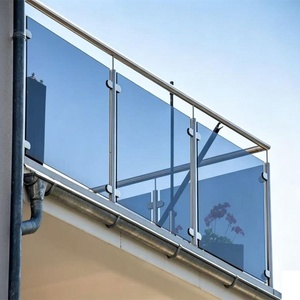
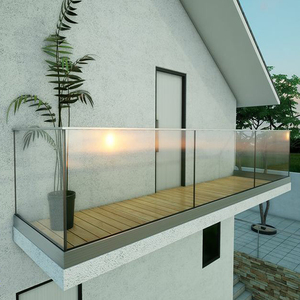
EKOO Top High Quality Indoor Stainless Balustrade Glass Clamp Post Balcony Railing
- SUS 304/316 Steel
- 10–12mm Toughened Glass
- Engineered Load Tested

Precision-manufactured insulated glass units, structural aluminum profiles, and interior glass architectural assemblies designed to meet rigorous North American, European, and Oceanian energy ratings.
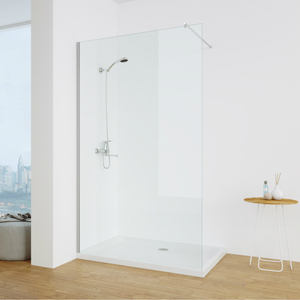
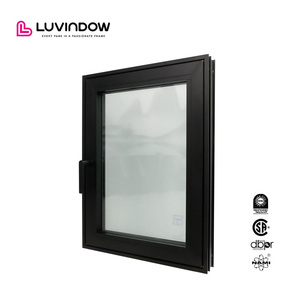
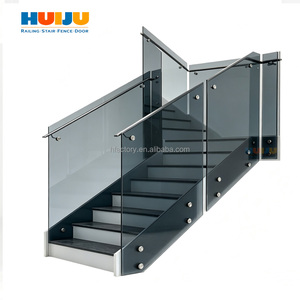
As international building energy codes tighten under ASHRAE 90.1, Title 24, and the EU Energy Performance of Buildings Directive (EPBD), selecting a fenestration supplier demands granular thermodynamic analysis. Monolithic or non-thermally broken frames are liabilities that cause thermal bridging, interior condensation, and excessive HVAC cycling.
Our double glazed insulated glass units (IGUs) utilize precision-engineered dual hermetic seal systems. The primary polyisobutylene (PIB) vapor barrier prevents moisture ingress, while structural silicone or polysulfide secondary seals maintain structural integrity against cyclic atmospheric pressure variations. Filled with 90%+ concentration high-purity dry Argon gas within 12mm to 20mm cavities, our units drop convective heat transfer to absolute thermodynamic minimums.
Dual sealed assembly featuring warm-edge stainless composite spacer bars, desiccant matrix, and architectural float glass calibrated for negative wind load pressures.
| Glazing Topology | Overall Uw (W/m²•K) | Solar Heat Gain (SHGC) | Sound Transmission (STC) | Relative Weight (kg/m²) | Ideal Architectural Application |
|---|---|---|---|---|---|
| Standard Double Glazed (Air Cavity) | 2.6 – 2.8 | 0.62 | 29 – 31 dB | 22 – 26 | Low-rise residential, interior shopfronts, mild temperate zones |
| High-Performance Dual Low-E + Argon | 1.2 – 1.4 | 0.28 – 0.38 | 36 – 39 dB | 25 – 30 | Commercial office envelopes, luxury mid-rise, coastal developments |
| Triple Glazed Double Low-E + Dual Argon | 0.78 – 0.95 | 0.22 – 0.32 | 42 – 46 dB | 38 – 45 | Passive House certifications, severe alpine/arctic climates |
| Vacuum Insulated Glazing (VIG) Hybrid | 0.55 – 0.72 | 0.25 – 0.35 | 39 – 42 dB | 24 – 28 | Ultra-slim architectural retrofits, historic building façades |
Leveraging 15+ years of architectural extrusion expertise and over 1,200 completed project sites internationally, we provide turnkey accountability from raw alloy batch testing to dockside container securing.
We exclusively employ high-density 6063-T5/T6 and 6061-T6 prime architectural billet extrusions. Wall thicknesses range from 1.4mm to 3.0mm heavy-duty commercial mullion designs, guaranteeing strict structural deflection compliance (L/175 or L/240 under severe cyclic gusts).
Automated 4-axis CNC machining centers perform continuous corner crimping, lock mortising, and weep-hole routing. Every sash is verified via digital laser measuring jigs to prevent out-of-square deviations and eliminate on-site air leaks.
Equipped for Class 1 anodizing (20μm+) and multi-coat PVDF architectural finishes conforming to AAMA 2605. Resistant to coastal saline corrosion, chalking, and intense UV degradation across desert, humid tropical, and marine microclimates.
We integrate native and European multi-point locking assemblies—including Siegenia, Roto Frank, and HOPPE—rated for 50,000+ continuous cycling tests. Smooth heavy-duty bogie rollers maintain silent, effortless operation on 400kg+ oversized sliding leaves.
Every production lot undergoes air-water-structural chamber trials, dew point testing down to -40°C (ASTM E546), glass stress polarimetry, and adhesion peel testing. Full QA records accompany container shipping documentation for municipal sign-offs.
Eliminate transit breakage. We package double glazed windows in customized fumigated timber or steel A-frame racks with corner elastomeric guards, moisture-absorbing silica canisters, and heavy-duty shrink wraps engineered to withstand ocean transit movements.
How international real estate developers, contractors, and façade engineers are navigating embodied carbon restrictions, automation, and advanced glass chemistry.
With the phase-in of the European Carbon Border Adjustment Mechanism (CBAM) and LEED v4.1/v5 whole-building life cycle assessments, aluminum fenestration procurement is no longer evaluated solely on landing price.
The global fenestration envelope is shifting rapidly toward whole-assembly thermal transmittance values below 1.0 W/m²•K. Sourcing double glazed units with warm-edge thermoplastic spacers (TPS) instead of cold aluminum spacers eliminates thermal conductivity at edge perimeters, lowering overall building operational carbon emissions by up to 18%.
Commercial spandrel panels and overhead architectural glazing are increasingly integrated with transparent and semi-transparent Cadmium Telluride (CdTe) or perovskite thin-film photovoltaic layers. Next-generation double glazed assemblies serve a dual role: robust thermal insulation and localized on-site clean electricity generation.
Modern procurement workflows now mandate parametric 3D models (Revit/IFC formats) directly from China suppliers. Integrating precise structural thermal bridge simulations (THERM/WINDOW) during shop drawing submittals ensures zero clashing with curtain wall anchor embedments.
Guaranteed project continuity from initial architectural schedule review to port unloading.
Review window schedules, calculate wind load dynamics (Ix/Iy), and deliver 2D/3D shop drawings.
Precision profile extrusion, thermal break assembly, and architectural powder coating/anodizing.
Robotic glass cutting, automated Low-E edge deletion, argon gas injection, and PIB secondary sealing.
In-line water chamber penetration tests, hardware cycling checks, and full photographic QA release.
Vertical A-frame containerized loading with anti-shock pallets, export customs release, and shipping.
Direct, definitive answers regarding export certifications, wind loads, thermal parameters, tariff compliance, and logistics management for double glazed systems.
Our fenestration assemblies are certified to primary global target standards: North American NFRC (U-factor, SHGC, VT) and AAMA/WDMA/CSA 101/I.S.2/A440; European CE markings conforming to EN 14351-1 and EN 1279 for IGUs; and Australian AS2047 / AS1288 structural standards. Comprehensive testing reports and factory mutual audits are provided with all commercial tenders.
Our structural engineering department uses regional structural design codes (such as ASCE 7-22, Eurocode 1, or AS/NZS 1170.2) based on building height, terrain category, and topographic exposure. We calculate the required Moment of Inertia ($I_x$ and $I_y$) for all structural mullions to limit deflection under peak gust pressures to $\le L/175$ or $L/240$.
Conventional aluminum box spacers conduct heat rapidly, creating localized perimeter condensation and thermal drops at the glass-frame junction. Warm-edge composite or stainless/polypropylene spacers reduce linear thermal transmittance ($\Psi$-value) by up to 0.04 W/m•K, elevating sightline temperature and boosting overall window $U_w$ by 8% to 12%.
Yes. Over 60% of our global contracts are managed with overseas developers, general contractors, and architects. We coordinate point-cloud 3D laser scans or verified framing rough-opening schedules, sharing real-time video validation, anodizing color swatches, and hardware mockups before mass fabrication starts.
Standard commercial lead time is 25 to 35 business days following final shop drawing and finish sign-off. We accommodate project-specific requirements with low MOQs for custom residential villas (as low as 20 m²) while operating high-throughput lines capable of supplying multi-tower commercial developments exceeding 50,000 m² per phase.
We seal all double glazed window cavities with robotic dual-stage PIB and high-modulus structural silicone. In addition, 3A molecular sieve desiccant is loaded into spacer tubes under continuous hygrometric control. Crates incorporate industrial vapor barrier liners and desiccant bags to prevent moisture accumulation during prolonged ocean transit.
Upload your architectural schedules, elevation elevations, or tender specs. Our engineering team returns comprehensive wind-load structural calculations, thermal simulations, and direct factory pricing within 24 hours.