
Explore precision-fabricated frameless spigots, post-mounted stainless glass assemblies, and structural architectural envelope systems manufactured to international safety codes.
Understanding the strict physics of high-load balustrades: Alloy chemistry, Pitting Resistance Equivalent Numbers (PREn), windward load transfers, and safety interlayer mechanics under international building regulations.
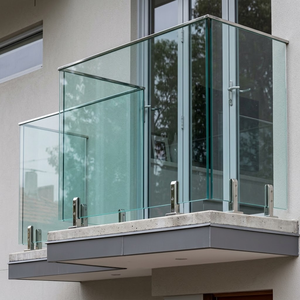
In contemporary commercial architecture, a glass balustrade is classified not as decorative infill, but as a primary structural safety barrier. Under the International Building Code (IBC 2024 Section 2407), ASTM E2358, and European Norm EN 12600 / EN 1991-1-1, railing assemblies must reliably withstand a concentrated point load of 200 lbf (0.89 kN) applied at any direction along the top edge and a continuous uniform linear load of 50 plf (0.73 kN/m) without structural plastic failure or dislodgement from anchors.
| Alloy Designation | Chemical Composition | PREn Score | Yield Strength (MPa) | Corrosion Tolerance | Ideal Architectural Deployment |
|---|---|---|---|---|---|
| AISI 304 (Austenitic) | 18% Cr, 8% Ni | 18.0 – 20.0 | ≥ 205 | Moderate (Atmospheric) | Interior commercial atriums, dry staircases, residential partitions |
| AISI 316 (Marine Grade) | 16% Cr, 10% Ni, 2.0% Mo | 23.0 – 25.0 | ≥ 220 | High (Chloride resistant) | Exterior balconies, coastal villas, terrace perimeters, swimming pool decks |
| Duplex 2205 (Ferritic-Austenitic) | 22% Cr, 5% Ni, 3.0% Mo, 0.17% N | 35.0 – 38.5 | ≥ 450 | Extreme (Ocean spray) | Marine spigot clamps, offshore balustrades, coastal public boardwalks |
| 6063-T6 / 6061-T6 Aluminum | Al-Mg-Si Structural Extrusions | N/A (Anodized 25μm) | ≥ 240 | Superior (Oxide barrier) | Continuous base shoe dry-glaze channels, structural fascia mounts |
For exterior frameless railings, ionoplast interlayers (Kuraray SentryGlas®) offer 5 times the tear strength and 100 times the rigidity of standard Polyvinyl Butyral (PVB). If laminated tempered glass shatters, SGP retains its structural plane vertically, preventing catastrophic pedestrian fall-through even without a continuous top cap.
Structural cantilevered glass railings behave as vertical beams fixed at the base. Under serviceability limit states, allowable lateral deflection at the top edge is constrained to h/60 or 25mm max under full design wind pressure. Base clamping channels must eliminate rotational micro-play via precision torque-calibrated composite dry wedges.
Surface contamination on stainless steel is caused by airborne chlorides penetrating the passive chromium oxide (Cr2O3) layer. To ensure 30+ year corrosion-free lifespans, components undergo continuous chemical pickling (ASTM A380) followed by ASTM A967 nitric acid passivation or mirror mechanical polishing to Ra < 0.4 μm.
A rigorous engineering and supply chain analysis assessing mechanical capability, fabrication accuracy, testing certifications, and global project delivery.
Primary Strengths: Worldwide benchmark in modular balustrade design. Renowned for their proprietary Easy Glass systems and dry-glaze wedge technology that eliminates chemical grout curing times. Complete testing under German AbP, British Standard BS 6180, and US IBC codes.
Best For: High-end commercial transit hubs, stadiums, and ultra-prime residential complexes.
Primary Strengths: Dominant North American manufacturer specializing in structural base shoes and patented TAPER-LOC® dry-glazing systems. They provide comprehensive CAD/BIM integrations, rigorous wind-load testing, and extensive ICC-ES certification reports for fast municipal permitting.
Best For: Large commercial skyscrapers, hospital balustrades, and high-rise condominiums.
Primary Strengths: Over 15 years of precision architectural fabrication with 1,200+ executed sites. Specializing in certified Pak Alco and Chawla heavy-duty alloy profiles paired with marine-grade SS316 and Duplex 2205 spigots. Every opening is verified by a laser site survey within 24 hours, cut and milled in-house.
Best For: High-specification luxury Spanish villas, commercial office facades, and coastal developments.
Primary Strengths: Engineered crowd-control architectural railing. Heavy-gauge welded stainless steel posts and pre-engineered seismic-compliant base shoes. They dominate monumental venue installations where dynamic crowd surging creates extreme horizontal lateral loads.
Best For: Sports arenas, convention centers, and major multi-modal transit stations.
Primary Strengths: Pioneer in monumental architectural glass railings with iconic floating handrails and sub-surface shoe anchoring. Blumcraft systems are famous for clean sightlines, zero exposed fasteners, and high-precision stainless steel castings.
Best For: Art museums, corporate headquarters, and high-prestige civic structures.
Primary Strengths: European engineering specialist focusing on lightweight structural aluminum shoe channels paired with stainless accessories. Known for their Flexfit alignment tool which allows operators to adjust glass panel plumb by up to 34mm from the balcony inside.
Best For: Medium-to-large multi-family residential towers where installation speed is paramount.
Primary Strengths: Renowned for their PanelGrip® dry-glaze railing mechanisms and custom illuminated stainless handrail extrusions (LumiRail). Excellent fabrication tolerances, ADA-compliant railings, and full code testing for both hurricane and seismic regions.
Best For: University campuses, municipal libraries, and public infrastructure stairwells.
Primary Strengths: Global master of point-fixed structural glass hardware (spider fittings, articulated rotules, and countersunk stainless bolts). SADEV systems are manufactured from high-grade casting alloys with microscopic dimensional tolerances for frameless facade integration.
Best For: Minimalist frameless glass canopies, suspended glass balustrades, and luxury shopfronts.
Primary Strengths: Renowned for commercial architectural hardware, automated entrance systems, and hydraulic self-closing glass railing gates. High metallurgical consistency across their SS316 clamp ranges with integrated physical security and access control interfaces.
Best For: Commercial banking halls, executive corporate suites, and airport terminal security corridors.
Primary Strengths: A premier European specialist in high-tensile stainless steel fasteners, machined standoff pins, and precision post components. Excellent traceability on mill test certificates (EN 10204 3.1) and strict zero-defect quality control for extreme chloride environments.
Best For: Coastal marine piers, luxury yacht marinas, and harsh chemical facility railings.
Strategic analysis of disruptive advancements transforming architectural glass balustrade procurement, environmental lifecycle governance, and integrated technology.
Modern building envelopes are shifting from passive structures to micro-energy generators. Building Integrated Photovoltaic (BIPV) balustrades utilize bifacial monocrystalline silicon cells embedded in laminated safety glass, outputting 110W to 170W per linear meter to power facade lighting and HVAC sensors.
Wet-cement installation methods (expanding hydraulic cements) are rapidly becoming obsolete in global commercial specifications due to irreversible glass staining, water trapping, and labor costs. Modular dry-glaze systems allow single-sided mechanical installation, reducing site labor overhead by up to 70%.
Physical Vapor Deposition (PVD) coating applies vaporized titanium nitride in high-vacuum chambers directly onto SS316 balustrade hardware. This delivers scratch-resistant finishes—such as brushed gold, champagne bronze, and satin obsidian black—with 300% higher surface hardness than liquid powder coats.
How state-of-the-art multi-axis CNC machining, robotic laser cutting, and automated continuous glass tempering furnaces ensure absolute dimensional repeatability.
Eliminating thermal distortion during the profiling of heavy-gauge stainless steel plate. High-pressure nitrogen-assist fiber lasers deliver burr-free edge radii on post bases and glass brackets, preventing microscopic stress concentrations that cause premature fatigue cracking.
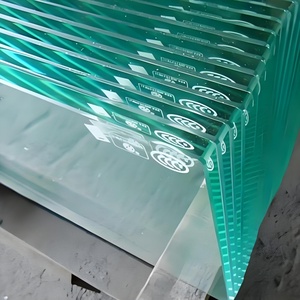
Tempered glass balustrades undergo strict optical laser measurement during furnace cooling to reduce roller-wave distortion to under 0.05mm per 300mm length. This ensures visual clarity without wavy optical reflections across expansive panoramic facades.
Certified stainless balustrade fixtures undergo 1,000+ continuous hours of Neutral Salt Spray (NSS) testing at 35°C without evidence of pitting or pitting bloom. Mill Test Certificates (MTC) confirm compliance with chemical heat numbers down to individual casting batches.
Operating a dedicated fabrication floor on Feroz Pur Road in Lahore, Al-Karam Aluminium bridges international architectural engineering with meticulous on-site craftsmanship. Backed by 15+ years of active field experience and 1,200+ completed residential, corporate, and developer installations, we manage the entire project lifecycle without subcontracting uncertainty.
We work exclusively with certified alloy extrusions from Pak Alco and Chawla, specifying 1.2mm to heavy structural profiles matched with 10mm to 12mm certified tempered and laminated safety glass.

In-depth technical answers addressing alloy verification, local building code tolerances, seismic fastening, and long-term surface care.
AISI 304 contains 18% Chromium and 8% Nickel, providing adequate protection for indoor, climate-controlled spaces. AISI 316 incorporates 2% to 3% Molybdenum, creating a passive chemical barrier that resists localized pitting attack from chlorides in marine, swimming pool, and high-pollution environments.
Standard PVB becomes pliable when exposed to exterior solar heat and moisture. If glass panels break, PVB collapses under its own weight. SGP ionoplast interlayers remain rigid even under elevated thermal conditions, maintaining post-breakage barrier stability and preventing catastrophic falls.
Under IBC 2024 Section 2407 and ASTM E2358, glass railings must withstand a 50 plf (0.73 kN/m) uniform horizontal load applied along the top edge, plus a 200 lbf (0.89 kN) concentrated load applied at any point. Impact testing requires a 400 ft-lb pendulum drop to confirm safety against blunt-force pedestrian impacts.
Tea staining is a cosmetic brown surface oxidation occurring on stainless steel when airborne salt or industrial pollutants deposit on rough surfaces (Ra > 0.5 μm). It is prevented by specifying electropolished or satin Ra < 0.4 μm finishes and periodic cleaning with mild phosphoric acid passivation solutions.
Dry-glaze wedge systems utilize mechanical polymer torque blocks to clamp glass inside aluminum shoe channels without liquid grout. This eliminates cure times, avoids messy masonry clean-up, protects the laminated glass interlayer from caustic chemical damage, and allows individual panel replacement in minutes.
Yes. When engineered with continuous heavy-duty base shoe channels, high-yield anchor bolts embedded into structural concrete, and 12mm+12mm SGP laminated tempered glass, systems are regularly tested and certified to Miami-Dade County hurricane standards, exceeding ±70 PSF (3.35 kPa) cyclic wind pressure.
Always demand an EN 10204 3.1 Mill Test Certificate (MTC) tracing each production batch back to its original raw material foundry. On-site verification can be instantly performed using a handheld XRF (X-ray Fluorescence) metallurgical analyzer to measure exact Nickel and Molybdenum percentages.
Standard custom fabrication ranges from 2 to 4 weeks depending on glass tempering and lamination schedules. Marine shipments require fumigated timber crates, vapor-barrier desiccants, and inter-panel cork spacers to prevent friction marring and moisture entrapment during oceanic freight.
Connect with our technical engineering desk to request complete profile CAD files, glass stress analysis calculations, certified mill certificates, and custom manufacturing pricing for your project.