
Explore high-tensile safety barriers, frameless core-drilled spigots, solar-integrated perimeter fencing, and heavy-duty architectural entry systems manufactured to global international standards.
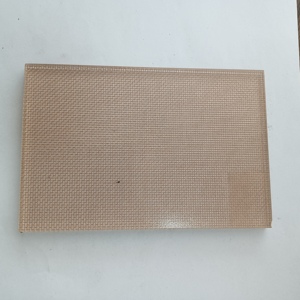
Engineered for wind-break terraces and modern aquatic facilities. Encapsulates architectural stainless wire mesh inside high-adhesion EVA/SGP interlayers for maximum post-breakage barrier security.
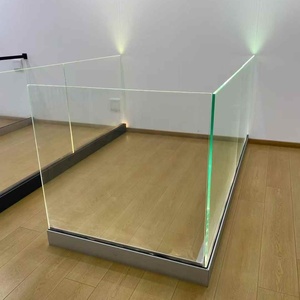
Custom structural glazing utilizing extruded 6063-T6 aluminum brackets. Engineered for extreme wind zones, perimeter gardens, and luxury terraces requiring rigid structural anchoring without line-of-sight obstruction.
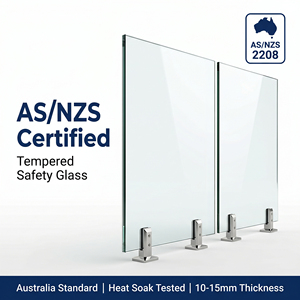
Precision flat-polished panels tailored specifically for strict Australian and New Zealand building safety codes. CNC-ground radiused corners (R2/R5), certified stampings, and heat-soak tested for zero NiS inclusions.
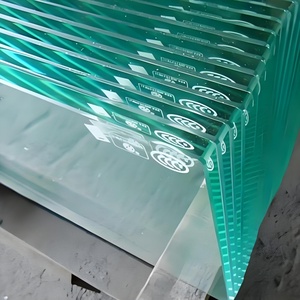
Pioneering photovoltaic perimeter barrier combining building-integrated photovoltaics (BIPV) with tempered structural glass. Powers landscape LED controls and circulation pumps while acting as a certified pool boundary.
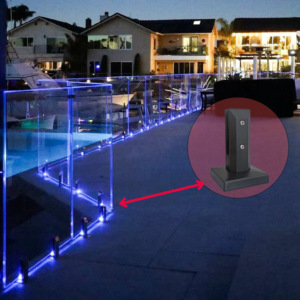
Features high-lumen, IP67 waterproof LED channel integration nestled directly within stainless steel base spigots or sub-floor shoes. Transforms poolside safety perimeters into striking nighttime architectural displays.
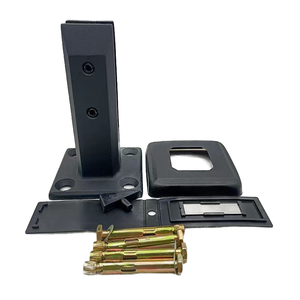
Solid one-piece investment casting spigots engineered for friction-fit glass retention with no panel drilling required. Micro-adjustable tilt screws allow rapid plumb alignment during concrete core-drill or deck surface installations.
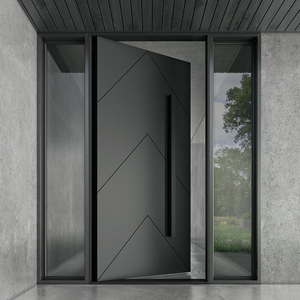
Heavy-duty aluminum-timber hybrid pivot systems engineered for resort pool pavilions, courtyard pool partitions, and VIP clubhouses. Equipped with hydraulic commercial floor springs and magnetic drop-seal locks.
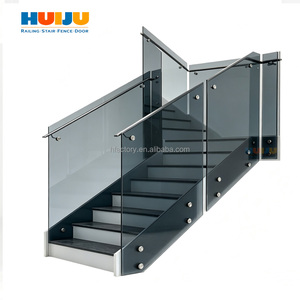
Heavy-duty CNC-machined square and round standoff pins for face-mounting onto pool concrete coping beams, terrace edges, and sunken pool terraces. Maximizes usable deck square footage while maintaining an invisible profile.
A rigorous comparative analysis of world-class architectural glass fabricators and hardware casting foundries, categorized by production capacity, certification rigor, and metallurgy controls.
B2B Procurement Insight: Sourcing pool safety glass barriers is fundamentally a life-safety engineering procurement task. Unlike standard interior glazing, pool fence panels endure prolonged exposure to airborne halogens (chlorine/bromine), severe wind-induced cyclic vibrations, soil movement around pool perimeters, and thermal shock. Top-tier suppliers are differentiated strictly by glass furnace convection quality, zero-tolerance edgework, and Duplex 2205 stainless steel casting integrity.
| Manufacturer / Supplier Cluster | Primary Regional Focus | Core Glass & Hardware Capabilities | Quality Certifications | B2B Suitability Tier |
|---|---|---|---|---|
| 1. KiteWindow / Al-Karam OEM Division | North America, Australia, Global Export | Custom automated tempering, CNC waterjet processing, AS/NZS 2208, Duplex 2205 & 6063-T6 aluminum hardware casting. | AS/NZS 2208, ASTM C1048, CE EN 12150, ISO 9001 | Tier 1: Factory-Direct Custom Fabrication & Engineering |
| 2. C.R. Laurence (CRL) Co. | United States, Canada, Europe | Architectural hardware distributor, base shoe systems, frameless glass spigots, standard safety fittings. | IBC Compliant, ASTM E2358, ICC-ES | Tier 1: Commercial Hardware Distribution (High Margin) |
| 3. Australian Glass Assemblies (AGA) | Australasia, Pacific Rim | Specialized pool boundary panels, pre-drilled gate leaves with radius corners, soft-close hydraulic hinges. | AS/NZS 2208, AS 1926.1 Swimming Pool Safety | Tier 1: Oceania Code Specialist |
| 4. Q-railing International | Europe, Middle East, USA | Modular balustrade systems, dry-glaze wedge channels, aluminum base profiles, structural testing reports. | EN 12600, AbP, DIN 18008, ASTM | Tier 1: Architectural Design & Modular Systems |
| 5. Saint-Gobain Building Glass | Global Enterprise / Europe Base | Float glass production, SGG Securit tempered glass, anti-corrosion marine coated flat panels. | EN 12150, ISO 14001, CE Certified | Tier 1: Primary Raw Glass Float Production |
| 6. Apex Safety Glass Australasia | Australia, New Zealand | Wholesale standard panels (1200mm height standard), core-drilled square spigot kits, gate hardware. | CertMark AS/NZS 2208, NATA Tested | Tier 2: Regional Distributor & Stockist |
| 7. Guardian Glass Commercial Division | North America, Global | UltraClear low-iron substrates, structural monolithic float glass, solar-control exterior barriers. | ASTM C1036, ASTM C1048, SGCC | Tier 1: High-Performance Glass Melting & Float |
| 8. Euroglass Architectural Systems | UK, Western Europe | Custom stainless standoffs, structural cantilevered pool balustrades, laminated EVA acoustic barriers. | BS 6180:2011, EN 14449 | Tier 2: European Project Contractor & Fabricator |
| 9. YKK AP Structural Glazing Group | Asia-Pacific, North America | Heavy commercial extruded perimeter channels, anodized aluminum base track assemblies for resort pools. | AAMA, ASTM E1300, JIS Standards | Tier 1: Extrusion & Heavy Framing Systems |
| 10. Metro Performance Glass | New Zealand, Australasia | Specialized CNC edging, custom cutouts for hydraulic hinges, digital ceramic frit printing for visibility strips. | AS/NZS 2208, AS/NZS 4666 | Tier 2: Regional Processing & Custom Toughening |
Direct manufacturers featuring continuous horizontal tempering furnaces (such as Glaston or Landglass), CNC multi-axis waterjet cutting, and integrated investment casting foundries. Sourcing from this tier provides 30–45% procurement cost savings, full bespoke size capability, and direct mill-test certificates for marine environments.
Companies specializing in hardware engineering, structural calculations, and regulatory code certifications in domestic markets. While providing local warehousing and immediate boxed deliveries, their supply chains almost universally rely on Asian OEM foundries for their core cast spigots and flat-glass container shipments.
Distributors maintaining stocks of standard modular dimensions (e.g., 1200mm high by 800mm–1600mm width increments). While fast for emergency replacements, they lack custom architectural fabrication capability, charge steep premiums for off-size cutouts, and cannot engineer bespoke wind-load solutions.
Commercial developers, civil contractors, and hospitality architects must navigate significant structural code shifts, sustainable material mandates, and smart system integrations over the next five years.
With stringent net-zero building regulations entering global municipal codes, passive glass fencing is rapidly giving way to Building Integrated Photovoltaic (BIPV) systems. Transparent and semi-transparent thin-film cells laminated between tempered glass sheets generate 60W–120W per linear meter, powering underwater illumination, gate sensors, and filtration pumps directly from perimeter safety walls.
Historic reliance on SS304 or standard AISI 316 for pool spigots has proven disastrous in saltwater chlorination environments, resulting in chronic tea-staining and catastrophic stress corrosion cracking (SCC). Modern B2B procurement tenders now explicitly mandate Duplex 2205 (UNS S32205/S31803) stainless steel, which features a Pitting Resistance Equivalent Number (PREN) above 34—nearly double that of SS316.
While monolithic 12mm toughened glass dominated the last decade, updated IBC (International Building Code) and Australasian standards for elevated balconies and infinity pool edges increasingly require laminated glass. Standard PVB softens in exterior heat; high-modulus SentryGlas® (SGP) ionoplast interlayers remain rigid, retaining post-breakage barrier geometry even if both tempered glass leaves are breached.
Modern luxury developments and commercial resorts are eliminating secondary surface-mounted alarms in favor of smart glass fencing. Edge-embedded strain sensors detect illegal climbing attempts or severe panel impacts, while integrated sub-floor LED channels visually signal latch engagement, swimming pool hours, and pool water depth violations directly via smart BMS (Building Management Systems).
Scale deposits from pool chemistry and water evaporation represent the largest ongoing maintenance cost for facility operators. Factory-applied, permanently fused silica or plasma-activated fluoropolymer nano-coatings resist lime scale, mineral bonding, and organic algae adhesion, reducing maintenance labor by over 70% across resort lifecycles.
A technical guide for project engineers, specifiers, and procurement officers evaluating glass thickness, edgework precision, and anchor shear load capacities.
Spontaneous breakage in tempered glass is primarily driven by microscopic Nickel Sulfide (NiS) inclusions. During high-temperature tempering, these inclusions are frozen in their high-temperature beta phase. Over time, under sunlight and ambient thermal cycling, the crystals expand by roughly 4% into their alpha phase, generating localized tensile stresses that shatter the panel catastrophically.
Our OEM factory deploys calibrated DIN EN 14179 and AS/NZS 2208 compliant heat-soak chambers. Panels are soaked at an elevated 290°C (±10°C) for a minimum of two hours, intentionally triggering destruction of any contaminated panels inside the test chamber before packaging and international export, eliminating field liability.

Eliminate middleman markups, ensure exact structural dimensional accuracy, and leverage over 15 years of end-to-end architectural engineering, custom fabrication, and international project execution.
Unlike distributors who subcontract glass tempering and hardware casting to secondary workshops, our facility controls all cutting, edgework, drilling, tempering, and chemical lamination under one roof on Feroz Pur Road. This ensures unmatched dimensional tolerances (±0.5mm) and spotless surface finishing.
Our aluminum extrusion systems utilize certified structural profiles from Pak Alco and Chawla. Ranging from 1.2mm architectural profiles up to heavy structural channels, all extrusions undergo advanced chromate-free pre-treatment and electrostatic architectural powder coating or deep anodizing to prevent bubbling and flaking in humid pool environments.
We eliminate guesswork. For residential estates, commercial waterparks, and multi-villa developments, our mobile survey division deploys industrial-grade Leica 3D laser scanners within 24 hours. Every pool deck level change, coping angle, and expansion joint is digitally mapped to generate accurate production shop drawings.
We do not rely on inexperienced third-party laborers. Local projects are fitted and aligned by our full-time, factory-trained master technicians, including structural chemical anchor injection, EPDM gasket sealing, and hydraulic gate adjustments. For international B2B clients and overseas investors, our dedicated export desk provides end-to-end digital tracking, container load optimization, and comprehensive installation manuals.
Handover is not the end of our partnership. Our structural pool glass installations are backed by responsive after-sales support, including annual roller adjustments, hydraulic hinge servicing, marine gasket replacement, and hardware re-tensioning. With more than 1,200 commercial and residential sites completed, our reputation is built on long-term client trust.
Essential guidance addressing material selection, global regulatory certifications, wind-load resistance, custom glass sizes, and overseas shipping logistics.
Under AS 1926.1 (Australia/NZ), ASTM C1048 (North America), and BS EN 12600 (UK/Europe), the minimum standard for frameless spigot-mounted pool glass barriers is 12mm monolithic toughened (tempered) safety glass. For semi-frameless systems with intermediate vertical aluminum posts, 8mm or 10mm toughened glass is permissible. In elevated or coastal installations subject to ultimate limit state (ULS) wind pressures exceeding 1.5 kPa, engineers recommend 13.52mm or 17.52mm laminated glass with SGP (SentryGlas®) interlayers.
Pool water environments are rich in airborne chlorine and salt aerosols that settle on metal surfaces. While AISI 316 has a Pitting Resistance Equivalent Number (PREN) of approximately 23–25, Duplex 2205 features a PREN of 34–36 due to its elevated chromium (22%), molybdenum (3%), and nitrogen (0.17%) alloy composition. Furthermore, Duplex 2205 possesses nearly double the mechanical yield strength of standard austenitic steel, ensuring zero microscopic stress fractures when holding high wind-loaded glass panels.
Yes. Because we operate our own precision automated CNC cutting lines and waterjet machining centers, there are zero modular constraints. We routinely manufacture raked panels to accommodate sloping poolside garden terraces, radius curved glass panels for circular hot tubs, and customized cutout slots for integrated hydraulic soft-close hinges or magnetic safety latches.
All export glass orders are packaged in heavy-duty, fumigated IPPC-certified solid wood end-cap crates or A-frame steel shipping racks. Every individual glass leaf is separated by mildew-resistant cork pads and thermal shrink-wrap to prevent abrasion, moisture etching, and friction wear during maritime shipping. Crate weight is strategically distributed to allow seamless unloading via forklift or job-site crane.
Core-drilled spigots feature a cylindrical shank extending 100mm–120mm into a core-drilled hole in reinforced concrete, anchored with non-shrink structural epoxy or expanding grout. This offers the cleanest visual line and maximum structural shear resistance. Surface-mounted spigots feature a welded base plate fastened to wooden decks or thin concrete slabs via 4 expansion anchor bolts. While easier to install on existing patios, surface spigots require careful sub-frame structural blocking.
Absolutely. Over 40% of our production volume serves international developers and overseas property investors. Our technical team works directly with your architectural CAD files (.dwg/.dxf) or BIM models. We prepare detailed shop takeoffs, verify local wind codes, supply material test mill certificates, and share real-time photo/video inspection milestones before container sealing.
Pool safety standards (such as Australia's AS 1926.1 and the US BOCA National Building Code) require pool gates to swing outward away from the pool area and be equipped with a reliable self-closing, self-latching mechanism. The latch release mechanism must sit at least 1500mm above finished ground level, or be shielded on the poolside of the barrier. Our systems feature hydraulic adjustable soft-close dampers that prevent destructive panel slamming while guaranteeing positive latch engagement every time.
Every fabrication batch undergoes a multi-step Quality Assurance (QA) audit: (1) Dimensional tolerance and diagonal squareness verification via digital calipers; (2) Polarized stress-pattern analysis to ensure uniform surface compression (greater than 90 MPa for fully tempered glass); (3) Optical roller wave and edge dip measurement to eliminate visual distortion; and (4) Calibrated Heat Soak Testing (HST) to eliminate potential Nickel Sulfide inclusions.