Structural Glazing
Technical Details →

Explore custom-engineered architectural solutions engineered to withstand extreme cycling, aggressive atmospheric exposure, and stringent commercial building safety codes.
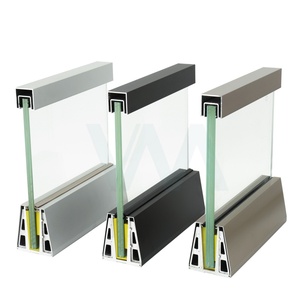
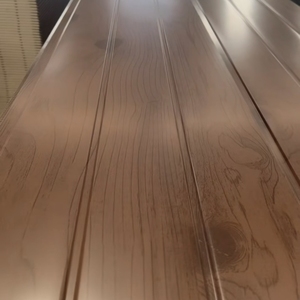
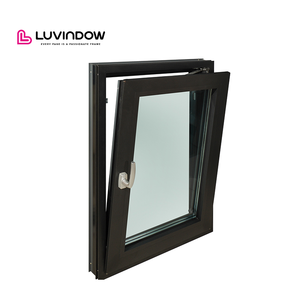
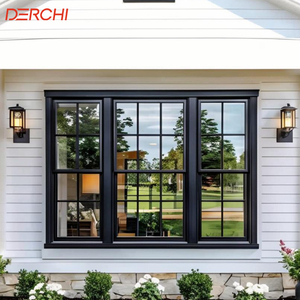
In high-traffic commercial centers, luxury residential villas, pharmaceutical complexes, and educational institutions, doors serve as the foundational interface connecting security, acoustic insulation, structural containment, and architectural statement. Selecting a Heavy Duty Door Manufacturer and Supplier is no longer an exercise in surface aesthetics; it is a critical engineering decision governed by metallurgical fatigue limits, dynamic wind loading parameters (ASTM E330), burglar-resistance classifications (EN 1627–1630), and long-term kinematic cycle testing (ANSI/BHMA A156).
Standard architectural doors typically incorporate thin-wall aluminium extrusions (0.8mm to 1.0mm) or low-gauge hollow steel cores, designed strictly for light residential operation under 50,000 cycles. Conversely, true heavy-duty systems require structural alloy compositions such as AA6063-T6 or AA6082-T6 structural aluminium with wall gauges ranging from 1.5mm to well over 3.0mm, reinforced corner cleats, multi-point lock cremones, and heavy tandem stainless steel rollers rated for leaf weights exceeding 400kg to 800kg. This industrial procurement report analyzes the global benchmark suppliers, providing technical procurement officers, project architects, and general contractors with verifiable metrics to drive high-ROI sourcing decisions.
A rigorous, comparative engineering audit of the world's leading manufacturers evaluated on structural metallurgy, wind-load capacity, custom architectural flexibility, and supply chain reliability.
Primary Focus: Custom Engineered Aluminium Mega-Span Sliding, Bifold, and Structural Swing Systems.
Renowned for bespoke engineering across South Asia with burgeoning export reach, Al-Karam Aluminium fabricates heavy-gauge architectural fenestration using 100% certified Pak Alco and Chawla structural extrusion profiles. With 15+ years of verified on-site experience and 1,200+ completed commercial and villa installations, Al-Karam eliminates size constraints through precision laser surveys and dedicated in-house installation crews.
Primary Focus: Commercial Steel, High-Security Access Control, & Panic Fire Doors.
Headquartered in Sweden, ASSA ABLOY is an indisputable global powerhouse in industrial steel entrance assemblies and architectural access hardware. Their heavy-duty commercial lines feature seamless welded hollow metal doors capable of withstanding extreme cyclic frequencies in transit hubs, detention facilities, and Grade-A office buildings.
Primary Focus: Premium Thermally Broken Aluminium Entrances & Sliding Panoramas.
Germany's Schüco represents the pinnacle of thermal efficiency and mechanical precision in aluminium fenestration. Their heavy-duty door series (such as AD UP 90 and ASE 80) incorporate multi-chamber polyamide thermal breaks, delivering near-passive house thermal values ($U_f \le 1.0\text{ W/m}^2\text{K}$) alongside RC3 burglar deterrence for institutional and modern luxury structures.
Primary Focus: Sustainable High-Load Architectural Sliders & Pivot Systems.
Based in Belgium, Reynaers specializes in complex structural profiles capable of floor-to-ceiling glass dimensions. Their MasterPatio and ConceptWall systems are favored in beachfront villas and extreme wind-load zones, offering Class 4 air permeability, Class E1200 water tightness, and heavy-duty concealed drive mechanisms that glide silently despite multi-ton structural loads.
Primary Focus: Commercial Storefront Entrances, Hurricane-Impact & Blast Resistant Doors.
With more than a century of American engineering heritage, Kawneer sets the benchmark for high-traffic retail, educational, and civic entrances. Their 500 Heavy Wall™ series is explicitly engineered with robust 4.8mm nominal extrusion walls at critical stress points, providing virtually indestructible performance against vandalism and continuous commuter surges.
Primary Focus: Heavy Industrial Sectional, High-Speed Spiral, & Acoustic Security Entrances.
Hörmann is Europe’s largest industrial door provider, renowned for specialized manufacturing in automotive logistics plants, refrigerated warehousing, and aviation hangars. Their high-speed heavy-duty spiral doors integrate PU-injected steel double-skin panels with rapid frequency drive motors, executing millions of operating cycles with zero maintenance downtime.
Primary Focus: Automated Heavy Commercial Revolving & Structural Glass Entrances.
Switzerland-based dormakaba dominates high-traffic automatic entrances, concealed overhead door closers, and heavy structural glass fittings. Their heavy revolving doors (KTV/Talos series) control building air pressurization and energy loss in international airports and financial towers, processing upwards of 4,000 pedestrian passages per hour effortlessly.
Primary Focus: Seismic, Thermal, & Hurricane-Resistant Architectural Entrances.
Originating from Japan and commanding immense market share across North America, YKK AP is recognized for metallurgical extrusion excellence. Their ProTek® heavy commercial entrance systems are specifically certified for extreme windborne missile impact zones, high seismic displacement, and severe cyclic pressure loading without structural joint separation.
Primary Focus: Circular Low-Carbon Aluminium Heavy Doors (Hydro CIRCAL 75R).
As part of Norwegian metallurgy giant Norsk Hydro, Germany’s Wicona leads sustainability-conscious engineering. Their Wicstyle series utilizes post-consumer recycled aluminium with a certified carbon footprint below 2.3 kg $CO_2$ per kg of aluminium, meeting the world’s most stringent LEED Platinum and BREEAM Outstanding facade specifications.
Primary Focus: Severe Storm Shelters, Blast Mitigation, & Heavy Hollow Metal Infrastructure.
Ceco Door manufactures severe-duty hollow metal doors designed to survive the harshest atmospheric, acoustic, and explosive blast threats. Widely deployed across petrochemical plants, nuclear facilities, federal embassies, and educational tornado safe rooms, Ceco doors feature internal vertical steel stiffeners welded at 6-inch centers, resisting static and dynamic wind loads up to 100 PSF and hurricane wind forces exceeding 250 MPH (FEMA 361/ICC 500 standards).
A granular side-by-side technical evaluation of metallurgical profiles, cycle resistance, thermal ratings, and optimal procurement environments.
| Manufacturer | Primary Substrate Alloy | Wall Gauge | Tested Cyclic Durability | Wind Load / Deflection | Primary Sector Application |
|---|---|---|---|---|---|
| Al-Karam Aluminium | Pak Alco & Chawla AA6063-T6 | 1.5mm – 3.2mm | 500,000+ Operations | ASTM E330 DP60 Design Pressure | Luxury Villas, Corporate Offices & Showrooms |
| ASSA ABLOY Group | Galvannealed A60 Carbon Steel | 1.6mm – 2.0mm | 1,000,000+ Cycles (BHMA Class 1) | ANSI A250.8 Structural Tier IV | Hospitals, Airports & Government Centers |
| Schüco International | EN AW-6060 T66 Multi-Chamber | 2.0mm – 3.0mm | 1,000,000 Cycles (EN 12400 Cl. 8) | EN 12210 Class C5 / B5 | High-End Architectural & Passive Facades |
| Reynaers Aluminium | Alloy EN AW-6060 / 6082-T6 | 1.8mm – 2.8mm | 500,000+ Operations | EN 12211 Class 4 (600 Pa) | Panoramic Mega-Spans & High-End Hotels |
| Kawneer (Arconic) | Extruded 6063-T6 Heavy Wall | 3.2mm – 4.8mm | 1,000,000+ Cycles | TAS 201/202/203 Impact Tested | High-Density Retail, Universities & Schools |
| Hörmann Group | Composite Steel / Polyurethane | 1.5mm – 2.5mm | 1,500,000 Cycles (High Speed) | EN 12424 Wind Class 4 | Industrial Plants, Logistics Hubs & Warehouses |
| dormakaba Holding | Structural Toughened Aluminium/Glass | 2.2mm – 3.5mm | 1,000,000+ Electronic Cycles | EN 16005 Commercial Standard | Corporate Headquarters & Transit Terminals |
| YKK AP Inc. | 6063-T6 / Structural ThermaBond | 2.0mm – 3.5mm | 750,000 Cycles | ASTM E1886 Impact Zone 4 | Coastal Facilities & Seismic Prone Buildings |
| Wicona (Hydro) | Hydro CIRCAL 75R Sustainable Alloy | 2.0mm – 2.8mm | 1,000,000 Cycles | EN 12210 Structural Class 4 | Net-Zero Carbon & Sustainable Urban Facades |
| Ceco Door | Reinforced 12-Gauge Carbon Steel | 2.5mm – 3.5mm | 1,000,000+ Impact Cycles | FEMA 361 Tornado (250 MPH Load) | Nuclear Plants, Blast Shelters & Severe Storm |
Breakthrough advancements in extrusion chemistry, structural thermal barrier geometry, smart kinematic hardware, and environmental lifecycle analysis.
Traditional heavy-duty metal entrances were historically compromised by rapid heat transfer. The modern standard utilizes precision multi-chamber Polyamide 66 reinforced with 25% short glass fibres (PA66 GF25), often injected with aerogel insulation cores. This engineering eliminates the dew point, limits condensation, and reduces overall structural envelope $U$-values down to passive building requirements ($U_d \le 0.85\text{ W/m}^2\text{K}$).
The convergence of building management systems (BMS) with heavy fenestration has spurred the adoption of 24V brushless electronic drive units housed completely invisibly inside top transom extrusions. Heavy structural sliders weighing upwards of 600kg now operate with touch-capacitive sensors, multi-point electro-mechanical security bolts, and smartphone remote credentials, without sacrificing mechanical emergency egress compliance.
Standard architectural laminated glass with standard PVB (polyvinyl butyral) interlayers exhibits significant flexure under continuous thermal shock and explosive or hurricane impact. State-of-the-art heavy-duty door fabrication integrates SentryGlas® (SGP) ionoplast interlayers, which are 5 times tougher and up to 100 times stiffer than conventional PVB. Even in the event of extreme glass fracture, the structural panel maintains rigid containment.
Atmospheric corrosion, salt spray in coastal zones, and particulate abrasion quickly erode generic finishes. Current industry standards require minimum 20-to-25-micron Qualanod architectural anodizing (Class 1) or fluoropolymer coatings containing minimum 70% Kynar 500 / Hylar 5000 PVDF resin, achieving complete resistance against 4,000 hours of continuous salt-spray exposure (ASTM B117) and intense solar UV chalking.
Manual measuring tape errors have been historically responsible for severe structural misalignment and costly on-site modifications. Industry leaders now mandate 3D sub-millimeter laser site surveys. Scanned spatial data is fed directly into 5-axis CNC machining centers, pre-milling profile locks, drainage weeps, and corner joint splines to exact 0.1mm tolerances before any component arrives on the construction floor.
Global environmental building certifications (LEED v4.1, BREEAM, and DGNB) are heavily penalizing high-embodied carbon inputs. The procurement vanguard favors certified low-carbon aluminium extrusions derived from renewable hydroelectric smelting and high-ratio post-consumer scrap recycling, guaranteeing embodied carbon figures under 4.0 kg $CO_2$e/kg compared to the global industry average of 16.7 kg $CO_2$e/kg.
Essential methodologies for project developers, quantity surveyors, and enterprise supply chain directors.
Procurement departments historically focused on upfront purchase price per square foot or meter. However, lifecycle failure analytics reveal that hardware replacement, roller degradation, gasket hardening, and emergency civil realignments account for up to 350% of the initial door cost over a 15-year commercial building cycle. Sourcing tier-1 heavy-gauge systems with stainless steel ball-bearing rollers, modular multi-point locks, and field-replaceable EPDM weather gaskets cuts operating downtime and maintenance overhead by up to 74%.
The traditional construction chain—spanning generic distributors, commission agents, and sub-tier installers—fosters specification dilution and margin inflation. Modern corporate project leaders increasingly engage directly with certified fabrication shops like Al-Karam Aluminium that control the complete value chain: sourcing certified mill billets, operating in-house precision mitering and CNC tooling, conducting 24-hour laser surveys, and dispatching in-house installation engineers.
With volatile global weather patterns producing unprecedented wind gusts and localized super-monsoons, procurement contracts now strictly stipulate dynamic pressure ratings (minimum DP50 to DP80). Doors spanning over 3.0 meters high must demonstrate maximum structural deflection limits under maximum load not exceeding $L/175$ or $L/240$, preventing glass blowout, water siphonage under jamb gaskets, and structural frame warp.
Forged over 15+ years of verified architectural fabrication and 1,200+ completed projects, Al-Karam Aluminium delivers uncompromised engineering precision from initial laser survey to long-term post-installation service.
We categorically refuse substandard, scrap-remelted aluminium profiles. Every frame fabricated in our Feroz Pur Road workshop utilizes certified Pak Alco and Chawla structural sections, providing consistent wall gauge integrity, uniform temper, and structural load deflection compliance across all architectural spans.
No two rough masonry openings are ever perfectly plumb or level. Our dedicated technical survey teams utilize high-accuracy digital laser rangefinders across Lahore and surrounding regions within 24 hours of inquiry, eliminating expensive site fitting discrepancies, perimeter seal leaks, and operational jamming.
Unlike off-the-shelf mass suppliers with rigid standard catalogs, we build custom to the millimetre. Whether accommodating a 6-meter-wide Spanish villa panoramic sliding aperture, an office glass partition with concealed drop seals, or heavy bifold terrace walls, our engineering team custom-calculates moment of inertia and load distribution.
Even the finest structural door fails if fitted poorly. Al-Karam Aluminium executes 100% of its site installations with its own factory-trained technicians. We handle anchor bolt setting, structural perimeter silicone, dual EPDM gasket bedding, and precision roller leveling to ensure butter-smooth fingertip operation.
Serving overseas property owners and expatriates across the UK, USA, Canada, and the Gulf, we offer complete digital coordination. From laser survey verification and CAD drawings to WhatsApp video progress milestones, clients receive transparent, factory-direct accountability without needing to be physically on site.
Our commitment extends far past the final invoice. We provide ongoing operational support, roller tracking calibration, hardware lubrication, lock maintenance, and gasket renewal, ensuring your fenestration retains its acoustic, thermal, and security integrity for decades.
Direct, unhedged answers to the most common engineering and procurement inquiries posed by structural engineers, project managers, and property developers.
For standard interior doors, 1.2mm profiles are adequate. However, for true heavy-duty exterior sliding, bifold, or high-traffic commercial swing entrances, a minimum wall gauge of 1.8mm to 2.5mm (and up to 3.2mm at critical structural anchoring points) is required. This ensures the frame can bear leaf loads exceeding 200kg without racking or warping under structural wind loads.
Structural door systems must comply with ASTM E330 or EN 12211 standard test methods for structural performance under static air pressure difference. We calculate the moment of inertia ($I_{xx}$) of the interlock and mullion extrusions against the project's specific height, opening width, and local wind exposure zone to guarantee structural deflection does not exceed the conservative limit of $L/175$.
Monolithic tempered glass (8mm to 12mm) provides impact resistance but shatters completely into blunt granules upon breakage, leaving an immediate structural void. Laminated glass consists of two glass panes bonded under heat and pressure with a PVB or SGP interlayer (e.g., 6mm + 1.52mm PVB + 6mm). If shattered, the interlayer retains the glass fragments in the frame, preventing weather intrusion, fall accidents, and forced entry.
Unbranded market extrusions are frequently cast from dirty scrap with high zinc and iron impurities, resulting in profile brittleness, inaccurate wall gauges, and premature powder-coat flaking. Certified Pak Alco and Chawla billets guarantee virgin AA6063-T6 composition, consistent yield strength (≥ 160 MPa), precise dimensional tolerances, and optimal surface receptivity for architectural anodizing and powder coating.
Yes. A substantial portion of our client base consists of overseas expatriates and international investors building luxury properties. We deploy laser survey teams to the job site, generate detailed shop drawings, hold online specification consultations, and send high-resolution photographic and video milestones throughout fabrication and final installation.
Standard nylon rollers fail within months under heavy glass loads. Heavy-duty sliding systems must feature tandem stainless-steel carriage rollers with sealed precision needle bearings running on a solid stainless-steel track capping. For swinging and pivot assemblies, heavy-duty floor springs (such as DORMA BTS 80) or concealed overhead hydraulic pivots with load ratings up to 600kg are mandatory.
Aluminium itself transmits sound vibration readily. To achieve high acoustic performance (Sound Transmission Class STC 38 to 45), doors must integrate asymmetric double-glazed units (e.g., 8mm toughened + 16mm argon gap + 6.76mm acoustic laminated glass) paired with continuous closed-cell multi-point EPDM compression gaskets rather than generic brush seals.
In environments characterized by extreme UV radiation, heat, and seasonal monsoon rains, architectural powder coating (minimum 60–80 microns conforming to Qualicoat Class 2) or 25-micron Qualanod architectural anodizing is recommended. Both offer superior resistance to chalking, surface micro-cracking, and chemical discoloration compared to standard industrial paints.
Consult with our senior fenestration engineers to obtain custom CAD section details, wind-load deflection calculations, structural profile samples, and comprehensive project bill-of-quantities (BOQ).
Send an Inquiry