
Explore our precision-machined aluminum base shoes, tempered laminated balustrades, stainless steel spigots, and heavy-duty architectural hardware fabricated directly to international ASTM, IBC, and EN building standards.
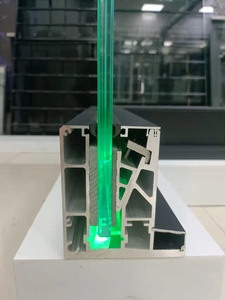
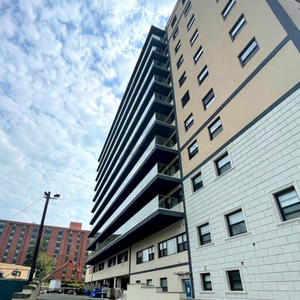
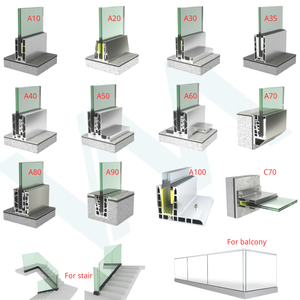
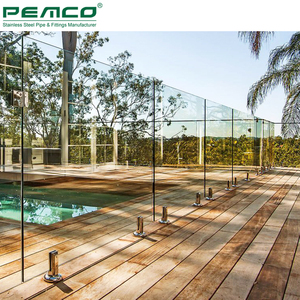
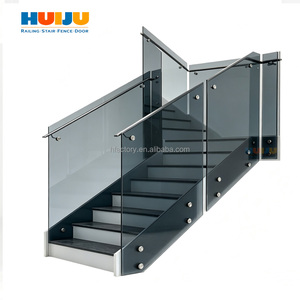
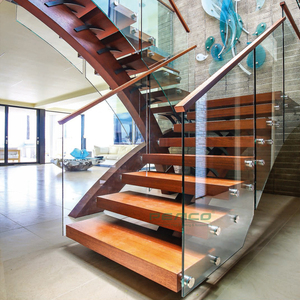
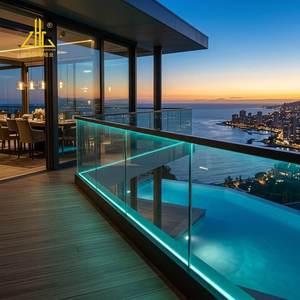
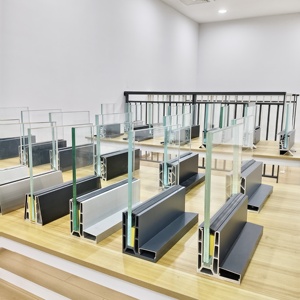
Modern architectural balustrades demand an uncompromising convergence of physical structural mechanics, precision metallurgy, and flawless glass chemistry. As an established direct OEM/ODM modern glass railing manufacturer, our production matrix spans specialized aluminum profile extrusion lines, robotic multi-axis CNC machining, dedicated tempering convection furnaces, and climate-controlled autoclave lamination chambers.
Standard retail distributors often encounter field failures stemming from inadequate wall thicknesses in aluminum channels, low-tensile alloy compositions, or micro-defects in tempered edges. Our factory eliminates these systemic liabilities by governing the entire fabrication chain under rigorous ISO 9001:2015 quality protocols.
We formulate virgin aluminum billets into aerospace-grade 6063-T6 and 6061-T6 structural base channels. Wall profiles range up to 12mm critical structural thicknesses, engineered to resist bending moment stresses without secondary vertical structural posts.
Our flat horizontal oscillating convection furnaces process monolithic and ultra-clear low-iron float glass. Strict surface compression control exceeding 90 to 110 MPa guarantees compliance with EN 12150-1 and ANSI Z97.1 impact parameters.
Cleanroom processing with Kuraray SentryGlas (SGP) ionoplast and acoustic PVB interlayers guarantees zero edge delamination, open-edge weather resistance, and post-breakage load-bearing resilience required for high-rise balconies.
Whether configuring dry-glaze wedge mechanisms for zero-mess installation or drilling custom side-fascia anchor placements to bypass reinforcing rebar in concrete slabs, our custom OEM engineering desk delivers rapid CAD/BIM modeling within 24 hours, followed by full physical mock-up stress verification.
Procurement directors, general contractors, and facade engineers across North America, Europe, and the Middle East are re-evaluating supply chain structures. Volatile logistical freight dynamics, tightening regional building safety codes, and mandatory environmental product declarations (EPDs) are reshaping how modern glass railings are specified and sourced.
Traditional wet-glazing with expansion grout and messy wet silicone sealant is rapidly being phased out globally. Sourcing trends favor mechanical wedge-lock systems that facilitate dry glass alignment in under five minutes per panel. This cuts on-site installation labor costs by up to 60% while mitigating weather-dependent installation delays.
Green building rating systems (LEED v4.1, BREEAM, and WELL standards) now heavily audit architectural envelope components. Forward-looking procurement departments mandate certified low-carbon recycled aluminum billets (minimum 60% post-consumer content) and localized renewable energy powered glass tempering processes.
The friction of multi-vendor sourcing—buying glass from domestic processors and channels from separate metal extruders—leads to misaligned tolerance stack-ups. Developers are moving directly to turnkey factory OEM suppliers capable of pre-packaging glass, profiles, EPDM gaskets, and stainless anchors in color-coded, labeled crates.
The transition from standard PVB to structural ionoplast interlayers (SGP) represents the most significant shift in high-performance specifications. The table below outlines technical criteria vital for engineering procurement officers:
| Performance Characteristic | Standard PVB (Polyvinyl Butyral) | Structural SGP (Ionoplast Interlayer) | Procurement Selection Guidance |
|---|---|---|---|
| Shear Modulus (20°C, 1 hr) | ~1.0 to 1.5 MPa | ~100 to 120 MPa | SGP offers 100x stiffness for high wind loads |
| Post-Breakage Structural Behavior | Collapses & sags under self-weight | Remains upright, resists fall-through | Mandatory for public & high-altitude barriers |
| Open-Edge Moisture Resistance | Susceptible to edge clouding/haze | Completely inert to humidity and moisture | Crucial for un-capped frameless exterior balustrades |
| Effective Glass Thickness Design | Requires thicker overall composition | Enables down-gauging total glass by 20-30% | Reduces dead load on balconies and lower freight |
Architectural glass railing is no longer viewed as a static perimeter barrier; it has evolved into an active element of structural expression, environmental isolation, and night-time ambient facade illumination. Driven by minimalist aesthetics, modern building designs demand maximum panoramic visibility with zero visible structural support framework.
Sub-floor recessing techniques allow the aluminum U-channel base shoe to sit fully below the finished floor line (FFL). When paired with low-iron laminated panels, the glass seems to emerge directly out of marble or hardwood flooring with zero visible hardware fasteners.
Next-generation profiles incorporate dual-chamber isolation channels. High-efficiency micro LED strips (IP68) nest inside an anodized thermal raceway, firing horizontally through the bottom edge of tempered glass to create edge-lit architectural night lines.
Exterior balustrades suffer from mineral deposits and air pollution. Contemporary glass orders now routinely integrate factory-applied hydrophobic vacuum-sputtered ceramic coatings, reducing facade maintenance frequency by up to 75%.
Advanced base shoe mechanisms now feature bi-directional eccentric adjustment screws. Installers can easily tilt panels back and forth by ±20mm at a 1200mm height to achieve laser-straight panel edge alignment across undulating concrete slabs.
Furthermore, stringent coastal engineering guidelines are fueling a massive change in metal metallurgy. Grade 304 stainless steel is no longer accepted in marine zones within 5 kilometers of coastlines. Our OEM lines specialize in Duplex 2205 casting alloys for spigots and bracket clamps, exhibiting a Pitting Resistance Equivalent Number (PREN) above 34, outperforming traditional 316 steel under continuous high-chloride salt fog conditions.
In-depth answers addressing structural calculations, international building codes, load tolerances, and factory direct customization capabilities.
Our structural aluminum U-channel systems and heavy-duty spigots are designed and third-party certified to exceed IBC (International Building Code) Section 1607.8.1 requirements. They easily resist a uniform horizontal load of 50 pounds per linear foot (0.73 kN/m) applied at the top edge, along with a concentrated live load of 200 pounds (0.89 kN) applied at any point along the barrier. For European and British jurisdictions, our reinforced commercial profiles meet BS 6180:2011 classifications up to 1.5 kN/m and 3.0 kN/m heavy crowd loadings.
SGP (SentryGlas) is strongly recommended or legally required in three scenarios: (1) Frameless balustrades without a continuous structural protective top rail, as mandated by IBC 2407.1.2; (2) High-altitude exterior balconies subjected to dynamic wind uplift and high negative pressures; and (3) Coastal installations with exposed raw glass edges, since PVB tends to absorb airborne humidity over time leading to delamination bubbles along edge perimeters, whereas SGP remains permanently clear and hydrophobic.
We provide full architectural-grade surface treatments: Architectural Anodizing Class I (up to 25 microns) in clear silver, matte black, champagne, and deep bronze; Qualicoat-certified fluorocarbon (PVDF) electrostatic architectural powder coatings available in any standard RAL color shade; and physical vapor deposition (PVD) titanium coatings on stainless components yielding mirror gold, rose gold, and brushed graphite finishes with extreme UV and scratch resistance.
Water pooling inside a base shoe channel can freeze in winter or degrade clamping gaskets over time. Our extruded U-channel base profiles feature integrated bottom drainage weep channels spaced every 300mm. Additionally, we provide custom CNC-machined aluminum shims (drainage spacers) that elevate the base shoe 10mm to 15mm off the concrete curb, allowing surface water to flow unimpeded underneath the balustrade toward exterior scuppers.
Yes. Our tooling facility houses advanced multi-roll profile stretch-bending machinery capable of curving extruded 6063-T6 U-channels down to radii as tight as 1,200mm without wall rippling or profile collapse. We concurrently produce matched curved tempered laminated glass using precise digital laser measuring and custom bending molds, guaranteeing a seamless, uniform sweep across spiral stairwells and radial balconies.
All monolithic tempered and tempered laminated glass panels manufactured for structural railings can be subjected to European Standard EN 14179-1 Heat Soak Testing (HST). In our calibrated heat soak chambers, glass is held at 290°C for a 2-hour dwell time. This accelerates the phase conversion of any microscopic nickel sulfide inclusions, destroying contaminated panels inside the factory chamber and preventing dangerous post-installation spontaneous failure on site.
Standard OEM extrusion and glass orders run on a 15 to 22-day production cycle following shop-drawing signoff. For international maritime transit, glass panels are interleaved with non-reactive cork pads or protective polymer film and enclosed inside fumigated IPPC-certified solid timber crates with integrated steel perimeter strapping. Base shoes are individually wrapped in protective peel-off adhesive film and bundled in multi-wall corrugated sleeves to prevent vibration abrasion.
Yes. Our in-house facade engineering department collaborates with clients to supply comprehensive 2D AutoCAD fabrication details, 3D BIM Revit models, and finite element analysis (FEA) structural calculation packs stamped against local project wind-speed ratings, seismic zone requirements, and occupancy classifications to facilitate fast municipal architectural approvals.
Connect directly with our senior architectural technical team to review structural drawings, obtain certified physical samples, or request a complete OEM production catalog tailored to your regional building code specifications.
Get Catalog