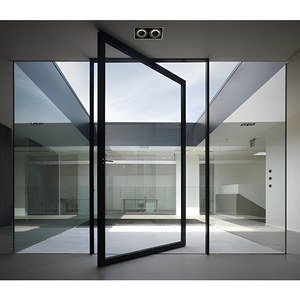

Engineered for international architectural specifications, commercial entrance durability, and ultra-luxury residential aesthetics. Directly exported from premier China manufacturing centers.
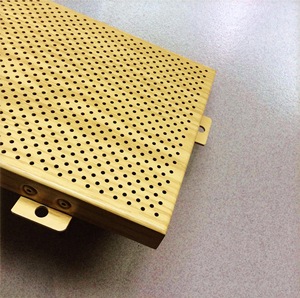
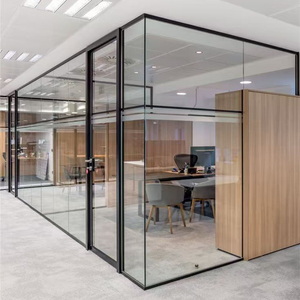
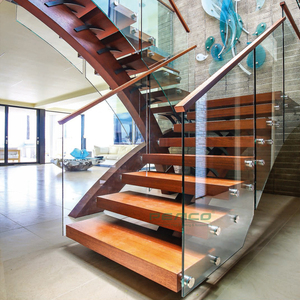
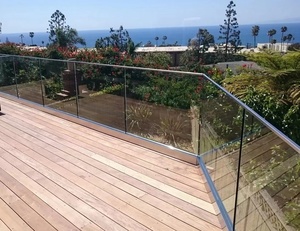
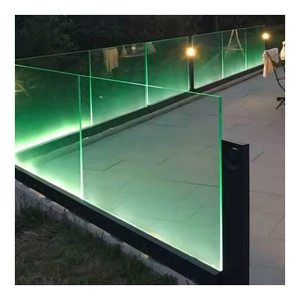
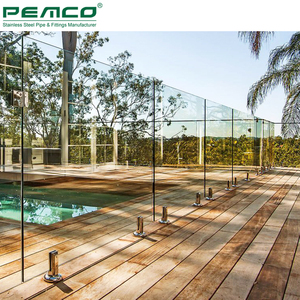
As a premier China wholesale toughened glass doors exporter, our manufacturing clusters leverage automated high-convection tempering furnaces, computerized CNC double-edging machines, and robotic structural glazing assembly lines. We engineer doors for architectural resilience, severe seismic categories, extreme wind loads, and acoustic barrier requirements.
Sourcing architectural toughened glass directly from specialized China exporters allows developers, general contractors, and facade consultants to eliminate multi-tiered distributor markups. Our direct export model provides access to precision-machined heavy-duty aluminum framing profiles (Pak Alco, Chawla, and custom 6063-T6 architectural grade alloys), world-class hardware suites (DORMA-style patch fittings, hydraulic pivot hinges, heavy-duty floor springs), and superior glass surface finishes.
Whether executing bespoke pivot door installations for luxury hospitality projects or supplying container-load shipments of frameless sliding glass doors for high-density multi-family residential developments, our facilities bridge the gap between heavy industrial capacity and millimeter-accurate architectural tolerance.

Toughened (tempered) glass doors undergo thermal processing wherein annealed float glass is uniformly heated to approximately 650°C–680°C and then subjected to rapid, high-pressure air quenching. This mechanical process induces uniform compressive stresses on outer glass surfaces while balancing tensile stresses within the interior core.
| Glazing System Type | Surface Compression (MPa) | Impact Resistance Standard | Acoustic Isolation (Rw / STC) | Thermal U-Value (W/m²·K) | Recommended Architectural Applications |
|---|---|---|---|---|---|
| Monolithic Clear Toughened (10–12mm) | ≥ 90–120 MPa | ANSI Z97.1 Class A / EN 12150 | 32 – 34 dB | 5.7 | Frameless interior office dividers, retail shopfronts, frameless swing doors |
| Double Glazed Toughened Low-E (6+12A+6) | ≥ 95–115 MPa | ASTM C1048 / AS/NZS 2208 | 36 – 40 dB | 1.4 – 1.8 | Exterior pivot entrance doors, modern villa main entries, luxury hotel portals |
| Laminated Toughened Glass (6+1.52PVB/SGP+6) | ≥ 100 MPa + Interlayer Shear | EN 12600 Class 1(B)1 / ISO 12543 | 38 – 42 dB | 5.2 (Air) / 2.8 (Insulated) | Cyclone-resistant entrances, anti-burglary facades, glass balustrades & roofs |
| Heat Soak Tested (HST) Toughened Glass | Calibrated to eliminate NiS inclusions | DIN 18516-4 / EN 14179-1 | Matches Parent Spec | Matches Parent Spec | High-rise public building entries, overhead canopy doors, critical balustrades |
Engineered with uniform compressive stress exceeding 69 MPa (10,000 psi) for commercial installations, resisting thermal stress differentials up to 250°C without risk of thermal fracture.
Upon impact failure exceeding design thresholds, our toughened glass disintegrates into tiny, blunt, dice-sized obtuse particles (over 40 particles per 50x50mm area), eliminating jagged puncture hazards.
Custom extruded 6063-T6 or 6061-T6 aluminum perimeter profiles and thermally broken sections provide the rigid skeletal architecture required to carry panels weighing up to 450kg.
State-of-the-art HST ovens expose glass to sustained 290°C thermal equilibrium, forcing accelerated phase-transformation of microscopic Nickel Sulfide (NiS) inclusions to prevent post-installation breakage.
Rooted in Foshan and premier Chinese industrial fabrication corridors, our manufacturing facilities embody over 15 years of rigorous architectural glass processing. Having successfully delivered systems to more than 1,200 commercial and high-end residential sites worldwide, we eliminate the friction typically associated with overseas glass procurement.

As international energy codes tighten and architectural design embraces ultra-minimalist framing, B2B glass procurement is undergoing dramatic shifts. Here is what leading general contractors and developers must anticipate when sourcing from China exporters over the next five years.
Architectural demand for soaring, monumental entrances has shifted baseline specs from standard 2.4m doors to 3.5m–4.5m single-leaf pivot panels. Sourcing these oversized monolithic and insulated panels requires specialized horizontal tempering furnaces with advanced ceramic rollers to prevent optical roller-wave distortion.
Global building codes (such as ASHRAE 90.1, IECC, and European Title 24 equivalents) mandate drastic cuts to door envelope thermal conductivity. Future procurement focuses on polyamide (PA66) thermal break extrusions paired with warm-edge glass spacers and argon-filled Low-E double glazing achieving U-factors under 1.4 W/m²·K.
Commercial fit-outs and luxury residential bathrooms increasingly procure PDLC (Polymer Dispersed Liquid Crystal) switchable laminated toughened glass. These systems allow instantaneous transformation from crystal transparency to milky opaque privacy via RF remote, wall switch, or building management automation.
Export markets in Europe, North America, and Oceania now evaluate Environmental Product Declarations (EPDs). Leading Chinese exporters are migrating to hydrogen-blended furnace smelting, recycled cullet batches, and solar-powered tempering facilities to provide verifiable lower embodied carbon figures for LEED and BREEAM certifications.
From the brittle float assemblies of the mid-20th century to modern high-modulus, multi-laminated structural envelopes, technological innovation in China's manufacturing sector has transformed the performance baseline of modern toughened glass doors.
Traditional overhead door closers and invasive floor-excavation boxes are rapidly being replaced by ultra-compact bottom-pivot hydraulic hinges. Our systems integrate twin-valve damping mechanisms concealed directly within a 35mm-tall base shoe, supporting 150kg to 300kg door leaves with adjustable closing sweeps (90° hold-open, 150° swing angle) and zero sub-floor core drilling.
Standard float glass exhibits a greenish tint due to natural ferric oxide ($Fe_2O_3$) content. Our high-transmittance ultra-clear (low-iron) glass boasts iron content below 0.015%, delivering 91.5%+ light transmission for pristine, color-neutral luxury facades. Combined with fused permanent pyrolytic hydrophobic coatings, the exterior surfaces actively repel mineral deposits, grease, and rain spotting.
Modern glass doors employ structural elastomeric silicone bonding that distributes dynamic wind loadings uniformly across concealed sub-frames. When paired with multi-layer acoustic PVB or ionoplast (SentryGlas®) interlayers, our soundproof glass doors achieve Sound Transmission Class ratings exceeding STC 42, isolating urban street noise and boardroom deliberations without bulky frame profiles.

The greatest threat to overseas architectural glass procurement is transit micro-fracturing and edge spalling. A China wholesale exporter's true capability is proven not just in the tempering furnace, but in its export logistics engineering.
Every consignment produced in our facility is packed onto custom heavy-gauge steel A-frames or enclosed inside fully fumigated solid-plywood crates (compliant with ISPM-15 standards). Individual glass leaves are cushioned by high-density closed-cell polyethylene foam corner guards, interleaved with shock-absorbing cork pads and desiccated moisture-barrier wrapping.
We optimize container stuffing layouts (calculating exact center-of-gravity distributions for 20GP and 40HQ high-cube ocean containers) to eliminate maritime transit shifting. As a result, our documented shipping loss rate remains below 0.05% across more than 40 destination countries across North America, the Middle East, Southeast Asia, and Europe.
Comprehensive answers addressing technical specifications, MOQ requirements, international certifications, and remote project execution for commercial buyers worldwide.
All architectural toughened glass doors fabricated for export comply with and carry certified test documentation for ANSI Z97.1-2015 (USA), 16 CFR 1201 (CPSC category II), EN 12150-1 (CE Mark Europe), AS/NZS 2208:1996 (Australia/New Zealand), and ISO 9001 quality management standards. Certified test reports, mill certificates, and batch traceability stamps are provided prior to shipment.
Yes. Our high-speed 5-axis CNC machining centers execute waterjet milling for any global architectural hardware standard. Whether your drawings specify DORMA patch fittings, CRL Geneva hinges, Hafele locking cylinders, or custom architectural push/pull bars, we mill, counterbore, and edge-polish all cutouts prior to tempering based on your exact manufacturer templates.
For commercial projects and wholesale distribution, our baseline MOQ is generally one 20ft container (approx. 800–1,200 m² of glass depending on thickness and framing assemblies). However, for custom villa entrance pivot doors or boutique hotel packages, we accommodate LCL (Less than Container Load) sample orders or mixed-container shipments combining doors, windows, and balustrades.
Spontaneous breakage is primarily caused by microscopic Nickel Sulfide (NiS) stone inclusions expanding inside the tempered tension zone. For all commercial facades, overhead glazing, and high-occupancy entrances, we offer optional Heat Soak Testing (HST) conforming to EN 14179-1 standards. This thermal process virtually eliminates post-installation spontaneous failure by pre-emptively shattering compromised panes in the test chamber.
Standard factory fabrication lead times range from 15 to 25 business days following final approved shop drawings and hardware cutout sign-offs. We support flexible Incoterms including FOB (Foshan / Guangzhou / Shenzhen), CIF, CFR, and full turnkey DDP (Delivered Duty Paid) to your project site or staging warehouse, managing customs clearance, port drayage, and inland transport.
We regularly collaborate with overseas architects, contractors, and project managers remotely. Our engineering desk works with 3D laser-scan BIM files, AutoCAD rough-opening drawings, or verified field dimension logs. We provide full submittal shop drawings indicating all clearance deducts, thermal expansion gaps, and finish floor datum points for formal contractor sign-off prior to releasing glass cutting.
Connect directly with our senior structural glass engineering desk. Access complete technical CAD drawing libraries, structural load calculation reports, comprehensive profile finish sample kits, and wholesale container price lists.