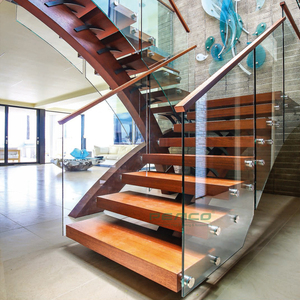
Engineered to comply with rigorous international building envelope standards including EN 14351-1, AAMA/WDMA/CSA 101, and AS2047. Explore our primary architectural export configurations below.
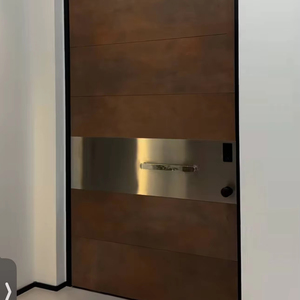
In modern high-efficiency building envelopes, thermal break doors represent the intersection of mechanical durability, thermodynamic engineering, and architectural minimalism. Historically, standard aluminum fenestration suffered from a high rate of thermal conduction ($k \approx 160-200 \text{ W/m}\cdot\text{K}$), turning frames into continuous thermal bridges that drove substantial HVAC energy loads and led to internal condensation issues in cold or humid zones. Premier Chinese manufacturing centers have completely revolutionized this segment by incorporating advanced multi-cavity polyamide insulating strips (PA66 GF25), structural thermal polyurethane barriers, and precision CNC-machined structural extrusions.
The structural core of an export-grade thermal break door relies on a precision-crimped composite section. Two separate aluminum extrusions—manufactured typically from architectural-grade 6063-T5 or 6063-T6 aluminum alloys with minimum structural web thicknesses ranging from 2.0mm to 3.0mm—are physically bridged by a glass-fiber reinforced polyamide strip (PA66 with 25% fiberglass). This composite configuration preserves high structural moment of inertia ($I_x, I_y$) to counteract severe wind load pressures exceeding 4,500 Pa, while simultaneously interrupting the thermal transfer vector. The resulting thermodynamic barrier reduces profile U-values down to between 1.1 and 1.6 W/m²·K on standard systems, and sub-0.8 W/m²·K on ultra-insulated Passivhaus-certified lines.
Furthermore, leading Chinese fenestration exporters utilize multi-stage surface finishing: architectural powder coating certified under AAMA 2604/2605 standards, high-durability fluorocarbon (PVDF) three-coat finishes rated for extreme coastal saline environments, and class-1 architectural anodization (20–25 microns). When combined with precision-injected corner brackets (corner cleat mechanical crimping backed by two-component polyurethane structural adhesive), Chinese thermal break systems achieve dimensional stability that eliminates corner joint cracking, water infiltration, and sash sag over decades of operational cycles.
Review the physical and thermodynamic metrics achieved by top-tier Chinese export facilities against standard residential thresholds.
| System Classification | Profile Wall Thickness | Polyamide Strip Width | System U-Value (Uw) | Airtightness (ASTM E283) | Water Penetration (ASTM E331) | Compliance Rating |
|---|---|---|---|---|---|---|
| Ultra-Slim Minimalist Slider | 2.0 mm – 2.5 mm | 24 mm – 34 mm (Multi-cavity) | 1.2 – 1.5 W/m²·K | Class 4 (≤ 0.1 m³/h·m) | 600 – 900 Pa | CE / AS2047 / NFRC |
| Heavy-Duty Commercial Pivot | 2.5 mm – 3.2 mm | 28 mm – 38 mm (Reinforced) | 1.3 – 1.6 W/m²·K | Class 3 (≤ 0.5 m³/h·m) | 700 – 1050 Pa | ASTM / AAMA Heavy |
| Passivhaus Architectural Bifold | 2.2 mm – 3.0 mm | 34 mm – 54 mm (Aero-Gel infill) | 0.78 – 0.95 W/m²·K | Class 4 (≤ 0.05 m³/h·m) | 1000 – 1200 Pa | Passivhaus Certified |
| Coastal Cyclone-Resistant Casement | 3.0 mm Structural Web | 24 mm – 32 mm (Structural) | 1.4 – 1.7 W/m²·K | Class 4 (≤ 0.08 m³/h·m) | 1200 – 1500 Pa | TAS 201/202/203 Impact |
As international energy codes tighten across North America (IECC 2024 / Title 24), the European Union (Energy Performance of Buildings Directive - EPBD), and Australasia (NCC 2022), procurement managers cannot purchase fenestration solely on per-square-meter unit price. Sourcing from top-tier Chinese manufacturers is shifting toward advanced integrated performance criteria:
Global developers demand verified Environmental Product Declarations (EPD). Tier-1 Chinese mills are shifting to low-carbon secondary aluminum billets and renewable hydro-powered smelting to achieve embodied carbon levels below 4.0 kg CO2e/kg aluminum, bypassing carbon border adjustment mechanisms (CBAM).
The convergence of thermal break framing with tempered Vacuum Insulated Glass (VIG) units (overall thickness <10.3mm achieving a center-of-glass Ug value of 0.45 W/m²·K) allows for ultra-slim, lightweight door sashes that outperform standard bulky triple-glazing assemblies.
Concealed automated drive systems embedded within the thermal break transoms, connected through KNX, Zigbee, or BACnet protocols. Oversized door leafs exceeding 600kg now open silently with magnetic levitation or brushless DC motors while maintaining strict air seal compression.

Sourcing directly from enterprise-scale Chinese fenestration plants provides institutional buyers with critical competitive advantages over domestic European or North American fabricators:
Essential technical, financial, and logistical insights for general contractors, facade consultants, and commercial importers.
Poured-and-debridged polyurethane involves filling an extruded aluminum channel with liquid structural polymer and cutting away the backing aluminum once cured. While cost-effective for standard thermal performance, it has lower structural shear resistance and cannot easily accommodate multi-cavity designs. In contrast, polyamide PA66 GF25 strips consist of extruded nylon reinforced with 25% chopped fiberglass, mechanically knurled and crimped into aluminum extrusion slots. PA66 GF25 matches the coefficient of thermal expansion of aluminum closely ($\approx 2.4 \times 10^{-5}/\text{K}$), preventing thermal shearing, delamination, and warpage under severe temperature fluctuations (-40°C to +80°C). It also enables intricate multi-chamber designs incorporating hollow chambers, low-emissivity foil inserts, and EPDM center gaskets for Passivhaus compliance.
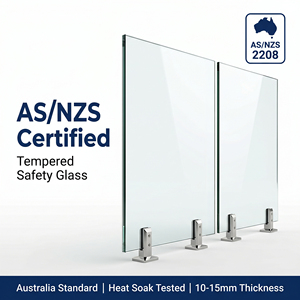
Top-tier Chinese exporters submit full door-and-frame assemblies to accredited third-party international testing bodies such as Intertek, TÜV Rheinland, and SGS. Testing includes ASTM E283 (air leakage rate), ASTM E331 (water penetration under static pressure), ASTM E330 (structural wind load capacity up to design and proof pressure), and NFRC 100/200/500 for thermal transmittance, SHGC, and condensation resistance. For Australia, products undergo AS/NZS 2208 safety glass certification and AS2047 fenestration testing in NATA-accredited test rigs. Qualified factories provide certified laboratory test reports and project-specific engineering structural calculation books stamped by licensed facade engineers.
To avoid a thermal mismatch where the frame outperforms the glass or vice versa, exported thermal break doors are typically paired with high-performance double or triple insulated glass units (IGU). A premier configuration includes 6mm Low-E Tempered + 16A (Argon gas filled) + 6mm Clear Tempered, utilizing warm-edge composite spacers (such as Technoform or Swisspacer) rather than conductive aluminum spacers. For extreme acoustic or security requirements, configurations utilize laminated safety glass (e.g., 6mm + 1.52mm SentryGlas/PVB + 6mm) which achieves acoustic attenuation ratings of STC 38–44 dB.
For standard export thermal break catalog profiles (such as 70mm, 85mm, 100mm, or 120mm system depths), most direct manufacturers accept MOQs as low as 30 to 50 square meters, making them ideal for high-end residential villas or custom commercial pilot phases. For completely proprietary architectural extrusions requiring custom steel die extrusion tooling, tool fabrication costs in China range from $800 to $2,500 USD per die set depending on cross-section complexity. Tooling turnaround typically requires 12 to 18 working days, followed by rapid sample extrusion and CMM coordinate measurement auditing.
Standard packaging protocols for export include: (1) low-tack protective PE film applied to all visible aluminum profile faces; (2) foam edge-guards along all perimeter corners; (3) desiccated shrink-wrap packaging over the entire sash to mitigate sea-air condensation and humidity during 30–45 day maritime transit; (4) crating inside non-fumigation engineered plywood boxes or customized heavy steel A-frames secured with high-tensile steel strapping. The crating is designed for overhead crane or standard heavy forklift discharge at container container freight stations (CFS).
Yes. Tier-1 exporters operate dedicated international project management desks staffed with English-speaking facade engineering professionals. Deliverables include detailed CAD shop drawings, 3D BIM (Revit) models, thermal simulation analyses (using LBNL THERM and WINDOW software), structural deflection calculations for jambs and transoms, and live high-definition video inspections during pre-assembly and water-spray testing in the factory test chamber prior to container loading.
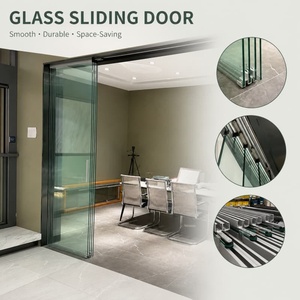
Oversized thermal break doors (sashes measuring 3.0m to 4.5m tall and weights from 300kg to 800kg) require specialized hardware engineering. For heavy-duty sliding and lift-and-slide doors, tandem stainless steel roller carriages with sealed precision needle bearings running on heavy-gauge 316 stainless steel tracks are utilized. For large pivot entrance doors, floor-concealed hydraulic door closers with built-in adjustable dampers and top pivot bearings with integral eccentric adjustment are engineered to guarantee smooth, self-closing operation without sash droop over 200,000 continuous test cycles.
Connect directly with senior export facade engineers. Receive comprehensive system performance test certificates, architectural CAD details, physical sample cut-sections, and an itemized factory-direct commercial quotation within 24 hours.