Direct factory supply of heavy-duty aluminum frames, structural glazing profiles, and high-performance insulated glass units (IGU) manufactured to international standards.
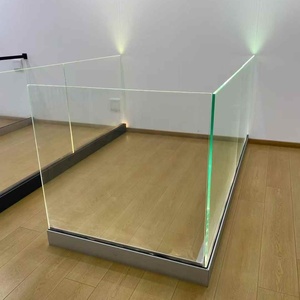
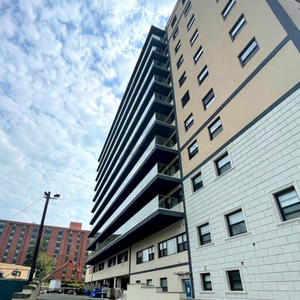
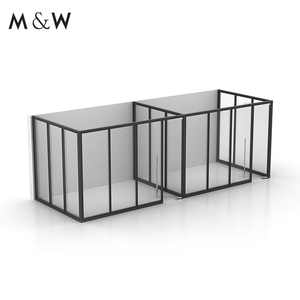
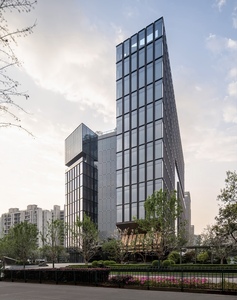
As modern architectural design shifts toward clean lines, expansive daylight harvesting, and seamless interior-exterior continuity, fixed glass windows—frequently designated as picture windows or direct-set vision glazing—have emerged as a core architectural element in luxury residential villas, high-rise commercial towers, and institutional projects worldwide. Operating from China’s industrial manufacturing hub, our state-of-the-art facility stands as a premier direct-factory manufacturer and exporter of heavy-duty aluminum framed fixed windows, structural glazing curtain wall infills, and high-performance Insulated Glass Units (IGUs).
Unlike standard operable fenestration systems (such as casement, tilt-and-turn, or horizontal sliding windows), fixed glass windows feature non-operable sashes or direct-to-frame glazing configurations. This mechanical structural advantage yields superior air-tightness, lower U-factors (thermal transmittance), exceptional water penetration resistance, and unparalleled acoustic isolation ratings. Our enterprise integrates precision Extrusion Milling, Automated Double-Sealed Structural Silicone Application, CNC Frame Assembly, and Rigorous QC Diagnostics to meet and exceed global building codes including North American ASTM standards, European EN certifications, and Australian AS/NZS compliance requirements.
Over the past 15 years, our engineering team has refined the fabrication lifecycle of structural architectural glass to solve complex site-specific challenges faced by general contractors, facade engineers, real estate developers, and architectural procurement managers. By sourcing from our China manufacturing base, tier-one international buyers unlock substantial information gain and material advantages:
We utilize certified 6063-T5 and 6060-T6 high-grade architectural aluminum alloys engineered with polyamide thermal breaks (PA66GF25) to eliminate thermal bridging in severe climates.
Fully automated Lisec double and triple glazing production lines with integrated Lisec warm-edge spacers, 95%+ Argon gas filling, and structural Dow Corning secondary silicone seals.
Engineered to resist extreme wind load pressures exceeding 5000 Pa (equivalent to Category 5 hurricanes), conforming to ASTM E330 structural performance testing.
Heavy-duty export-ready fumigated wooden crates, steel A-frame glass transport racks, and vacuum shrink wrapping ensuring zero breakage during transoceanic transit.
To assist facade engineers and procurement officers in selecting the precise glass configuration for commercial and luxury residential builds, the technical matrix below outlines our standard export product series, physical properties, and performance metrics.
| Window Series / Profile | Glass Configuration (IGU) | U-Factor (W/m²·K) | SHGC Range | Acoustic Rating (STC) | Ideal Application |
|---|---|---|---|---|---|
| FG-65 Commercial Non-Thermal | 6mm + 12Ar + 6mm Clear Tempered | 2.4 – 2.8 | 0.55 – 0.70 | 32 – 35 dB | Low-rise storefronts, interior atrium partitions |
| FG-80 Heavy Duty Thermal Break | 6mm Low-E + 16Ar + 6mm Toughened | 1.4 – 1.8 | 0.28 – 0.42 | 38 – 42 dB | Luxury residential villas, coastal apartments |
| FG-100 Passive Ultra Insulation | 5mm Low-E + 12Ar + 5mm + 12Ar + 5mm Triple | 0.8 – 1.1 | 0.22 – 0.35 | 42 – 48 dB | Cold-climate architecture, Passive House standards |
| FG-SSG Structural Glazing (Slim) | 8mm High-Trans Low-E + 18Ar + 8mm Laminated | 1.2 – 1.5 | 0.25 – 0.38 | 44 – 50 dB | Floor-to-ceiling curtain wall vision panels, office towers |
The global architectural fenestration sector is undergoing a profound transformation driven by stringent carbon-neutral mandates, updated energy codes (such as California Title 24, European EPBD, and UAE Estidama standards), and shifting aesthetic preferences toward ultra-slim sightlines. B2B buyers sourcing fixed glass windows from China must align their technical requisites with key emerging industry trends:
Vacuum Insulated Glass represents the next quantum leap in architectural glazing. By replacing the gas-filled cavity between glass panes with an evacuated narrow vacuum gap sealed with inorganic solder glass, VIG achieves center-of-glass U-values as low as 0.30 W/m²·K in a profile height of under 10mm. Forward-thinking real estate developers are leveraging fixed VIG windows to eliminate bulky triple-pane units while achieving passive house thermal performance.
Fixed picture windows often present solar heat gain challenges in large south- and west-facing elevations. Sourcing trends indicate a sharp uptick in fixed glass units pre-integrated with smart electrochromic coatings or dynamic SPD (Suspended Particle Device) film. Controlled via building management systems (BMS) or smart sensors, these fixed glazing units automatically tint in response to peak irradiance, slashing commercial HVAC cooling loads by up to 30%.
With the implementation of the European Union’s Carbon Border Adjustment Mechanism (CBAM), international buyers are inspecting the embodied carbon footprint of imported fenestration. Our factory leads the export market by offering aluminum profile extrusions processed using hydro-electric power and incorporating up to 75% post-consumer recycled aluminum alloy, drastically reducing EPD (Environmental Product Declaration) carbon metrics.
Fixed window performance relies on the synergy of structural physics, glass surface chemistry, and advanced silicone polymer sealing. Sourcing high-specification fixed windows requires a deep understanding of several critical technical dimensions:
In modern architectural facades, conventional mechanical aluminum retaining beads are frequently replaced by 4-sided Structural Silicone Glazing (SSG). High-modulus structural silicone sealants (such as Dow Corning 983 or Tremco Proglaze SSG) transfer dynamic wind pressure loads directly from the tempered glass pane to the structural aluminum sub-frame. This allows for unbroken, continuous glass facades where adjacent fixed window units form a smooth, glass-only exterior plane.
Specifying fixed windows requires balancing Visible Light Transmittance (VLT) and Solar Heat Gain Coefficient (SHGC). Double-silver and triple-silver magnetron sputter Low-E coatings selectively reflect near-infrared thermal solar energy while permitting maximum visible light wavelength passage. The mathematical ratio of VLT to SHGC—known as the Light-to-Solar-Gain (LSG) ratio or Selectivity Index—should ideally exceed 1.55 for sustainable commercial project specifications.
Addressing the critical operational, engineering, and logistics questions encountered during B2B fixed window procurement from China.
A fixed sash window includes an internal aluminum sash frame mounted inside a master frame to match the sightlines of adjacent operable (casement or tilt-turn) windows. A direct-set fixed window glazes the insulated glass unit directly into the master frame, maximizing clear viewable glass area, lowering profile costs, and offering slimmer structural sightlines.
Large fixed glass panels with high solar absorption Low-E coatings experience non-uniform temperature distribution across the central vision area versus the shaded pane edges. To prevent thermal stress fracture, all our exported fixed Low-E units undergo full thermal tempering or heat-strengthening processes, combined with precision CNC polished edge grinding to eliminate micro-cracks before furnace tempering.
Our fixed aluminum window systems are rigorously tested and certified under: (1) North American NFRC and AAMA / WDMA / CSA 101/I.S.2/A440 for air inflation, water tightness, and structural wind pressure; (2) European CE Marking under EN 14351-1 and EN 1279 for IGU longevity; and (3) Australian AS2047 & AS2208 compliance standards.
Fixed glass windows are packed using heavy-duty, fully closed fumigated plywood crates with internal high-density EPDM rubber corner protectors and interleaved cork shock-absorbing pads. Units are strapped with high-tensile polyester bands onto steel A-frames designed for forklift handling and seamless container unloading.
Yes. Our factory operates specialized jumbo-size glass processing lines capable of producing single fixed glass units up to 3200mm x 9000mm. We also supply custom geometric shapes including arch tops, trapezoids, triangles, and corner-mitered glass-to-glass butt joint fixed windows.
Standard architectural profile colors (powder-coated black, white, bronze, silver anodized) carry a shop drawing approval lead time of 20 to 25 calendar days. Custom extrusions or custom PVDF color matching typically require 30 to 35 days, including die creation, extruding, thermal break crimping, double glazing, and final QC loading inspection.
Contact our engineering and export estimation team today for CAD structural detailing, wind load calculations, sample kits, and competitive direct-factory price estimates.