Manufactured with certified metallurgy, computer-controlled tempering furnaces, and laser-guided accuracy. Explore our core structural elements, extruded profiles, and engineered safety systems engineered for international building codes.
The production of architectural curved glass balustrades requires an exacting balance between thermodynamics, structural deflection mechanics, and optical clarity. Discover how top Chinese manufacturers engineer safety-critical curved glass systems for world-class architectural projects.
Gravitational annealing (hot bending) subjects float glass to 600°C in bespoke ceramic molds for intricate radii, but lacks mechanical surface compression. Modern Tier-1 Chinese export factories utilize dual-chamber horizontal convection oscillating tempering furnaces. This process rapidly quenches the glass using high-pressure air nozzles while achieving surface compression >90 MPa, satisfying both ASTM C1048 and EN 12150-2 safety glass mandates.
For frameless curved structural balustrades, conventional Polyvinyl Butyral (PVB) exhibits excessive viscoelastic creep under sustained horizontal loads. China's premier laminating lines utilize SentryGlas® (SGP) ionoplast interlayers. SGP yields 100 times the mechanical stiffness and 5 times the tear strength of traditional PVB, ensuring zero post-breakage panel collapse and exceptional post-failure barrier retention on cantilevered balconies.
Curving introduces critical challenges regarding optical refraction and roller wave distortion (ASTM C1651). By optimizing dynamic roller bed velocity, deploying advanced continuous Pyrometry, and maintaining strict edge lift tolerances (≤0.15mm), specialized Chinese manufacturers eliminate the visual "funhouse mirror" effect on complex spiral staircases and large-radius architectural facades.
Direct comparison of monolithic, PVB laminated, and SGP structural curved glass across international performance thresholds.
| Glazing Architecture | Standard Configurations | Surface Compression (MPa) | Linear Deflection Resistance | Shear Modulus (G, 50°C) | International Code Compliance |
|---|---|---|---|---|---|
| Monolithic Toughened Curved | 10mm, 12mm, 15mm | 90 – 120 MPa | Moderate (Point Load Sensitive) | N/A (Monolithic Elastic) | BS 6180, ANSI Z97.1 |
| Curved Tempered PVB Laminated | 8+1.52PVB+8mm / 10+1.52PVB+10mm | ≥ 95 MPa | Good (Dampens Dynamic Impacts) | ~0.45 MPa (Viscoelastic Drop) | EN 12600 Class 1B1, AS/NZS 2208 |
| High-Performance SGP Laminated | 10+1.52SGP+10mm / 12+1.52SGP+12mm | ≥ 100 MPa | Exceptional (Structural Monolithic Act) | > 9.5 MPa (Rigid at High Temp) | ASTM E1300, IBC 2024, CE EN 14449 |
| Triple Laminated Hurricane Grade | 8+1.52SGP+8+1.52SGP+8mm | ≥ 105 MPa | Ultra-High (Large Span Helical) | Composite Hyper-Rigid | Miami-Dade NOA, Florida High Velocity |
The global luxury residential and commercial developments market is moving away from post-supported, segmented, flat-glass polygonal approximations toward pure, organic, monolithic curved geometries.
Standard clear float glass exhibits a pronounced green tint when viewed along exposed polished edges—an aesthetic problem multiplied on thick laminated curved barriers. Global architectural firms now specify low-iron (opti-white) glass with ferric oxide content below 100 ppm, yielding a 91.5%+ Light Transmission index and pristine crystal-clear transparency across curved viewing corridors.
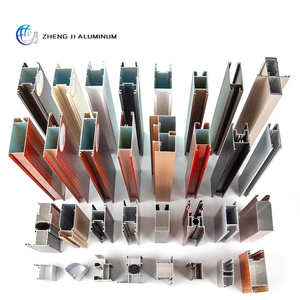
Wet glazing using chemical grouts and expanding cement is being superseded by custom CNC-curved architectural aluminum profiles (6063-T6 metallurgy). Systems utilize adjustable expansion clamps and high-memory EPDM/Santoprene isolating gaskets. This accelerates installation time by 65%, eliminates glass stress concentration points, and allows micro-level vertical alignment post-anchoring.
Forward-thinking commercial hubs in Dubai, Singapore, and London are procuring curved balustrades with CNC-milled bottom-shoe profile channels housing IP68 continuous-run linear low-voltage LEDs. Furthermore, advancements in curved PDLC (Polymer Dispersed Liquid Crystal) film lamination allow curved privacy balustrades for VIP corporate mezzanines and private spa installations.
International general contractors now require Environmental Product Declarations (EPDs) from Chinese glass factories. The transition to electric smelting furnaces, closed-loop water treatment in CNC polishing departments, and recycling 98% of glass cullet has placed leading Chinese producers at the top of LEED and BREEAM-accredited procurement shortlists.
Integrating 15+ years of architectural glass fabrication mastery with specialized metallurgy, high-gauge structural aluminum sub-bases, and rigorous quality assurance.
Curved installations fail when field deviations clash with factory tolerances. Drawing from extensive commercial site experience across more than 1,200 completed developments, our engineers convert 3D laser-scan point clouds into high-precision CNC bending files, guaranteeing exact alignment with masonry stringers, steel floor slabs, or complex concrete helical stairways.
Unlike simple glass processors who subcontract aluminum mounting bases, top-tier Chinese manufacturers operate internal extrusion and precision cutting workshops. Utilizing high-grade Pak Alco and Chawla standard certified alloys alongside architectural 6063-T6 aluminum sections, every channel, spigot, and bracket is custom engineered to support dynamic 1.5 kN/m to 3.0 kN/m line loads.
Nickel Sulfide (NiS) inclusions in raw float glass can cause spontaneous failure in tempered panels. Certified export factories subject all architectural curved balustrades to calibrated Heat Soak Testing (EN 14179-1) inside controlled thermal chambers at 290°C for a minimum of 2 hours, destroying contaminated panels in the facility rather than on your jobsite.
Direct technical answers for commercial developers, general contractors, structural engineers, and overseas project directors.
The minimum bending radius depends directly on glass thickness and tempering furnace capabilities. For 10mm and 12mm monolithic or laminated glass, our advanced horizontal roll-forming furnaces can achieve a tight minimum radius of 1,000mm (R1000). For heavy-duty 15mm or 19mm panels, the typical minimum radius ranges from 1,200mm to 1,500mm. Tight variable-radii curves and 3D compound helical spirals can also be fabricated via gravity-assisted thermal bending autoclaves.
We eliminate field fitting errors through a strict digital coordination protocol. Overseas clients provide CAD/Revit files or 3D point cloud scans captured with on-site laser trackers. Our technical department prepares fully annotated workshop shop-drawings detailing chord heights, arc lengths, radius points, and anchor bolt coordinates. We fabricate full-scale CNC acrylic templates or test-assemble the curved sub-base profiles on the factory floor prior to containerized packing.
All export glass panels are stamped with mandatory traceability codes and accompanied by complete test certificates. Standard documentation packages include CE EN 12150 and EN 14449 (Europe), SGCC ANSI Z97.1-2015 and ASTM C1048 (North America), as well as AS/NZS 2208 (Australia/New Zealand). Independent third-party mill test reports (MTR) for aluminum 6063-T6 channels and stainless steel 316/2205 spigots are also provided for municipal building inspections.
Curved glass panels cannot be packed flat. We engineer custom heavy-duty radiused wooden crates made from ISPM-15 compliant fumigated timber. Panels are suspended with non-compressible EVA foam corner cushions, separated by mildew-resistant cork pads, and banded with steel tension straps. Crates are loaded onto flat-rack or open-top shipping containers with diagonal structural steel bracing to withstand maritime pitching, rolling, and dynamic container port crane handling.
Yes. A substantial portion of our projects are coordinated remotely with overseas developers, architects, and estate owners. Once you share the project drawings, our engineering desk establishes a dedicated project line via WhatsApp, Zoom, or Email. We supply comprehensive CAD drawings, video-recorded dry-fit factory trials, third-party lab inspection videos, and real-time shipping tracking from our factory floor directly to your destination port.