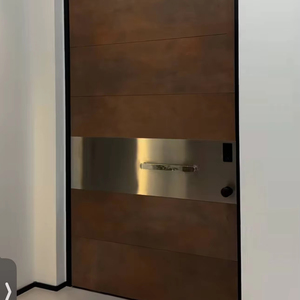
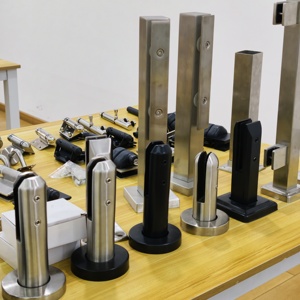
Explore commercial and residential fenestration profiles, minimalist glass assemblies, and structural envelope solutions precision-engineered to international ASTM, EN, and GB quality standards.
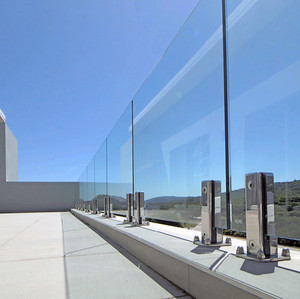
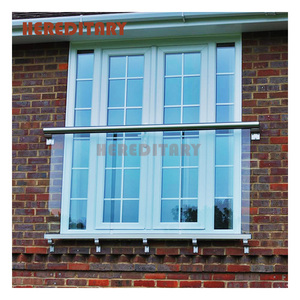
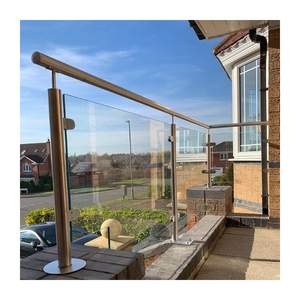
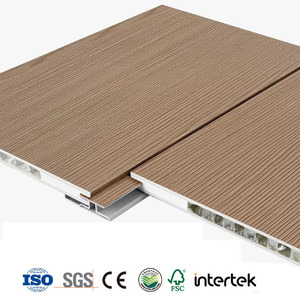
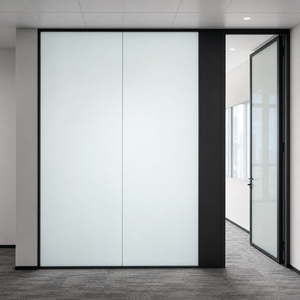
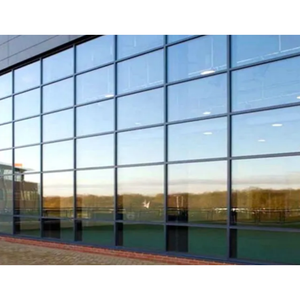
By unifying metallurgical precision, multi-axis die casting, automated anodizing, and global freight accountability, we resolve the friction points typical of overseas fenestration procurement.
We cast solely from A00 pure primary aluminium billets, formulating 6063-T5, 6063-T6, and 6061-T6 compositions. We reject recycled scrap blending in load-bearing architectural structural members.
Equipped with computerized high-tonnage extrusion presses (up to 10,000 MT), our profile cross-sections conform strictly to EN 12020-2 and high-precision class GB/T 5237 dimensional metrics.
In-house CAD/CAM tooling centers allow customized dies for slimline, thermal break, and unitized curtain wall mullions within 7 to 12 days, speeding up architectural prototype cycles.
Every profile bundle is protected with customized low-tack protective film, interleaved pearl cotton, and heavy-gauge fumigated wooden skeleton crates to prevent sea-freight oxidation and scuffing.
In contemporary façade engineering, aluminium window and door profiles must satisfy demanding structural, acoustic, and thermal mandates. As China's extrusion industry evolves toward carbon neutrality and advanced precision, top-tier suppliers have migrated beyond commodity framing into complete fenestration assemblies.
Our profile systems integrate PA66 GF25 (25% glass fiber reinforced polyamide) barrier strips via knurled mechanical rolling. This breaks the conductive thermal bridge typical of aluminum (which has a thermal conductivity of ~160 to 200 W/m·K), suppressing overall fenestration U-values down to ≤ 1.3 W/m²·K when paired with Low-E argon-filled insulated glass units (IGUs).
From towering coastal commercial curtain wall facades to minimalist residential pivot doors, profile wall thickness is systematically calculated across critical stress intersections to resist cyclic wind-load pressures up to 5.0 kPa (satisfying ASTM E330, AS 2047, and EN 12210 criteria).

A direct metallurgical comparison guiding structural engineers and facade consultants in selecting the optimal aluminum alloy grade for project-specific wind pressures and aesthetic finishes.
| Alloy & Temper | Tensile Strength (Rm MPa) | Yield Strength (Rp0.2 MPa) | Elongation (A50 %) | Hardness (Webster HW) | Target Applications |
|---|---|---|---|---|---|
| 6063-T5 | ≥ 160 MPa | ≥ 110 MPa | ≥ 8% | ≥ 8.5 HW | Standard residential windows, interior acoustic partitions, sliding door sashes. |
| 6063-T6 | ≥ 205 MPa | ≥ 180 MPa | ≥ 8% | ≥ 11.5 HW | High-exposure exterior windows, heavy glazed pivot systems, commercial storefronts. |
| 6061-T6 | ≥ 265 MPa | ≥ 245 MPa | ≥ 8% | ≥ 15.0 HW | Structural curtain wall transoms, glass spigot balustrades, heavy-load floor tracks. |
| 6005A-T6 | ≥ 270 MPa | ≥ 225 MPa | ≥ 8% | ≥ 14.0 HW | Large-span sunroom purlins, exterior cantilever canopies, architectural louvers. |
How international carbon border adjustments, minimalist architectural design, and smart building envelopes are transforming the B2B supply chain.
With the European Union Carbon Border Adjustment Mechanism (CBAM) and global ESG standards taking effect, certified suppliers in China are powering extrusion presses with hydroelectric and solar energy. Utilizing certified low-carbon primary aluminum (≤ 4.0 kg CO2e/kg Al) protects international developers from cross-border carbon tariffs.
Architects demand panoramic views with near-invisible aluminum framing. The next generation of profile engineering employs recessed perimeter frames (sightlines under 18mm) capable of supporting triple-glazed IGU panels weighing upwards of 400kg using high-tensile 6061/6063-T6 corner keys and heavy-duty concealed multi-point rollers.
The convergence of aluminum framing with intelligent facades is accelerating. Extruded profile cross-sections are engineered with dedicated internal wire conduits to support switchable PDLC privacy glass, integrated photovoltaic (BIPV) framing clips, and motorized motorized multi-point actuators synced with HVAC Building Management Systems (BMS).

An aluminum window profile is only as durable as its surface barrier. China's top suppliers maintain strict automated vertical immersion and electrostatic horizontal coating lines operating under international certifications:
Navigating cross-border profile sourcing demands clarity on tolerances, sample sign-offs, and quality assurance checkpoints.
Prior to die extrusion, verify dynamic cross-sections via CAD DWG review and finite element analysis (FEA) thermal modeling (ISO 10077-2). Confirm gasket retention groove dimensions and corner bracket crimping compatibility.
Require trial billet extrusions from new dies. Perform spectrometer alloy tests, cross-sectional caliper measurements, Webster hardness verification, and tensile elongation testing before authorizing bulk production runs.
Conduct third-party or live remote video inspection of batch powder coating micron thickness, film adhesion (cross-hatch test ISO 2409), wrapping integrity, and moisture desiccant placement within sea freight containers.
Detailed answers addressing metallurgical grades, tooling investments, production lead times, and global delivery guarantees.
The primary divergence lies in artificial aging and heat treatment. 6063-T5 is cooled rapidly from extrusion temperatures and artificially aged, achieving an ultimate tensile strength of ≥160 MPa. 6063-T6 undergoes solution heat treatment followed by precision artificial aging, delivering a higher yield strength (≥180 MPa) and Webster hardness ≥11.5 HW, making it ideal for tall curtain wall mullions and high-wind coastal installations.
Standard custom extrusion dies for window and door sash/frame profiles typically take 7 to 12 working days to fabricate and validate. Die tooling costs range from $350 to $1,800 depending on cross-section complexity and perimeter size. For bulk production orders exceeding 5 to 10 metric tons, die costs are routinely refunded in full.
PA66 GF25 polyamide strips provide mechanical structural stability, maintaining tensile strength under direct solar heating up to 200°C. They allow dual-color finishes (different interior and exterior profile colors). In contrast, poured polyurethane resin can experience creep under heavy dead-loads and high temperatures, making polyamide the preferred architectural standard globally.
For coastal environments within 5 km of seawater, we specify PVDF (polyvinylidene fluoride) fluorocarbon coatings meeting AAMA 2605 or Qualicoat Class 3 powder coatings, or Class I anodized finishes (≥20μm). These systems withstand over 3,000 to 4,000 hours of neutral salt spray (ASTM B117) without film blistering, chalking, or delamination.
Standard architectural catalog dies feature a low MOQ of 500 kg to 1 metric ton per finish run. For bespoke custom die extrusions, the standard batch MOQ is 1 to 3 metric tons, accommodating tailored powder coating colors (RAL/Pantone match) and custom length cuttings (typically 5.8m for 20GP containers and 5.85m to 6.0m for 40HQ containers).
Every profile undergoes automatic lamination with UV-resistant PE protective film. Extrusion bundles are wrapped in high-density pearl cotton and wrapped with composite waterproof kraft paper. For export containerization, bundles are strapped inside fumigated timber crates or steel frame cradles with silica gel desiccant packs to avoid moisture-induced white rust during transit.
Yes. Our engineering project desk provides end-to-end remote coordination. We supply 3D DWG/BIM profile models, express-deliver physical cut-samples and color chips via DHL within 3 to 5 days, and provide digital quality inspection reports with spectral material analysis and micrometric laser dimensional verification before container sealing.
Each container shipment is accompanied by an official Mill Test Certificate (MTC) conforming to EN 10204 3.1, detailing chemical composition, mechanical tensile and yield tests, coating thickness reports, and CE/ISO 9001 quality certificates. Third-party inspections (SGS, TÜV, Intertek) are available upon request prior to vessel dispatch.
Connect with our technical engineering desk for complimentary CAD die analysis, material test certifications, and container-level FOB/CIF pricing within 24 hours.