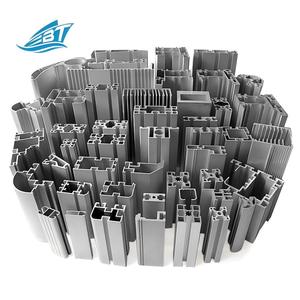
Fabricated from prime A00 aluminium ingots across 6063, 6061, and 6005A metallurgical grades. Optimized for casement, slim-frame sliding, commercial flush pivot, and invisible door assemblies.
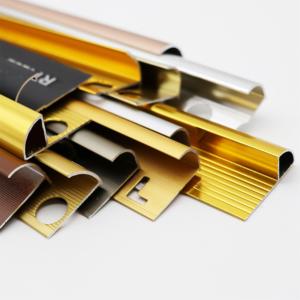 Trim Profile
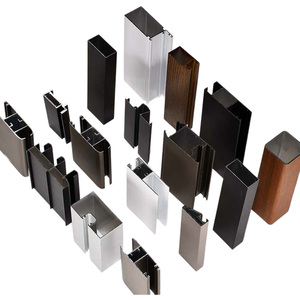 Casement & Sliding
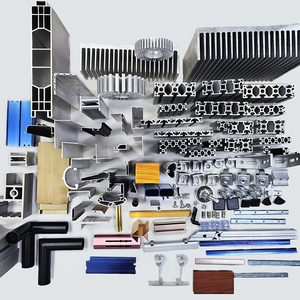 Custom Extrusion
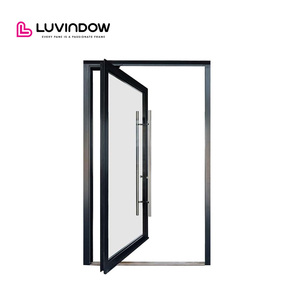 Pivot System
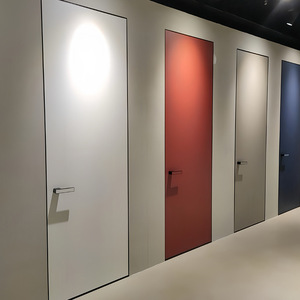 Flush Invisible
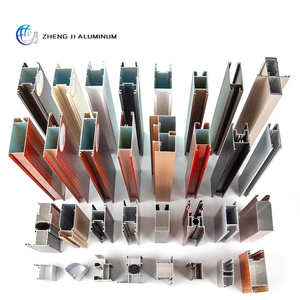 Interior Partition
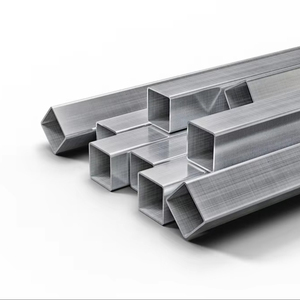 Structural Tubing
As contemporary architecture pivots toward decarbonized construction, extreme thermal envelopes, and expansive structural glazing, door extrusion engineering must evolve beyond simple structural framing.
The global luxury residential and commercial sector has permanently shifted away from bulky face-widths toward micro-transoms and concealed frames. Today's architectural benchmark demands visible interlock profiles narrower than 20mm while handling wind loads up to 3.5 kPa (Class C5 under EN 12210).
To achieve this structural inertia without increasing sightline dimensions, our extrusion matrices integrate alloy chemistry modifications—specifically grain-refined 6063-T6 and 6005A billets. By increasing silicon and magnesium ratios within precise ASTM B221 envelopes, our engineers achieve high yield strength (Rp0.2 > 215 MPa). This enables floor-to-ceiling glass wall doors exceeding 3.8 meters in height without deflection or roller track fatigue.

Thermal bridge mitigation is no longer an optional luxury—it is mandated by building codes globally, from the European Energy Performance of Buildings Directive (EPBD) to North American ASHRAE 90.1. Aluminium door profiles have historically faced scrutiny over metal conductivity.
Our answer lies in multi-cavity thermal break systems utilizing 25% glass fiber-reinforced polyamide struts (PA66 GF25) measuring up to 34mm in depth. Combined with cellular polyolefin foam insulation inserts within the internal chambers, our thermal-break door profiles drop the thermal transmittance value (Uf) below 1.2 W/(m²·K). This enables whole-door assemblies to easily satisfy Passive House certification standards while eliminating indoor condensation risks under extreme exterior temperature differentials (-30°C to +45°C).

Moving beyond conventional electro-coloring, procurement trends favor ultra-durable Fluoropolymer PVDF (AAMA 2605 compliant) and Qualicoat Class 2 hyper-durable powders designed to endure 3,000+ hours of continuous neutral salt spray without gloss retention loss.
Standardized integration of European standard 15/20mm hardware mounting grooves. Eliminates secondary milling for downstream window and door fabricators, permitting plug-and-play assembly of multi-point locks, concealed hinges, and automatic pivot operators.
International tenders increasingly require certified Environmental Product Declarations (EPD). Utilizing clean-energy powered electrolysis and up to 60% post-industrial recycled scrap billets, our profiles achieve an embodied carbon rating below 4.0 kg CO₂e/kg Al.
How international facade contractors, hardware distributors, and high-volume modular builders are re-architecting their procurement playbooks to balance landed unit costs, lead times, and regulatory compliance.
| Procurement Vector | Traditional Import Approach | Modern Value-Stream Sourcing (2025+) | Strategic Advantage |
|---|---|---|---|
| Fabrication Readiness | Raw line extrusions shipped in 6.0m bundles; cutting, punching & notching done on jobsite. | CNC Pre-Machined, cut-to-length kits with pre-milled hinge pockets and mitered corner keys. | Reduces destination fabrication labor costs by up to 45% and eliminates site scrap metal waste. |
| Thermal Technology | Non-insulated solid profiles or entry-level resin pour-and-debridge systems. | PA66 GF25 multi-chamber polyamide crimping with automated pull-off shear testing records. | Meets strict thermal envelope energy codes (AAMA/WDMA/CSA 101, EN 14351-1). |
| Surface Coating Quality | Standard architectural powder coating without environmental warranty. | Qualicoat Seaside certified powder coatings and Class I (15-20µm) anodization guarantees. | Overcomes coastal saline corrosion and high-UV chalking for 20+ year asset life. |
| Supply Chain Audit | Paper-based certificates often lacking metallurgical batch traceability. | Direct Mill Test Certificates (EN 10204 3.1) linked with real-time optical emission spectrometry. | Guarantees chemical compliance; avoids catastrophic brittle failure in heavy structural glass doors. |
Experienced procurement officers and developers no longer evaluate Chinese aluminium profile manufacturers on gross billet base price alone. The true commercial differentiator lies in extrusion straightness tolerances, die wall uniformity, and protective export packaging.
A profile that deviates by just 0.5mm across a 3-meter sash frame introduces immense friction into sliding roller assemblies, causes perimeter seal separation, and compromises air-tightness. By leveraging automated hydraulic pullers, nitrogen die cooling systems, and multi-point laser micrometer gauges during the run, our facility guarantees profile twist within 0.5° per meter and transverse bow below 1.5mm per 3000mm length—exceeding EN 755-9 high-precision standards.
Rooted in 15+ years of dedicated metallurgy and precision architectural fabrication. We combine massive raw capacity with artisan attention to structural integrity and architectural finish.
From 600 MT up to 3,600 MT hydraulic presses. Capable of extruding complex structural profiles with outer dimensions up to 350mm and ultra-thin wall sections down to 0.8mm.
Master CAD/CAM toolmakers with wire-cut EDM machinery. Custom prototype profile dies fabricated within 7 to 10 working days, backed by rapid 3D sample print verification.
Fully automated vertical powder-coating plants (Gema Switzerland), horizontal anodizing baths up to 7.5 meters, electrophoretic deposition, and realistic 3D Italian wood-grain transfer.
Every billet charge undergoes direct-reading spectrometer inspection, Webster/Barcol hardness checks after aging ovens, cross-hatch adhesion testing, and chemical bath titrations.
4-axis 6.5-meter CNC machining centers. Delivers miter cuts, thermal strip roll-crimping, drainage slot milling, corner-cleat punching, and pre-tapped hinge pocket preparation.
Individual protective PE film with private labeling, pearl cotton interleaving, shrink-wrapped bundles, heavy-duty honeycomb carton wraps, and fumigated steel-reinforced wood pallets.

Specifying the wrong alloy grade can result in premature structural sagging or poor surface finishes. Here is how our engineering team directs your procurement specifications:
Actionable, transparent answers covering tooling charges, lead times, international standard alignments, and surface durability warranties.
For new custom door profile geometries, our in-house die department completes tool design, steel quenching, and wire-cut EDM within 8 to 12 calendar days. Initial First Article Inspection (FAI) sample profiles (300mm to 1000mm length) are extruded, dimensionally measured against your CAD/PDF tolerances, and dispatched via international courier (DHL/FedEx) within 14 days of CAD drawing sign-off.
Our extrusions strictly adhere to European standard EN 755 (Parts 1-9), EN 12020-2 for high-precision architectural profiles, and American standard ASTM B221. For surface finishes, our powder-coating plants follow Qualicoat Class 1 & Class 2 (Seaside certified) and AAMA 2604 / 2605 specifications. Anodizing meets BS EN 12373-1 and AAMA 611 Class I (thickness ≥ 18-25 microns) for severe marine environments.
For existing factory dies (such as our 6000 series sliding window/door, flush concealed hidden door, and round tile trim systems), our standard MOQ is 500 kg per section. For completely custom profiles requiring a new die, we accept trial orders of 1,000 kg per section. Tooling die fees are 100% credited or refunded once cumulative container shipments exceed 10 metric tons.
Yes. We house automated high-speed thermal barrier knurling, strip insertion, and rolling lines. We utilize genuine Technoform or equivalent PA66 GF25 insulation struts. Every batch undergoes mandatory room-temperature and high-temperature transverse tensile pull-off testing (EN 14024 compliant) with recorded shear strength certificates before packing.
Export-grade packaging is engineered to prevent humidity staining and micro-fretting. Every profile receives a low-tack protective PE film (with custom customer logo branding available). Bundles are wrapped in water-resistant composite craft paper or heat-shrink film, lined with EPE foam separators between visible faces, and packed into heavy-duty fumigated wooden crates or steel-reinforced skid cradles.
Yes. Our architectural door and window profile systems are engineered with standard European Groove (15/20mm Euro-groove) dimensions. This ensures plug-and-play compatibility with global hardware suppliers including Siegenia, Roto, G-U, Hoppe, Sobinco, and Kin Long, eliminating the need for expensive custom corner gears or proprietary drive rods.
Our facade engineering desk provides full DWG / DXF structural shop drawings, 3D STEP models, and Section Inertia Moments (Ix, Iy) for wind-load calculation under project-specific design pressures. We routinely assist facade consultants and general contractors with wind deflection modeling to ensure compliance with regional structural codes.
We operate under standard international Incoterms 2020 including FOB (Foshan / Shenzhen / Shanghai / Ningbo ports), CIF, CFR, and DDP for select North American and European destinations. Payment terms are commonly 30% T/T deposit upon order confirmation and 70% against Bill of Lading (B/L) copy, or Irrevocable Documentary Letter of Credit (L/C at sight) for high-volume transactions.
Send your CAD profiles (.dwg / .dxf / .step), alloy requirements, or tender specifications. Receive a comprehensive quotation with die breakdown, tolerance verification, and sample dispatch within 24 business hours.