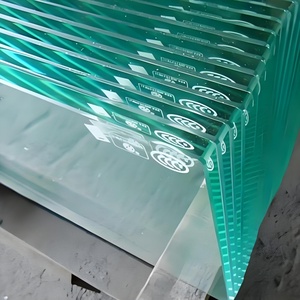
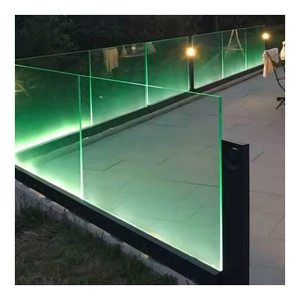
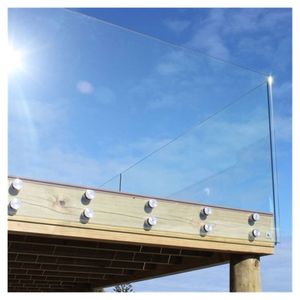
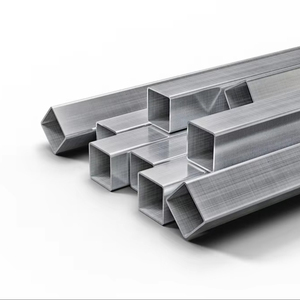
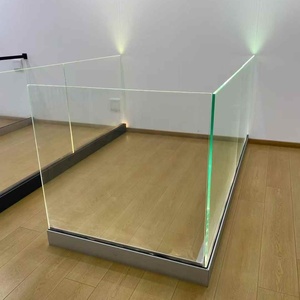
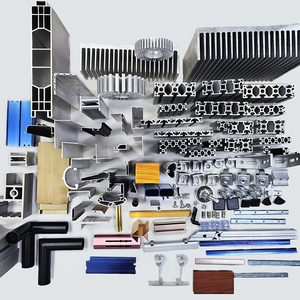
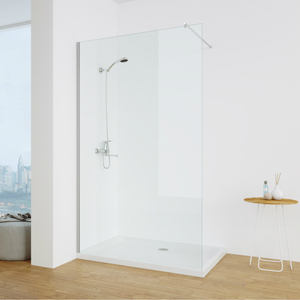
Discover our precision-fabricated portfolio ranging from heavy-duty structural aluminium profiles and triple-glazed energy-efficient doors to glass balustrades and integrated safety pool surrounds.
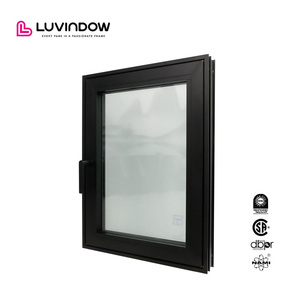
Procuring aluminium French doors for institutional, multi-family, or high-end residential applications demands adherence to strict structural and thermal directives. Under the European Standard EN 14351-1:2006+A2:2016, external pedestrian doorsets must meet non-negotiable performance thresholds verified by independent notified bodies.
CE certification mandates repeatable cyclic testing per EN 1191. Our heavy-duty aluminium French door sash and frame profiles are tested through 100,000 to 200,000 continuous opening and closing cycles under simulated operational weight loads without hinge deflection exceeding 0.5mm or compromising perimeter seal engagement.
Compliance with European Energy Performance of Buildings Directive (EPBD) requires certified overall heat transfer coefficients. Utilizing finite element thermal simulation (ISO 10077-2), our polyamide thermal barriers achieve a frame coefficient (Uf) of 1.4 W/m²K, which when combined with argon-filled warm-edge Low-E insulated glazing units yields an overall Uw as low as 0.85 to 1.1 W/(m²·K).
French door assemblies feature inherent vulnerabilities at the meeting stiles (floating rebated astragal). Our systems integrate multi-point lock mechanisms (European DIN 18251) with hardened anti-lift mushroom cam bolts, full-length shootbolts, and anti-drill manganese plates certified to EN 1627 Class RC2 and RC3 resistance.
| Performance Criterion | Harmonized Test Standard | Certified Performance Class | Architectural Engineering Benefit |
|---|---|---|---|
| Air Permeability | EN 1026 / EN 12207 | Class 4 (600 Pa max differential pressure) | Near-zero draft infiltration, critical for Passivhaus and NZEB buildings. |
| Watertightness | EN 1027 / EN 12208 | Class 9A / Exxx (up to 1050 Pa static pressure) | No water ingress during hurricane-force driving monsoon conditions. |
| Wind Load Deflection | EN 12211 / EN 12210 | Class C5 (≤ 2000 Pa design wind pressure) | Frame deflection held to < L/300; maximum structural perimeter stability. |
| Acoustic Insulation | EN ISO 10140-2 / ISO 717-1 | Rw (C; Ctr) = 36 dB to 44 dB | Significant mitigation of low-frequency urban traffic and external decibels. |
| Impact Resistance | EN 13049 | Class 5 (Drop height: 950 mm) | Structural integrity guaranteed against accidental structural body collisions. |
Rooted in 15+ years of dedicated structural fenestration and glazing craftsmanship, we manufacture custom aluminium door and window solutions for more than 1,200 commercial complexes, corporate headquarters, and high-specification residences across regional and international territories.
We reject low-grade scrap re-melting. Our structural aluminium profiles are extruded strictly from 6063-T5, 6063-T6, and 6061 prime virgin billets meeting ASTM B221 and EN 755 directives. Through partner tiers including certified heavy-gauge Pak Alco and Chawla series extrusions, profile web thicknesses range from 1.6mm to 3.0mm to bear oversized, multi-lite glass loads without sag.
Eliminate site-level framing errors. Supported by mobile 3D digital laser site surveying teams dispatched within 24 hours, our 4-axis industrial CNC machining centers cut, rout, miter, and crimp with sub-millimeter precision (±0.5mm). Every door leaf, rebated threshold, and astragal aligns with factory-level precision prior to shipping.
Finishing defines architectural lifespan. Our powder coating adheres to Qualicoat Class 2 / AAMA 2604 architectural specifications with multi-stage chemical pretreatment, achieving ≥60–80μm dry film thickness resistant to 3,000 hours of continuous acetic acid salt spray (AASS). Architectural anodizing options deliver 15μm to 25μm clear or deep bronze oxide layers.
Consult with our lead fenestration engineers to obtain custom CAD section details, thermal break calculations, and CE test reports.
The global commercial and residential fenestration landscape is undergoing rapid structural transformations driven by strict carbon accounting directives, smart building BMS protocols, and modern minimalist architectural paradigms.
Procurement protocols across Europe, North America, and high-tier global projects increasingly mandate verified Environmental Product Declarations (EPDs). The transition toward post-consumer recycled billets processed using hydroelectric or renewable smelting drops embodied carbon from 16.7 kg CO2e/kg down to ≤ 4.0 kg CO2e/kg aluminium. Sourcing departments are treating circularity certification as a mandatory bidding criterion.
Traditional 80mm–100mm French door stiles are being displaced by minimalist 38mm–45mm ultra-slim sightlines. Achieving high structural load-bearing performance with narrow profiles requires advanced structural silicone bonding technology (SSG), where the double or triple-glazed insulated glass unit acts as an integral shear-resistant structural diaphragm within the aluminium perimeter leaf.
Next-generation French doors are evolving from purely manual architectural closures into connected building envelope elements. Developments include concealed multi-point motorized shootbolts, contactless biometric/RFID entry access integrated directly into flush push-pull handles, and concealed status contact sensors linked directly to smart commercial building management systems (BMS).
Essential technical, testing, compliance, and supply chain insights for procurement directors, quantity surveyors, architects, and facade consultants.
Authentic CE compliance requires three primary documents: 1) Initial Type Testing (ITT) reports issued by an accredited third-party notified test laboratory; 2) Factory Production Control (FPC) audit certifications complying with ISO 9001:2015; and 3) A legally binding Declaration of Performance (DoP) signed by the manufacturer outlining exact metrics for air permeability, water tightness, wind load resistance, and thermal transmittance.
Non-thermal aluminium is a single continuous metal extrusion with high thermal conductivity (approx. 160 W/mK), which triggers severe condensation, energy loss, and internal frame cooling. A thermally broken profile divides the interior and exterior aluminium chambers using low-conductivity polyamide strips (PA66 GF25 with 25% glass fiber reinforcement), eliminating thermal bridging and boosting acoustic damping.
On double-leaf French doors, the central junction (meeting stile) lacks a fixed vertical jamb. For tall openings (>2400mm) subject to high wind pressures, we engineer heavy-wall internal structural reinforcement fins within the secondary slave-leaf astragal extrusion. This structural spine boosts the moment of inertia (Ix value), keeping wind deflection well within the conservative EN 12210 Class C5 threshold (≤ L/300).
Standard packages utilize 28mm to 42mm double or triple insulated glazing units. Components comprise 6mm or 8mm toughened safety glass (EN 12150-1) or multi-layer PVB/SentryGlas acoustic laminated glass (EN 14449), separated by stainless steel or composite warm-edge spacer bars, backfilled with 90%+ Argon gas, and finished with double-sputtered magnetron Low-E soft coatings.
Yes. More than 40% of our production supports international developers, overseas hospitality projects, and expatriate villa builds. After preliminary architectural review, we produce full shop drawings (CAD/BIM), exchange physical corner sample mock-ups, conduct cloud-based live video assembly audits, and manage international CIF/DDP sea freight packaging in steel-banded fumigated plywood crates.
French doors carry significant cantilever loads. We configure 3D micro-adjustable concealed or barrel flag hinges forged from AISI 304 or 316 marine-grade stainless steel rated to 160 kg – 200 kg per pair. The hardware systems, sourced from premier European partners (Siegenia, GU, Hoppe, or certified equivalent high-torque brands), undergo 480 hours of neutral salt spray corrosion testing per EN 1670 Grade 4.