0%

Choosing Aluminium Glass Swing Doors is a practical decision, not merely a visual upgrade. The right system must balance appearance, durability, accessibility, safety, and operating costs. A busy hotel entrance needs smooth movement, strong hinges, and glass that tolerates repeated daily use. A small office may value acoustic control, thermal performance, and easy maintenance more. Details matter. Door width, frame depth, opening direction, threshold height, and hardware quality can change the user experience completely.

The United Nations Environment Programme reported in its 2023 Global Status Report that buildings and construction created 37% of global energy-related and process-related carbon emissions in 2022. The International Aluminium Institute also identifies building and construction as a major aluminium-use sector. These findings make material efficiency and long service life important selection criteria. The U.S. Department of Energy’s Building America guidance further emphasizes air sealing around openings, including doors. A beautiful entrance can still perform poorly if installation leaves visible gaps.

Carl Elefante, FAIA, former president of the American Institute of Architects, offers a useful sustainability principle: “The greenest building is the one that is already built.” For business owners, that idea supports choosing Aluminium Glass Swing Doors designed for repair, adjustment, and long-term use. Check the glass specification, tested hardware, warranty, corrosion resistance, and cleaning requirements. Ask for performance evidence, not attractive promises. I would also test a sample door during peak traffic. Specifications can look perfect on paper. Real users may disagree.
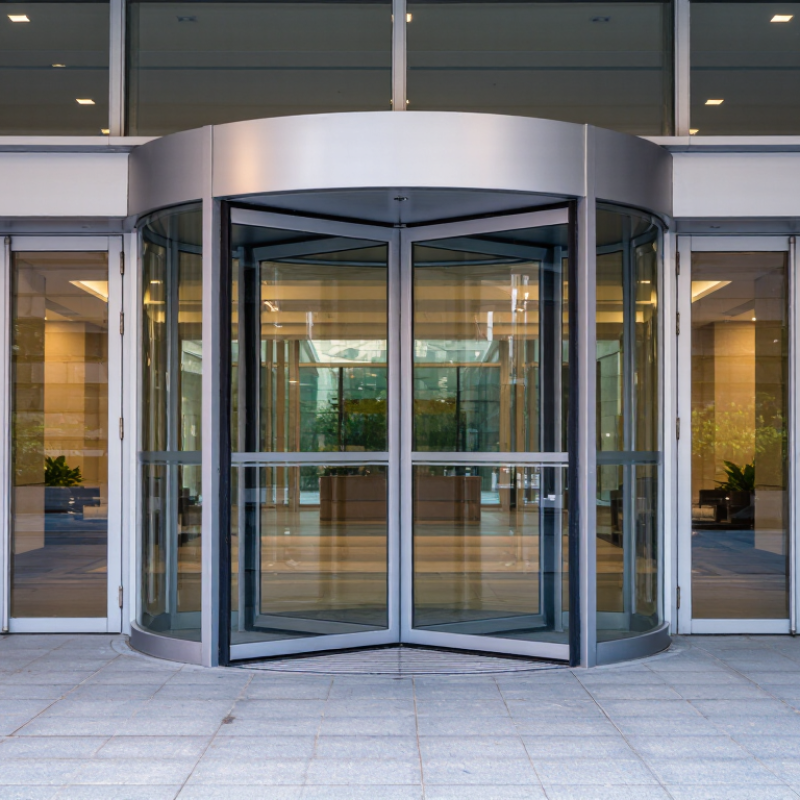
How to Choose Aluminium Glass Swing Doors for Your Business

Define Door Use, Traffic Volume, and Hardware Durability Under EN 12400

Choosing aluminium glass swing doors starts with their daily purpose, not their appearance. A reception door has different demands than a supermarket entrance.

Define the use clearly. Will people carry trays, push carts, or open the door with wet hands? These details affect the closer, hinges, handles, and safety glazing. Record normal traffic and peak traffic separately. A door serving 300 people daily may face intense use during short morning and lunch periods. That pressure can expose weak hardware quickly.

EN 12400 helps specify mechanical durability through performance classes and repeated opening cycles. Select a door system tested for the expected workload, rather than choosing a class by guesswork. Ask for test evidence covering the complete assembly, including the frame, hinges, closer, and locking components. Hardware should match the tested configuration. Replacing one component later may change performance.

High-traffic entrances usually need adjustable closers, reinforced fixing points, and corrosion-resistant hardware. Low-traffic office doors may not require the same specification. Still, underestimating traffic is common. I have seen “light use” doors placed beside busy lifts, where constant opening caused early adjustment problems. Measure real behavior for several days when possible. People rarely use doors exactly as planned.

Leave clearance for bags and carts. Check closing force during installation. Small details matter. A quiet, controlled closing action protects the glass, seals, and users while supporting long-term durability.

Set Thermal Goals with Low-E Double Glazing Near 1.1 W/m²K U-Value

For a business, an aluminium glass swing door must balance thermal performance, traffic, daylight, and maintenance. Start with a measurable target: Low-E double glazing near a 1.1 W/m²K U-value. That figure usually describes the glass centre, not the complete door. Ask for the whole-door U-value, frame details, spacer type, and test conditions. Small print matters here.

Specify a thermally broken aluminium frame with continuous insulating separators. Warm-edge spacers can reduce edge heat loss and interior condensation. Argon-filled cavities may support the target, but installation quality still controls results. Check gasket compression, sill drainage, and the junction between frame and wall. A beautiful door can underperform. On busy entrances, repeated opening also changes heat loss and air leakage. Review closer settings, threshold design, and expected daily cycles with the installer.

I would compare at least two documented quotations, not just glass prices. Request U-value evidence, solar-control data, visible-light transmission, and condensation guidance. South-facing glazing may need lower solar gain, while shaded façades may benefit from more daylight. Local climate and indoor humidity deserve attention. One detail is easy to miss: a low U-value does not automatically prevent overheating. If calculations conflict, pause and ask for project-specific modelling. That extra check can expose weak assumptions before the first frame is fitted.

How to Choose Aluminium Glass Swing Doors for Your Business

Set thermal goals with Low-E double glazing near a 1.1 W/m²K U-value

Lower U-values indicate better resistance to heat transfer. Typical center-of-glass benchmarks are approximately 5.7 W/m²K for single glazing, 2.8 W/m²K for standard double glazing, 1.1 W/m²K for Low-E double glazing with insulating gas, and 0.7 W/m²K for high-performance triple glazing. Actual door performance also depends on the aluminium frame, spacers, seals, panel size, and installation quality.

Select Safety Glass Meeting EN 12150 or ANSI Z97.1 Requirements

When choosing aluminium glass swing doors, safety glass should guide the decision. Look for glass tested to EN 12150 or ANSI Z97.1 requirements. EN 12150 covers thermally toughened soda-lime silicate safety glass. ANSI Z97.1 evaluates safety glazing performance under impact conditions. These standards are not decorative labels. They indicate that the glass has passed defined safety tests.

Ask the supplier for current test reports, product markings, glass thickness, and heat-treatment details. Check whether the report matches the proposed door glass, not merely a similar sample. In busy entrances, consider impact direction, door width, hinge strength, and the risk of shoulder-level contact. Properly finished edges also matter. A small chip can become a serious weakness. In practice, a certificate alone is not enough. The complete door assembly must suit the site and local building requirements.

Tips: Confirm the standard before ordering. Inspect the glass marking after delivery. Keep the test documents with the project records. Ask how the glass behaves after breakage, especially near children, queues, or narrow corridors. Avoid selecting glass only by appearance or price. Clear glass can still create visibility problems. Frosted bands or visual markings may help people notice the door. I have found that rushed checks often miss hardware compatibility. That mistake can undermine otherwise compliant safety glass.

How to Choose Aluminium Glass Swing Doors for Your Business - Select Safety Glass Meeting EN 12150 or ANSI Z97.1 Requirements

Selection Dimension Recommended Specification or Data Why It Matters for a Business Swing Door Verification Point
Safety-glass standard Use thermally toughened soda-lime silicate safety glass manufactured to EN 12150, or safety glazing tested and certified to ANSI Z97.1. Both standards address safety glazing performance, including resistance to human-impact hazards and safe fracture behavior. Request the applicable conformity documentation, test report, or permanent product marking before installation.
Glass type Choose fully tempered glass for general commercial swing-door applications. Use laminated safety glass where post-breakage retention is required by the project or local code. Tempered glass breaks into small particles rather than large sharp shards. Laminated glass generally remains held together after breakage. Confirm the glass construction, thickness, interlayer where applicable, and required building-code classification.
Common glass thickness Typical commercial door selections include approximately 6 mm, 8 mm, 10 mm, or 12 mm glass, subject to panel size, hardware, wind load, and engineering review. Thickness influences rigidity, weight, hardware compatibility, acoustic performance, and resistance to service loads. Do not select thickness from appearance alone; obtain a calculation or approved door-system recommendation.
Door leaf weight For glass only, approximate mass is 2.5 kg/m² per millimetre of glass thickness. Example: 10 mm glass weighs about 25 kg/m² before adding the aluminium frame and hardware. Hinges, pivots, closers, handles, and the supporting frame must be rated for the complete door-leaf weight. Calculate the full assembly weight and compare it with the load rating of every supporting component.
Safety glazing location Treat the complete glazed door leaf and adjacent hazardous glazing areas as safety-critical locations, especially at entrances, corridors, and high-traffic areas. People are more likely to walk into large, transparent, or low-level glass panels in busy commercial spaces. Check the local building code for required safety-glazing locations, markings, visibility bands, and guarding.
Aluminium frame finish Select a finish suitable for the environment, such as an anodized or powder-coated architectural finish with documented durability requirements. The finish affects corrosion resistance, appearance retention, cleaning requirements, and suitability for indoor or exterior exposure. Specify the exposure category, colour tolerance, surface warranty, and cleaning method.
Swing direction and clearance Define single- or double-action operation, handing, opening angle, threshold arrangement, and the required circulation clearance. Correct clearances reduce collisions and allow the door to operate safely without obstructing routes or equipment. Coordinate the door schedule with the floor plan, accessibility requirements, escape routes, and nearby fixtures.
Hardware selection Use hinges, pivots, handles, locks, seals, and closers specifically rated for the selected glass thickness, door weight, and traffic frequency. Commercial traffic can cause premature wear if hardware is undersized or not compatible with the door construction. Check load rating, cycle rating, adjustment range, fixing method, and compatibility with the aluminium profile system.
Accessibility and threshold Use a low-profile or flush threshold where required, maintain suitable clear opening dimensions, and limit opening force in accordance with the applicable accessibility code. Accessible doors should be usable by people with mobility, strength, or reach limitations. Verify the project jurisdiction’s accessibility rules rather than relying on a generic product dimension.
Visibility markings Add contrasting manifestation, decals, or a visible horizontal band when required for transparent doors or glazed screens. Visual indicators help users identify the door plane and reduce accidental impact. Confirm marking height, width, contrast, and location with local accessibility and safety requirements.
Thermal and solar performance For exterior entrances, evaluate insulated glazing, low-emissivity coatings, solar-control glass, air leakage, and thermal bridging in the complete door assembly. The glass and frame can affect heating, cooling loads, condensation risk, and occupant comfort. Use whole-door performance data where available; centre-of-glass values alone do not represent the complete assembly.
Installation and maintenance Install with compatible gaskets, setting blocks, fasteners, and sealants. Inspect alignment, hardware tightness, glass edges, and closing action regularly. Improper support, edge damage, or misalignment can reduce service life and create operational hazards. Keep installation instructions, inspection records, and replacement-part specifications with the building maintenance documentation.
Final compliance review Review safety glazing, door dimensions, hardware, accessibility, fire or smoke requirements where applicable, wind loads, and local permitting requirements as one complete system. A glass panel may meet a safety standard while the complete door installation still requires additional code compliance. Obtain approval from the responsible designer, building official, or qualified professional before procurement and installation.

Verify Air Leakage and Water Resistance Using ASTM E283 and E331

How to Choose Aluminium Glass Swing Doors for Your Business

Air leakage can quietly increase energy costs and create uncomfortable drafts. ASTM E283 measures air leakage through a door assembly under a controlled pressure difference. Ask for the tested leakage rate, pressure level, and assembly size. These details matter because results can change with testing conditions. A low rate is useful evidence, not an absolute promise.

Water resistance needs a separate check. ASTM E331 exposes the closed door to controlled water spray and static pressure. It helps reveal leaks around glazing, seals, corners, and the frame connection. Request the test pressure and duration. Also inspect the threshold design. Poor drainage can defeat a well-tested door.

Installation deserves equal attention. In field inspections, I have found that damaged gaskets and uneven floors cause avoidable failures. The strongest test report cannot repair a careless installation. Confirm compatible seals, accurate frame anchoring, and a level sill before ordering. Review maintenance access as well. Dust and repeated traffic can reduce sealing performance over time. A practical choice may require compromise. More glass can improve visibility, but it may increase weight and hardware stress. Test evidence should guide the decision, while site conditions complete the picture.

Compare Aluminium Finishes Under AAMA 2603, 2604, and 2605 Standards

Choosing an aluminium glass swing door involves more than frame style and glass thickness. The finish can influence appearance, maintenance, and service life.

AAMA 2603 coatings suit interior areas or sheltered locations with limited ultraviolet exposure. They are practical and economical, but colour fading may appear sooner outdoors.

AAMA 2604 provides stronger resistance to weathering, abrasion, and colour change. It fits busy entrances, retail spaces, and offices exposed to regular sunlight.

AAMA 2605 offers the highest performance among these three levels. Its fluoropolymer-based coating is better suited to intense sunlight, coastal air, and demanding commercial façades. The best option depends on the building’s location, cleaning routine, and expected traffic.

Tips:

Inspect a real finish sample beside the entrance. Look for fingerprints, fine scratches, and uneven colour under direct light. Ask for coating test records, preparation details, and written performance terms. Do not judge by gloss alone. Gloss can hide early wear. Also, specify compatible cleaners; harsh chemicals may damage even a high-grade coating. A lower-rated finish may work indoors, while a premium finish may be unnecessary there. The cheapest choice can age badly. No standard replaces careful site judgment. An imperfect but realistic review should include nearby salt air, door-handle contact, and cleaning habits. These small details often decide whether the aluminium still looks professional after years of daily use.

FAQS

What thermal target should I set for an aluminium glass swing door?

Aim for Low-E double glazing near a 1.1 W/m²K glass U-value. Ask for the complete door U-value too. The frame, spacer, seals, and installation affect performance. Small print matters.

Why is a thermally broken aluminium frame important?

Continuous insulating separators reduce heat transfer through the frame. Warm-edge spacers may reduce edge heat loss and condensation. Argon-filled cavities can support performance. They are not magic.

Can a low U-value prevent overheating?

No. Low heat transfer does not automatically control solar gain. South-facing doors may need stronger solar-control glass. Shaded façades may benefit from higher visible-light transmission. Check the local climate.

What should I check for air leakage?

Request documented leakage results for the complete door assembly. Confirm the pressure level and tested assembly size. Check gasket compression, threshold design, and door-closing settings. Busy entrances need special attention.

How can I reduce water leakage around the door?

Ask for controlled water-resistance test results and test duration. Inspect seals, corners, glazing joints, and frame connections. A level sill and clear drainage path are essential. Poor drainage defeats good testing.

How does daily traffic affect door performance?

Repeated opening can increase air leakage and hardware stress. Confirm expected daily cycles with the installer. Review closer settings, threshold design, and maintenance access. Traffic changes everything.

Which aluminium finish suits a commercial entrance?

A basic coating may suit sheltered interiors with limited sunlight. A stronger finish is better for busy entrances and regular weather exposure. The highest-grade option suits intense sunlight or coastal air. The most expensive finish is not always necessary.

What should I inspect before approving the finish?

View a real sample beside the entrance in direct light. Check fingerprints, fine scratches, gloss variation, and uneven colour. Ask for coating records and compatible cleaning products. Harsh chemicals can damage the surface.

How should I compare supplier quotations?

Compare at least two documented quotations, not only glass prices. Request U-value evidence, solar-control data, and visible-light transmission. Check installation details, maintenance access, and written performance terms. Cheap can age badly.

Conclusion

Choosing Aluminium Glass Swing Doors for a business starts with understanding how and where they will be used. Consider the building’s function, expected traffic volume, door size, opening frequency, and the required level of hardware durability under EN 12400. Energy performance should also match the project’s climate and comfort goals, with Low-E double glazing offering a practical target near a 1.1 W/m²K U-value. For safety, select glass that meets EN 12150 or ANSI Z97.1 requirements and is suitable for the expected impact and operating conditions.

Before installation, verify air leakage and water resistance through testing methods such as ASTM E283 and ASTM E331. These checks help confirm reliable performance in changing weather conditions. Finally, compare aluminium finishes according to AAMA 2603, 2604, and 2605, considering appearance, coating quality, weather exposure, and maintenance needs. A balanced evaluation of safety, durability, thermal efficiency, and finish performance will support a dependable long-term door solution.

Vivienne

Vivienne

Vivienne is a professional marketing specialist with a strong understanding of product strategy, customer needs, and digital communication. As a valued member of the company’s marketing team, she combines industry insight with practical experience to create clear, informative, and engaging content......