Choosing the right Aluminium Sliding Windows can shape a building’s comfort, appearance, and long-term operating cost. Global buyers face different climates, building standards, installation practices, and supply conditions. A product suited to Dubai may not perform equally well in Vancouver or Singapore.
Fenestration consultant Joe Hayden offers a useful principle: “A window must manage water, air, heat, and movement before it frames a view.” This practical observation guides our selection. The ten products featured here are assessed beyond surface appearance. We examine aluminium alloy quality, frame depth, thermal breaks, glass options, roller performance, drainage design, air tightness, and installation support.
Small details matter.
A smooth handle can hide weak rollers. A slim frame can still transfer excessive heat. Some systems promise large panels but provide limited guidance for replacement parts. These differences become visible when rain enters a track, salt attacks coastal hardware, or a heavy sash begins to drag.
This guide is designed for architects, developers, distributors, and homeowners comparing international options. It considers performance evidence, warranty clarity, tested ratings, manufacturing consistency, and regional adaptability. Certification is important, but it is not the whole decision. Proper surveying and installation remain essential.
The ranking is not absolute. No window suits every project. Budget pressure, local weather, wall structure, and maintenance access can change the best choice. That uncertainty deserves attention. Readers should verify current specifications, independent test reports, and installer qualifications before ordering.
The following ten Aluminium Sliding Windows represent strong options for global buyers seeking practical performance, clean design, and dependable value.
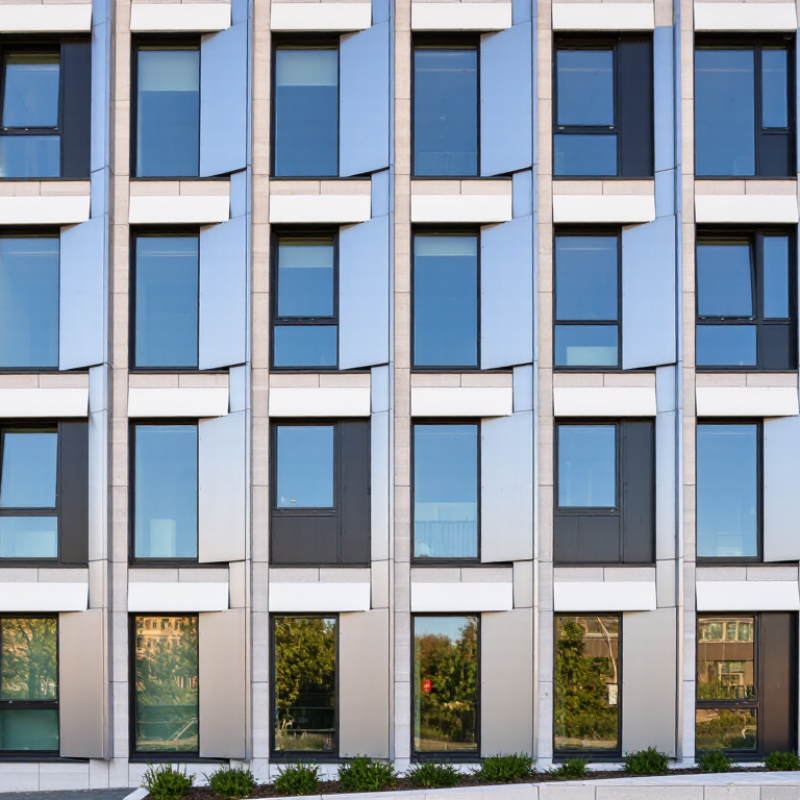
Aluminium sliding windows depend on three details: profile design, glass selection, and thermal breaks.
A narrow profile can look elegant, but it may transfer heat quickly without an insulated barrier. Thermal-break systems place a low-conductivity polyamide strip between the inner and outer aluminium sections. This reduces cold bridging around the frame.
Glass needs equal attention. Double glazing is common, while triple glazing suits colder climates and stricter energy targets. Low-emissivity coatings help reflect indoor heat, and argon-filled cavities can improve insulation.
The U.S. Department of Energy reports that windows can cause 25–30% of residential heating and cooling energy use. That figure makes glass specification more than a visual choice.
Check the complete window, not only the centre glass. Ask for whole-window U-factor, solar heat gain coefficient, air leakage, and water resistance results. Local climate matters. A hot, sunny site may need lower solar gain, while a cold region may prioritise a lower U-factor.
The International Aluminium Institute states that recycled aluminium uses about 5% of the energy required for primary aluminium production, supporting a stronger material lifecycle. Still, recycled content alone does not guarantee performance.
Installation gaps, weak drainage, or poorly adjusted rollers can undermine excellent profiles. I would avoid choosing by frame thickness alone. It sounds practical, but it is incomplete.
A credible aluminium sliding window should be judged by tested performance, not appearance alone. Uw measures whole-window thermal transmittance, including the frame and glass. Lower values indicate better insulation. The Passive House Institute uses 0.80 W/m²K as a demanding benchmark for certified window components, although climate and installation conditions can change the target. Many premium projects accept values near 1.0 W/m²K. Product size also matters. A small test window may produce a more attractive Uw result.
Air leakage deserves equal attention. Under EN 12207, Class 4 allows leakage up to 3 m³/(h·m²) at 100 Pa, while lower classes permit substantially more leakage. Windy coastal sites quickly expose weak seals. Small gaps matter. Buyers should request laboratory test reports showing the tested configuration, dimensions, pressure stages, and opening type. A brochure value without these details is incomplete.
EN 14351-1 defines essential performance characteristics and supports conformity assessment for external windows and doors. It does not impose one universal Uw requirement for every market. Therefore, a strong shortlist should compare Uw, air permeability, water tightness, wind resistance, and declared testing conditions together. Installation remains a weak point. Even an excellent frame can underperform with poor shimming or unsealed perimeter joints. This is where many comparisons become optimistic. Regional building codes and independent verification should be checked before purchase.
(Sources: EN 14351-1; EN 12207; Passive House Institute window criteria.)
10 Best Aluminium Sliding Windows for Global Buyers
These ten aluminium sliding window types are ranked by energy performance, security, and overall value. Thermally broken frames with low-emissivity double glazing rank first because they reduce heat transfer and indoor noise. Triple-glazed thermal systems follow, offering stronger insulation in severe climates, although their weight needs careful installation. Laminated-glass sliders rank third for impact resistance and quieter rooms. Multi-point locking windows come next, improving security around larger openings. Standard double-glazed models offer dependable value for moderate climates. Slim-profile systems provide more daylight but may sacrifice some thermal performance. Lift-and-slide windows move smoothly across wide openings, yet their hardware costs more. Recessed-track designs create clean thresholds but demand excellent drainage. Powder-coated frames resist weathering and usually need limited maintenance. Basic single-glazed aluminium sliders rank tenth because their low price can mean higher energy bills.
Tips: Check the whole window, not only the frame. Ask for tested U-values, air leakage results, water resistance, and lock specifications. Confirm whether measurements use the glass centre or the complete installed unit. Installation quality matters greatly. A well-rated window can still leak through a poorly sealed perimeter.
Regional weather changes the ranking. A coastal home needs durable finishes and drainage. A cold region needs stronger thermal breaks. A hot, sunny building may benefit from solar-control glass. I would not choose the most expensive option automatically. Hardware availability, replacement seals, warranty clarity, and local installer experience affect real value. Some catalogues also present optimistic performance figures. Independent test documents deserve closer attention.
Ranked by Energy Efficiency, Security, and Value
Scores are indicative benchmark indices from 0 to 100 for representative aluminium sliding-window configurations. Energy scores reflect typical whole-window Uw performance, where lower Uw values indicate better insulation. Security scores reflect commonly specified EN 1627 resistance classes, while value scores balance purchase cost, durability, and performance. Actual results vary according to glazing, frame depth, hardware, dimensions, installation, and local regulations.
Safety claims need more than polished photographs. EN 1627 evaluates resistance against forced entry, using defined tools, attack methods, and resistance classes. A serious supplier should provide the tested configuration, not only the frame profile. Glass, locks, rollers, handles, and installation details affect the result. A stronger frame can still fail through weak hardware.
ASTM E283 measures air leakage under a controlled pressure difference. Technicians seal the sample, apply pressure, and record airflow through gaps. Lower leakage usually means better comfort and fewer drafts. However, laboratory performance may change after transport or poor installation. Ask for test pressure, sample size, and leakage results. Numbers without test conditions remain incomplete.
The 100,000-cycle test checks repeated opening and closing. It can reveal roller wear, handle looseness, track damage, and alignment problems. The window should move smoothly near the final cycle, not merely survive it. In practical inspections, dust and small installation errors matter. That is where many assumptions weaken.
I would also examine drainage holes, corner joints, and replacement access. A convincing report identifies the laboratory, test date, product dimensions, and tested hardware. It should also state what was not tested. That detail builds trust.
When comparing the 10 best aluminium sliding windows, sustainability begins with evidence, not glossy claims. Aluminium is often associated with a 75% recycling rate, but this figure needs context. It may describe market recovery, not recycled content in your frame. Ask whether the profile contains post-consumer or post-industrial aluminium. Recycled billet can reduce embodied carbon, yet transport, thermal breaks, glass, coatings, and hardware still affect the result. Small details matter.
A product-specific Environmental Product Declaration, or EPD, provides stronger evidence. Look for independent verification and the correct product category rules. Check the declared unit, system boundary, service life, and life-cycle modules. Compare windows with similar sizes and thermal performance. Otherwise, a weak comparison may make one product appear greener than it is. In real projects, request U-values, air leakage, water tightness, and maintenance data alongside the EPD. Sustainability is less convincing if seals fail early. That lesson is easy to overlook.
Tips: Ask for verified recycled-content data and a clear take-back route. Choose durable coatings, replaceable seals, and repairable rollers. Do not treat “100% recyclable” as proof of low emissions. Request project-specific freight estimates and keep the documents for future audits. Some decisions will remain imperfect, especially when EPD boundaries differ. Be transparent about that.
| Rank | Aluminium Sliding Window Type | Best For | Typical Glazing | Typical Whole-Window Uw Target | Thermal Break | Indicative Maximum Sash Width | Recommended Sustainability Evidence | Global Buying Considerations |
|---|---|---|---|---|---|---|---|---|
| 1 | Thermally Broken Lift-and-Slide Window | Large residential openings, premium villas and hotels | Double or triple insulating glass; low-emissivity coating and argon may be specified | Approximately 1.0–1.8 W/m²K | Required | About 3.0–4.0 m per sash, depending on system and glass weight | Product-specific EPD to EN 15804+A2; recycled-content declaration; aluminium alloy and finish documentation | Check floor loading, drainage, lifting hardware, threshold detail and corrosion category for the project location |
| 2 | Thermally Broken Multi-Panel Sliding Window | Wide panoramic façades and indoor–outdoor connections | Double or triple insulating glass, commonly 24–52 mm overall thickness | Approximately 1.1–2.0 W/m²K | Required | About 1.2–3.5 m per panel | EPD covering frame, hardware and glazing scope; design-stage embodied-carbon calculation | Ask for tested air, water and wind performance for the exact panel combination, not only for a single sash |
| 3 | Slim-Profile Thermally Broken Slider | Contemporary façades where visible aluminium width is important | Double insulating glass; triple glazing is possible in deeper profiles | Approximately 1.4–2.2 W/m²K | Preferred | About 1.0–2.5 m per panel | EPD or verified product carbon data; declaration of recycled aluminium input and coating durability | Slim sections can limit glass thickness, hardware capacity and weather performance; verify project-specific test data |
| 4 | Triple-Glazed Aluminium Slider | Cold climates, low-energy buildings and high-performance envelopes | Triple insulating glass, typically with low-emissivity coatings and inert-gas filling | Approximately 0.8–1.4 W/m²K | Required | Usually up to about 2.5–3.0 m per panel | Whole-window EPD or life-cycle assessment including the heavier glazing; thermal and condensation calculations | Confirm sash weight, roller durability, glass replacement method and compatibility with local energy codes |
| 5 | Double-Glazed Thermal-Break Slider | Balanced cost, performance and availability in many markets | Double insulating glass, commonly 20–32 mm overall thickness | Approximately 1.6–2.6 W/m²K | Recommended | About 1.0–2.8 m per panel | Environmental Product Declaration where available; aluminium recycled-content statement; repair and replacement information | Compare the declared Uw value rather than the centre-of-glass U-value alone |
| 6 | Low-Threshold Accessible Sliding Window | Accessible housing, healthcare, hospitality and ageing-in-place projects | Double or triple insulating glass, selected according to climate and acoustic needs | Approximately 1.2–2.2 W/m²K | Recommended | About 1.0–2.5 m per panel | EPD scope for threshold, drainage components and replacement parts; accessibility and slip-resistance documentation | Confirm water drainage, weather seals, threshold height, wheelchair clearance and local accessibility requirements |
| 7 | Acoustic Aluminium Sliding Window | Urban buildings, transport corridors and mixed-use developments | Laminated acoustic double glazing or acoustic triple glazing | Approximately 1.2–2.2 W/m²K | Required | About 1.0–2.5 m per panel | EPD plus independently tested weighted sound reduction value, such as Rw; glass interlayer specification | Acoustic results depend on the complete installed assembly, perimeter seals, wall construction and ventilation strategy |
| 8 | High-Wind-Rated Sliding Window | Coastal, exposed, high-rise and cyclone-prone locations | Safety or laminated insulating glass selected for design wind pressure | Approximately 1.5–2.8 W/m²K | Required | Project-specific; often reduced as wind pressure and panel area increase | Product EPD, corrosion-resistance evidence and independently tested air, water and structural performance | Specify design wind pressure, building height, exposure category, impact requirements and anchorage details before purchase |
| 9 | Recycled-Aluminium Sliding Window | Projects prioritising material circularity and lower primary aluminium demand | Double or triple insulating glass according to thermal requirements | Approximately 1.2–2.6 W/m²K | Recommended | Depends on the selected sliding system and recycled alloy route | Third-party recycled-content verification, chain-of-custody evidence and product-specific EPD | Distinguish pre-consumer from post-consumer recycled content and confirm that performance is unchanged for the declared alloy |
| 10 | Repairable and Modular Sliding Window | Long-life commercial buildings, rental housing and maintenance-focused projects | Replaceable double or triple insulating glass | Approximately 1.4–2.6 W/m²K | Preferred | About 1.0–3.0 m per panel | EPD, design-for-disassembly information, spare-parts availability and documented service-life assumptions | Prioritise replaceable rollers, gaskets and handles, accessible drainage channels and standardised glass dimensions |
Important interpretation: Aluminium is highly recyclable and can be recycled repeatedly without losing its basic material properties. The often-cited 75% figure generally refers to the approximate share of aluminium ever produced that remains in use, not a universal global recycling rate for every aluminium window.
EPD verification: An Environmental Product Declaration should identify the manufacturer-independent programme operator, product scope, declared unit, life-cycle modules, service-life assumptions and conformity with EN 15804+A2 or the applicable local standard. Values should not be compared unless the scope and declared unit are equivalent.
Performance note: Uw ranges are indicative design targets for complete windows. Actual results vary with frame geometry, glazing, spacer, dimensions, hardware, installation and climate. Always request project-specific test reports and calculations.
Uw measures heat transfer through the complete window, including the frame and glass. Lower values usually mean better insulation. Size matters.
Around 0.80 W/m²K is demanding. Values near 1.0 W/m²K may suit many premium projects. Climate changes the target.
Air leakage reveals gaps around seals and moving parts. Class 4 permits limited leakage at 100 Pa. Coastal wind can expose weak seals quickly.
Request the tested size, opening type, pressure stages, and complete configuration. A brochure number alone is incomplete.
No. It supports performance assessment for external windows and doors. Local codes still determine suitable requirements for each project.
Check the resistance class and tested configuration. Glass, locks, rollers, handles, and installation all affect the result. Frames alone are not enough.
It checks repeated opening and closing. Inspect roller wear, handle looseness, track damage, and alignment. Smooth movement matters near the final cycle.
Ask whether recycled content is post-consumer or post-industrial. Also review glass, coatings, thermal breaks, transport, and hardware. The 75% figure needs context.
Check independent verification, declared unit, system boundary, service life, and life-cycle modules. Compare similar window sizes and thermal performance.
Look for replaceable seals, repairable rollers, drainage holes, and accessible corner joints. Keep testing and sustainability documents. Some comparisons remain imperfect.
This guide explains how Aluminium Sliding Windows combine slim profiles, high-performance glass, and thermal-break technology to improve comfort, daylight, and energy efficiency. It introduces key specifications for global buyers, including Uw values for insulation, air-leakage performance, and EN 14351-1 compliance. A practical ranking compares ten window solutions by energy efficiency, security, durability, ease of maintenance, and overall value, helping buyers match product performance with project requirements and climate conditions.
The article also reviews essential safety and durability checks, including resistance testing aligned with EN 1627, air-permeability assessment under ASTM E283, and long-term operation verified through 100,000-cycle testing. Finally, it highlights sustainable purchasing factors: aluminium can be recycled at a high rate, while Environmental Product Declarations (EPDs) provide transparent information about embodied carbon and lifecycle impact. Together, these criteria offer a clear framework for selecting reliable, efficient, secure, and environmentally responsible sliding window systems.