0%

Choosing the right window affects comfort, daylight, ventilation, and long-term operating costs. Aluminium Awning Windows are often considered for projects needing durable frames and controlled ventilation during light rain. Their outward-opening sash can help direct airflow into a room, while its position may offer some shelter from passing showers. Performance still depends on the design.

The U.S. Department of Energy’s Energy Saver guidance estimates that heat gain and heat loss through windows account for about 25%–30% of residential heating and cooling energy use. This figure describes windows generally, not awning windows alone. It is a useful reminder to assess the complete assembly: glazing, frame, thermal breaks, weather seals, and installation. Check certified ratings such as U-factor and solar heat gain coefficient, rather than relying on frame material alone.

Details matter. A thermally broken aluminium frame can reduce heat transfer compared with an unbroken metal frame, but results vary by product and climate. Ask suppliers for test data, drainage details, hardware specifications, and maintenance guidance. Consider whether the sash’s projection suits walkways, screens, and nearby landscaping. Aluminium is not magic. Poor installation or weak seals can still cause drafts and water entry. A careful comparison helps architects, builders, and homeowners choose windows that fit the building’s exposure, budget, and ventilation needs—with realistic expectations.
Why Choose Aluminium Awning Windows for Your Project?

What Aluminium Awning Windows Are and How They Work

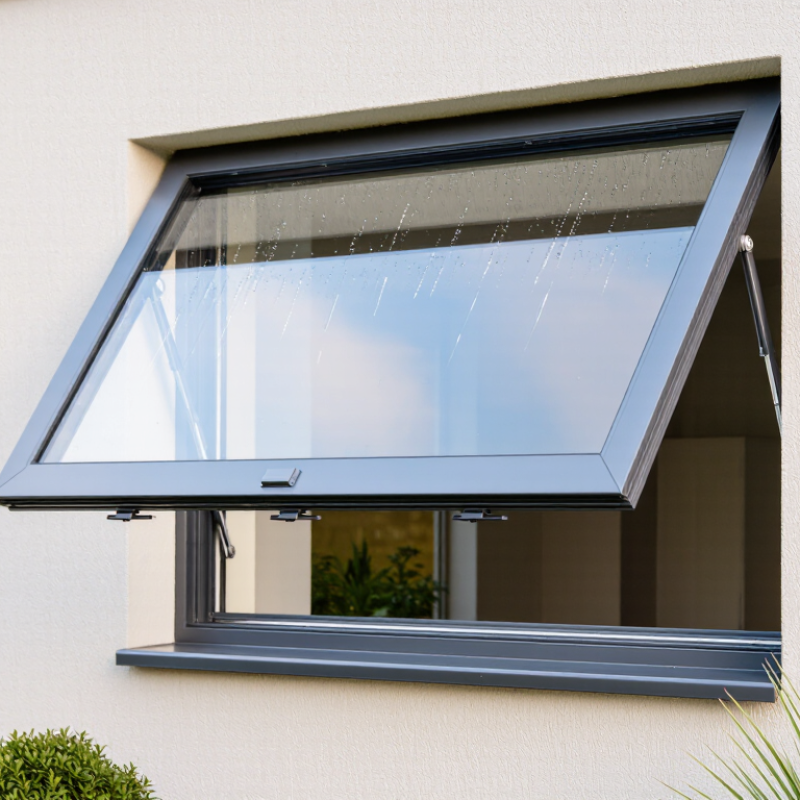
An aluminium awning window has a sash hinged along its top edge. Its lower edge swings outward, forming a small canopy above the opening. A handle or crank moves linkage arms, guiding the sash and holding it at an angle. Simple in principle. When closed, locking points press the sash against perimeter seals, helping limit drafts and water entry.

Opening the sash creates a gap along the bottom and sides for fresh air. Since the glass projects outdoors, the window does not take up indoor floor space. Light rain may be kept out, but wind direction and rainfall can change that. It is not a guarantee of ventilation in every weather. Aluminium frames are rigid, and some designs include thermal breaks to reduce heat transfer through the frame.


Placement affects everyday use. Awning windows can suit bathrooms or kitchens, where privacy and controlled airflow matter. Still, check that the outward swing clears paths, plants, and nearby structures. Hardware should move smoothly; stiff operation can point to adjustment or installation issues. Screens may also limit the opening slightly. That trade-off is easy to miss when choosing from drawings alone.

How Their Materials and Design Affect Performance

Aluminium awning windows combine a slim frame with a top-hinged sash that opens outward. The material’s strength allows narrow sightlines and larger glass areas, bringing more daylight into a room. But aluminium conducts heat readily. A thermal break—a low-conductivity barrier between the inner and outer frame—helps reduce heat transfer and condensation risk. Ask for tested thermal-performance data, not just a general claim of efficiency.

Design details matter in daily use. Compression seals around the sash help limit drafts, while well-positioned drainage paths let incidental water escape. Check that weep openings remain clear after installation. Small detail. The outward-opening sash can admit ventilation during light rain, yet it is not a substitute for closing windows in severe weather. Hardware, sash size, and local wind exposure all affect how securely it operates.

Finishes also influence service life. A durable coating can protect aluminium from weathering, while suitable fasteners help limit corrosion where different metals meet. Still, there are trade-offs. Wide openings may need stronger hinges and careful sizing, and slim frames do not guarantee good insulation on their own. On a project, compare frame specifications, glazing, seals, and installation details as one system. Even a well-made window can underperform if the frame is poorly fitted or drainage is obstructed.

Benefits for Ventilation, Weather Protection, and Durability

Aluminium awning windows are hinged at the top and open outward from the bottom. This design can support ventilation while helping shield an open window from light rain. The sash forms a small canopy, though wind-driven rain may still enter. They are not a substitute for closing windows during severe weather.

Small details matter. A window’s airflow depends on its size, opening angle, room layout, and other openings nearby. In a kitchen or bathroom, an awning window can release warm, humid air without occupying much interior space. Add insect screens where needed, and check that the outward-opening sash will clear paths, plants, and exterior fixtures.

Aluminium frames are valued for their strength and resistance to warping. A sound finish helps protect the surface, while thermal breaks can reduce heat transfer through the frame. Performance still depends on proper installation, glazing, weather seals, and drainage. Seals can wear; drainage channels can collect dust. Include these parts in routine checks. For coastal or exposed sites, ask the supplier about suitable finishes and hardware, and consider local wind conditions when selecting the opening size.

Factors to Consider When Selecting Awning Windows

Why Choose Aluminium Awning Windows for Your Project?

When selecting awning windows, begin with climate, room use, and exposure to rain. The outward-opening sash can help ventilate a kitchen or bathroom while shielding the opening from light rain. But wind-driven rain can still enter, so check the manufacturer’s tested water-resistance rating for your project conditions. Small details matter.

Compare whole-window U-factor and solar heat gain coefficient, not frame material alone. The U.S. Department of Energy’s Energy Saver guidance estimates that windows account for about 25–30% of residential heating and cooling energy use. That figure makes glazing and installation worth careful attention. Aluminium is strong and allows slim frames, yet it conducts heat readily. Look for a thermal break, then compare certified performance labels, such as NFRC ratings, across the complete window unit. A high-performance frame cannot compensate for poor installation.

Tips: Before ordering, measure the opening and check handle clearance, insect-screen access, and cleaning reach. Ask how the sash locks and how often its hinges need inspection. For a west-facing room, consider glare and afternoon heat; for a sheltered bathroom, privacy glass may matter more. These choices can feel fussy, but replacing a poorly suited window is harder. My own caution: ratings help compare products, though they cannot predict every site condition.

Common Applications in Residential and Commercial Projects

Aluminium awning windows suit rooms that need fresh air without leaving the opening fully exposed. In homes, they are often used above kitchen counters, in bathrooms, and along upper walls. Their outward-opening sash can help limit direct rain entry during light showers, while still allowing ventilation. A raised position can also preserve wall space and offer privacy. Small detail, big difference.

In offices, clinics, and small retail spaces, awning windows can provide controlled airflow without projecting far into busy walkways. Operators are useful where windows sit above desks or work surfaces. For larger commercial projects, repeated window units can create a consistent façade, though ventilation needs should be checked against room size and occupancy. Appearance alone is not enough.

Before choosing a size, check the opening clearance, reachable controls, and how the window will be cleaned. Wind exposure matters, too; an open sash may catch strong gusts. Aluminium frames are durable, but glass, seals, hardware, and installation all affect performance. I would not specify the same configuration for every room. A compact bathroom window and a wide office opening have different needs, and that distinction is easy to overlook.

FAQS

How does an aluminium awning window open?

Its sash is hinged along the top. A handle or crank moves linkage arms, swinging the lower edge outward. Simple in principle.

Can it provide ventilation during rain?

The projecting sash can shelter the opening from light rain. Wind-driven rain may still enter, so close it during severe weather. Not a guarantee.

Where are these windows useful?

They can suit kitchens and bathrooms, where controlled airflow and privacy matter. The sash uses little indoor space. Check outward clearance.

Do aluminium frames insulate well?

Aluminium conducts heat readily. Thermal breaks can reduce heat transfer and condensation risk, but glazing, seals, and installation also matter. Ask for tested data.

What affects airflow through an awning window?

Airflow depends on window size, opening angle, room layout, and nearby openings. Screens may reduce the usable opening slightly. Easy to overlook.

What should I inspect after installation?

Check that the hardware moves smoothly, seals are intact, and drainage openings remain clear. Poor fitting or blocked openings can undermine performance. Dust gathers.

Are aluminium awning windows durable?

Aluminium resists warping, and a durable finish helps protect it from weathering. Suitable fasteners can limit corrosion between different metals. Not maintenance-free.

What should I consider for exposed locations?

Consider local wind conditions, opening size, finish, and hardware. Check clearance around paths, plants, and exterior fixtures. Drawings can mislead.

Conclusion

Aluminium Awning Windows are hinged at the top and open outward, allowing fresh air to enter while the sash helps shield the opening from rain. Their operation makes them a practical choice where ventilation and weather protection are both important. The strength and light weight of aluminium support slim, stable frames, while suitable glazing, seals, finishes, and hardware can further influence insulation, ease of use, and long-term performance.

When selecting awning windows, consider the opening size, ventilation needs, local weather, energy goals, maintenance expectations, and how the windows will coordinate with the building’s design. They can be used in homes in spaces such as kitchens, bathrooms, and living areas, as well as in commercial projects where controlled airflow and durable construction are valued. Choosing the right configuration and installation approach helps ensure the windows meet the project’s practical and visual requirements.

Vivienne

Vivienne

Vivienne is a professional marketing specialist with a strong understanding of product strategy, customer needs, and digital communication. As a valued member of the company’s marketing team, she combines industry insight with practical experience to create clear, informative, and engaging content......